
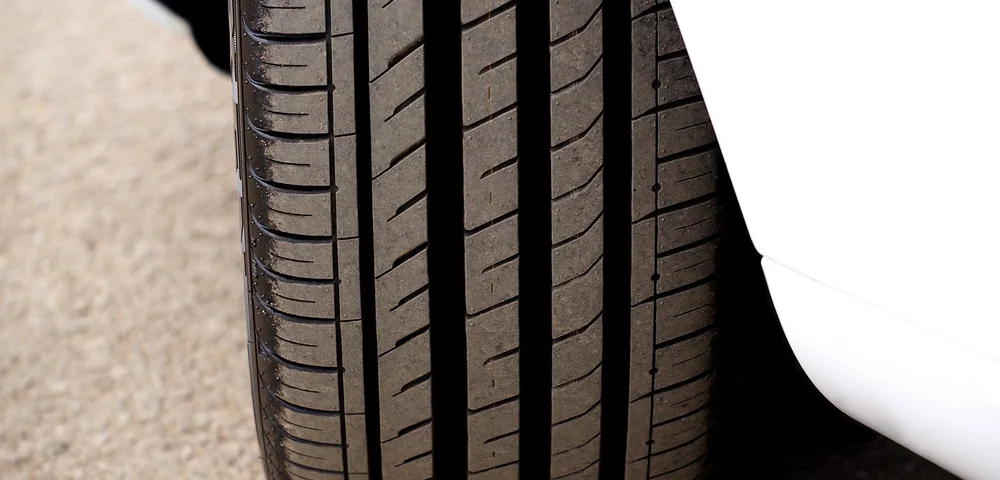
Firestone tires are a solid mid-tier choice — not the quietest or longest-lasting tires on the market, but a brand that consistently delivers dependable all-season grip, reasonable tread life, and pricing that undercuts its own parent company, Bridgestone, by a meaningful margin. If you want a tire that does everything competently without paying for a premium badge, Firestone deserves a spot on your shortlist. If ultimate ride comfort or class-leading treadwear is your top priority, you’ll want to look elsewhere. Below is a full breakdown of where Firestone fits, what each product line does well, and who should (and shouldn’t) buy them.

Who Makes Firestone and Where They Sit in the Market
Firestone has been an American tire brand since 1900, and since 1988 it has operated as a subsidiary of Bridgestone Corporation, one of the two largest tire manufacturers in the world. This ownership structure matters: Firestone isn’t a budget import brand cutting corners to hit a price point, it’s a legacy brand that shares R&D resources, testing facilities, and manufacturing standards with Bridgestone, while being positioned to sell at a lower price tier.
In practice, Firestone occupies the same shelf space as brands like General, Cooper, and Kumho — mid-range tires that are a step above true budget brands (Kenda, Sumic, Travelstar) but priced well under flagship Michelin, Bridgestone, or Continental products. Firestone tires are manufactured in the U.S. and other Bridgestone-affiliated plants, and they carry a reputation built primarily on truck, SUV, and light commercial tires, though the passenger car lineup has grown substantially. If you’re comparing the parent brand directly, our Goodyear vs Firestone comparison and the full Bridgestone tire review are useful companion reads.
Firestone Tire Range: Main Lines and What Each Is For
Firestone’s lineup is organized by vehicle type and use case rather than by performance tier, which makes shopping fairly straightforward once you know your vehicle category.
- Firestone WeatherGrip: A grand touring all-season tire built specifically for wet and light winter traction, with a 3-Peak Mountain Snowflake rating. This is Firestone’s answer to buyers who want one tire to handle rain and light snow without switching to dedicated winters.
- Firestone Destination line (LE3, AT2, X/T): Covers SUVs, crossovers, and light trucks. The LE3 is highway-focused, the AT2 is all-terrain for trucks that see gravel and dirt roads, and the X/T leans more aggressive for off-road use.
- Firestone Firehawk line: The performance-oriented family, split between all-season touring (Firehawk AS) and summer performance (Firehawk Indy 500) options for drivers who want sharper handling.
- Firestone Champion: An affordable, fuel-efficient all-season touring tire aimed at sedans and minivans prioritizing comfort and mileage over performance.
- Firestone Transforce: Commercial and work-truck tires built for load capacity and durability, relevant to anyone using our load range guide to spec a work vehicle.
The common mistake buyers make here is picking a tire by name recognition rather than matching the line to their actual use case — putting a Destination A/T2 on a commuter sedan-turned-crossover that never leaves pavement, for example, adds noise and rolling resistance for no benefit.
Performance: Dry, Wet and Winter Grip
Firestone’s dry handling is competent but not sporty. On mainstream all-season lines like the Champion and Destination LE3, dry grip is predictable and confidence-inspiring at legal speeds, but you’ll notice softer, more progressive steering response compared to a Continental or Michelin in the same class — fine for daily commuting, less satisfying if you enjoy spirited driving. The Firehawk line closes some of that gap with firmer compounds and more aggressive tread patterns, though it still trails dedicated performance brands in outright cornering grip.
Wet performance is genuinely a strong point for Firestone, particularly with the WeatherGrip and newer Firehawk touring tires, which use tread compounds and full-depth sipes designed specifically to channel water and resist hydroplaning. This is one area where Firestone punches above its price bracket.
Winter grip on non-winter Firestone tires is adequate for light snow and slush but not a substitute for a dedicated winter tire below freezing temperatures on packed snow or ice — the rubber compound stiffens, and traction drops off noticeably. Only the WeatherGrip carries the 3PMSF rating; other all-season lines are fair-weather commuting tires with mild cold-weather tolerance. Drivers in true winter climates should still budget for a seasonal swap.
Tread Life, Warranty and Value for Money
Firestone backs most passenger and light-truck lines with treadwear warranties ranging from roughly 50,000 to 70,000 miles depending on the specific model, which is in line with mid-range competitors like General and Cooper, though it falls short of the 70,000-85,000 mile warranties Michelin and some Continental touring tires offer. Real-world tread life tracks reasonably close to the warranty mileage when tires are rotated on schedule and alignment is kept in spec — uneven wear from a bad alignment (see our guide on thrust alignment) will cut that life short regardless of brand.
Where Firestone earns its keep is the price-to-mileage ratio. Because retail pricing typically sits below Bridgethstone, Michelin, and Continental equivalents, the cost-per-mile often works out favorably even when raw tread life numbers are a notch lower. This is the classic mid-tier value proposition: you’re not buying the longest-lasting tire on the market, but you’re also not overpaying for a mileage rating you may never fully realize if you replace vehicles every 4-6 years.
Before buying, always check the specific warranty terms for your exact model and confirm it’s honored through standard tire warranty coverage at your installer, since prorated mileage warranties have conditions around rotation records and minimum tread depth at claim time that many buyers overlook.
Road Noise and Ride Comfort
This is the category where Firestone shows its mid-tier positioning most clearly. Touring lines like the Champion and Destination LE3 are tuned for comfort with reasonably quiet cabins on smooth highway pavement, but road noise becomes noticeably more present on coarse asphalt or at highway speeds compared to premium touring tires with multi-pitch tread designs and noise-canceling foam inserts. Owners frequently describe Firestone’s ride as comfortable over small bumps and expansion joints but slightly more vocal over rough surfaces than a comparably priced Michelin Defender or Continental TrueContact.
The Destination A/T2 and X/T, as expected for all-terrain and off-road-oriented tires, trade quiet cruising for more aggressive tread voids that generate a distinct hum at speed — a normal and expected tradeoff for the traction they provide off-pavement, not a defect.
If cabin noise is a top priority for you, it’s worth reading our Yokohama tire review and the Bridgestone review linked above for direct comparisons, since noise perception is highly dependent on vehicle sound insulation as well as tire design — the same tire can feel notably quieter in a well-insulated sedan than in an SUV or truck cabin.
How Firestone Compares With Rivals at the Same Price
Firestone competes most directly against General, Cooper, Kumho, and Hankook’s budget sibling brands in the mid-tier space. Here’s how the categories typically stack up:
| Category | Firestone | General/Cooper | Kumho |
|---|---|---|---|
| Dry handling | Good, not sporty | Good, similar feel | Slightly sharper |
| Wet traction | Very good | Good | Good |
| Ride comfort | Good | Very good | Good |
| Noise | Moderate | Quiet on touring lines | Moderate |
| Treadwear warranty | 50k-70k miles | 60k-75k miles | 50k-70k miles |
| Price tier | Mid | Mid | Mid |
For a deeper look at how General and Cooper stack up against each other specifically, see our General Tire vs Cooper Tire comparison, and for Kumho’s positioning against a premium brand, our Kumho vs Goodyear breakdown is directly relevant. The takeaway: Firestone is competitive but rarely the outright best in any single category among its direct price-tier rivals — its strength is consistency across the board rather than dominance in one area.
Who Should Buy Firestone Tires — and Who Shouldn’t
Firestone tires make sense for daily commuters, family sedan and minivan owners, and truck/SUV owners who want a dependable all-season or all-terrain tire without paying flagship prices. They’re a particularly good fit if your priority list is wet-weather safety, reasonable mileage, and a lower purchase price, in roughly that order. Fleet and work-truck operators also benefit from the Transforce line’s durability and load ratings for the price.
Firestone is a weaker choice if you live somewhere with genuine winter conditions and want a single tire to handle it all — only the WeatherGrip is built for that, and even it isn’t a full substitute for dedicated winter rubber on ice. Performance-focused drivers who prioritize sharp steering feel and maximum dry grip will likely be happier with a Firehawk upgrade or a step up to Continental or Michelin’s performance lines. And buyers chasing the absolute lowest noise floor or the longest treadwear warranty on the market will find better numbers elsewhere, even if the real-world gap is smaller than the spec sheet suggests.
A common mistake is assuming all Firestone tires perform identically because they share a brand name — the gap between a Champion touring tire and a Destination A/T2 is enormous in noise, ride, and highway manners, so match the specific model to your vehicle and driving conditions rather than buying on brand alone.
Frequently Asked Questions
Are Firestone tires as good as Bridgestone tires?
Not quite — Bridgestone sits above Firestone as the premium tier within the same parent company, generally offering longer treadwear warranties, quieter ride tuning, and more advanced tread compounds. Firestone delivers a large share of that performance at a lower price, which is why it’s positioned as Bridgestone’s value alternative rather than a direct equal.
Do Firestone tires last a long time?
Most Firestone passenger and light-truck lines carry 50,000-70,000 mile treadwear warranties, which is average for the mid-tier segment. Actual mileage achieved depends heavily on rotation schedule, alignment, and driving style, so following manufacturer maintenance intervals matters as much as the tire itself.
Is Firestone a good brand for snow and winter driving?
The Firestone WeatherGrip is the only line rated for severe winter service (3PMSF), and it handles light snow and slush well. For sustained sub-freezing temperatures or icy roads, a dedicated winter tire will still outperform any Firestone all-season option, including the WeatherGrip.
Are Firestone tires good for SUVs and trucks?
Yes — the Destination LE3, AT2, and Transforce lines are specifically engineered for SUVs, crossovers, and trucks, covering everything from quiet highway commuting to light off-road use and commercial load-carrying, making them one of Firestone’s strongest overall categories.
How do I know if a Firestone tire will fit my vehicle?
Check your vehicle’s tire placard (usually on the driver’s door jamb) for the correct size, load range, and speed rating, and cross-reference it against the tire’s sidewall markings. Our guide to reading a tire sidewall walks through exactly what each number and letter means before you buy.