
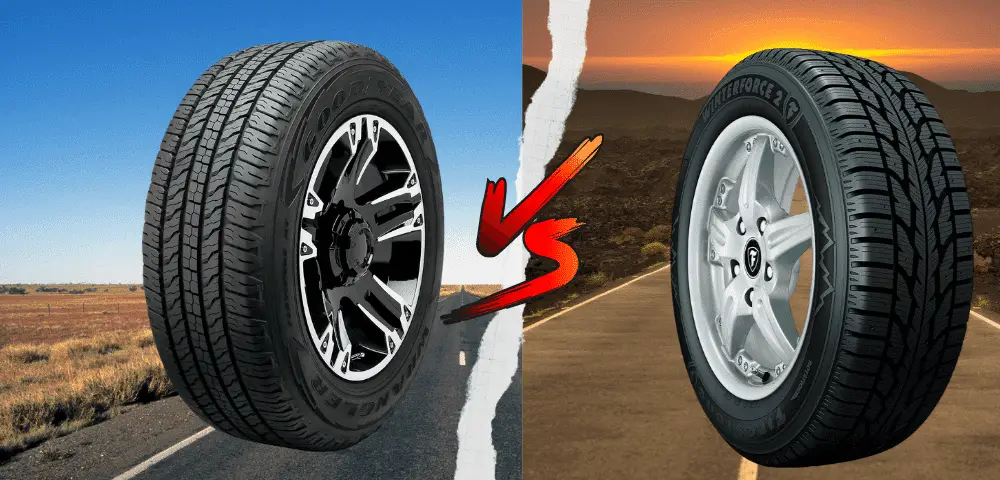
Short answer: Firestone tends to offer better value and sportier, summer-focused performance, while Goodyear has the broader lineup for winter, off-road, and all-terrain driving. Below, we break down the history, top models, specs, and real-world feedback for both brands so you can decide which is right for your vehicle.
Generally, car owners can agree that there are many tire brands in the world today, and one needs to be careful about which to choose.
There are top brands like Continental, Goodyear, Firestone, and Michelin. Among drivers, one of the most common debates is Goodyear vs Firestone — two American-rooted brands that have competed head-to-head for over a century.
If you’re also weighing other options, our guides on best all-terrain tires and what is a good treadwear rating can help round out your research.
Goodyear Vs Firestone: Tire Brands Compared
Goodyear Tires
When it comes to radial tires for sedans and passenger cars, Goodyear is one of the most recognized names in the industry, with billions of dollars in annual tire sales.
Goodyear was founded in 1898 by Frank Seiberling in Akron, Ohio. The company was named in honor of Charles Goodyear, the inventor of vulcanized rubber, though he had no direct involvement in founding the business.
The company’s earliest products included bicycle and carriage tires, horseshoe pads, and even poker chips.
A few years later, Goodyear moved into racing and passenger car tires, and today it remains one of the largest tire manufacturers in the world.
Firestone Tires
Around the same time, in 1900, the Firestone Tire and Rubber Company was founded, also in Akron, Ohio.
The company was built by Harvey Firestone, partly on the strength of his relationship with Henry Ford, whose early automobiles were fitted with Firestone tires.
In 1988, Bridgestone acquired Firestone, and the combined company remains one of the top tire suppliers in North America.
Today, this brand offers a wide range of tires for passenger cars, light trucks, motorcycles, snowmobiles, and racing applications.
Independently, Firestone and Goodyear remain among the largest tire manufacturers serving the North American market.
Given their long histories and overlapping product lines, it’s easy to see why drivers find it difficult to pick between them.
Goodyear vs Firestone: Quick Comparison Table
| Category | Goodyear | Firestone |
|---|---|---|
| Best for | All-terrain, winter, and off-road driving | Sporty performance and summer driving |
| Typical price range | Mid to premium | Budget-friendly to mid-range |
| Treadwear warranty (top models) | Up to ~85,000 miles (varies by model) | Up to ~65,000 miles (varies by model) |
| Ride comfort / noise | Good, varies by line | Often quieter on touring/all-season models |
| Handling | Strong on all-terrain and winter models | Strong on performance/summer models |
| 3PMSF snow-rated options | Yes (e.g., Wrangler DuraTrac) | Yes (e.g., Weathergrip) |
Note: Exact pricing and warranty mileage vary by tire size, speed rating, and retailer, so always confirm current figures before purchasing. See our treadwear rating guide for how these warranties are calculated.
Top 3 Goodyear Tire Models
Let’s take a look at some of the most popular Goodyear tires below.
Goodyear Wrangler DuraTrac


Goodyear Wrangler DuraTrac is a rugged on- and off-road tire designed for pickups, light trucks, and sport utility vehicles.
It’s one of the better mud-terrain options in its class thanks to a rugged tread compound that resists chipping and an aggressive, self-cleaning tread pattern built for stability in loose terrain.
This tire is built to handle winter, summer, and rough terrain alike.
It uses Goodyear’s TractiveGroove technology along with zigzag sipes and circumferential grooves to create biting edges that improve traction on dry and wet roads, as well as in deep mud and heavy snow.
The Wrangler DuraTrac carries the three-peak mountain snowflake (3PMSF) symbol, confirming it meets industry standards for severe snow performance.
Goodyear Endurance

Goodyear Endurance is a special-purpose tire designed solely for trailers — it is not intended for use on passenger vehicles or light trucks.
This tire is built for durability and long service life.
It uses a symmetric rib tread design to maximize rubber-to-road contact and stability under load.
It also has twin steel belts with two-ply nylon reinforcements to improve stability on paved roads.
Finally, the Goodyear Endurance includes a scuff guard on the sidewall to help resist curb damage and improve durability.
Goodyear Eagle F1 Asymmetric

Goodyear Eagle F1 Asymmetric is one of the better high-performance all-season tires in Goodyear’s lineup, designed specifically for coupes and sedans.
As an all-season tire, it’s built to handle dry, wet, and light snow conditions. Its asymmetric tread design — with different tread patterns on the inner and outer shoulders — helps balance dry handling with wet-road traction.
This performance tire has strong outboard tread blocks to enhance handling on dry surfaces, along with additional biting edges for rain and light snow.
For durability at high speeds, it uses twin steel belts with spirally wrapped polyamide cord cap reinforcements.
It also features Goodyear’s SoundComfort technology to reduce road noise and improve overall ride quality.
Top 3 Firestone Tire Models
Check out some of the top Firestone tires below.
Firestone Weathergrip
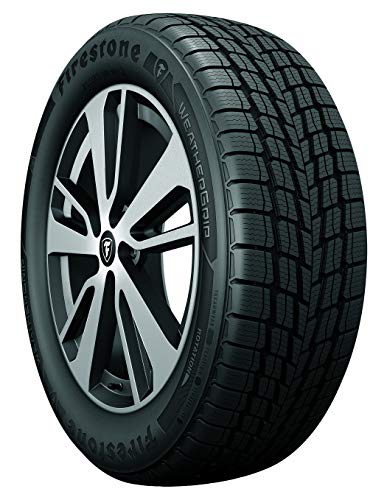
Firestone Weathergrip is an all-weather touring tire — not a dedicated winter tire, but one built to handle rain, light snow, and cold temperatures better than a typical all-season tire. It was designed for crossovers, sedans, coupes, and station wagons.
This tire has a unique tread compound molded into a traction-focused directional pattern for durability and stability.
It also comes with Hydro-Grip technology and full-depth grooves to help resist hydroplaning.
It has chamfered shoulder blocks that improve road contact and braking, plus Claw-Grip technology for light snow traction.
Firestone Weathergrip carries the three-peak mountain snowflake symbol, confirming its severe snow performance rating.
It also has high-density zigzag sipes and interlocking grooves that improve handling and durability at highway speeds.
Firestone Destination LE3
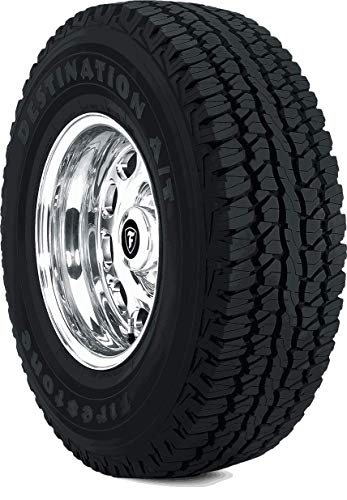
One of the most comfortable yet capable tires in Firestone’s lineup is the Destination LE3, a highway all-season tire built for crossovers, light trucks, and SUVs.
This tire is designed for long tread life thanks to an advanced rubber compound molded into a symmetric design, which helps deliver a smooth ride and predictable handling.
Like other all-season tires from Firestone, the Destination LE3 uses Hydro-Grip technology to help reduce hydroplaning and improve wet traction.
It also has full-depth 3D sipes for added grip in wet and light winter conditions, though it is not a substitute for a dedicated winter tire in harsh climates.
Firestone Firehawk

Firestone Firehawk is another strong option for dry and wet conditions. It’s one of Firestone’s high-performance all-season tires, designed for sports cars and sport sedans.
This tire pairs sporty handling with a silica-enhanced, Long Link Carbon tread compound for durability.
It also has full-depth grooves and sipes that create additional biting edges for hydroplaning resistance and light snow traction.
Lastly, the Firehawk has reinforced construction for precise handling and high-speed capability.
Features Face to Face
Now let’s compare Goodyear and Firestone across the factors that matter most to drivers.
Quality
Both brands produce some of the highest-quality tires in the industry, with options for light trucks, pickups, sedans, coupes, and passenger vehicles.
When it comes to sporty, performance-oriented tires specifically, Firestone’s lineup (like the Firehawk) tends to edge out Goodyear’s comparable options — though Goodyear counters with a broader range of specialty and all-terrain products.
Which Is More Durable?
While comparing the all-season lineups from both Goodyear and Firestone, it’s impossible not to consider durability.
Tread compound quality and construction both play a role here.
In this case, Goodyear generally has the edge for durability, especially in its on- and off-road, all-terrain lines that are built to handle rougher conditions.
Which Is More Affordable?
Affordability is an important factor when you buy tires online or from a local shop, since it determines what fits your budget.
Both Firestone and Goodyear are established brands, so pricing tends to sit above budget or off-brand tires. That said, Firestone’s lineup is generally priced more affordably than Goodyear’s comparable models, particularly in the performance and touring categories. Always compare current prices for your specific tire size, since pricing shifts frequently based on demand and retailer.
Ride Comfort and Road Noise
Firestone often has a slight edge in ride comfort on its touring and all-season lines. The brand integrates noise-reducing tread technology on several models to improve cabin quietness.
Handling
If you need responsive handling for winter driving, off-road terrain, or all-weather cornering, Goodyear tends to win thanks to its broader range of all-terrain and winter-capable tires.
Tread Life and Treadwear Warranty
Tread life varies significantly by specific model, so it’s hard to make a blanket statement for either brand.
As a general benchmark, Firestone’s Destination line typically carries treadwear warranties in the 60,000–70,000-mile range, while some of Goodyear’s touring models (like the Assurance MaxLife) offer warranties up to around 85,000 miles. These figures vary by tire size and speed rating, so always check the specific warranty listed for the tire you’re buying — see our treadwear rating guide for more detail.
Tire Warranty Coverage
Both brands offer a limited treadwear warranty on most passenger and light-truck tires, covering premature tread wear down to a specified depth, along with materials and workmanship defects.
Coverage details (mileage limits, prorated reimbursement, and included services like free tire rotations) vary by specific model for both Goodyear and Firestone, so it’s worth reading the fine print for the exact tire you’re considering rather than assuming one brand’s warranty is universally better.
Real-World Owner Feedback and Test Data
Beyond spec sheets, it’s worth checking independent sources like Tire Rack’s consumer ratings, ConsumerReports, and retailer review sections before buying.
In general, owners of the Goodyear Wrangler DuraTrac frequently praise its off-road traction and durability on gravel and mud, with some noting a firmer ride and slightly more road noise than comparable all-terrain tires.
Owners of the Firestone Firehawk commonly cite responsive handling and good value for a performance all-season tire, while noting that ultimate grip falls short of dedicated summer performance tires from premium brands.
As always, individual experiences vary by vehicle, driving style, and climate, so cross-check reviews for your specific tire size before purchasing.
Frequently Asked Questions
Is Goodyear the Same as Firestone?
No. Goodyear and Firestone are separate, competing brands, though both are legacy American tire makers headquartered in Akron, Ohio. Firestone has been owned by Bridgestone since 1988, while Goodyear remains an independent, publicly traded company.
Firestone tends to lean toward sportier, performance and summer-driving-focused tires, while Goodyear offers a broader range for extreme weather, all-terrain, and winter driving.
Is Firestone Cheaper Than Goodyear?
Generally, yes — Firestone’s tires tend to be priced a bit lower than comparable Goodyear models, though this varies by tire line and size. Always compare current prices for your exact fitment before deciding, since pricing changes frequently.
Are Goodyear Tires Better Than Firestone?
It depends on your priorities. Goodyear tends to perform better for winter driving and off-road use, with a more diverse product lineup overall. Firestone often edges ahead for affordability and sporty summer performance. Neither brand is universally “better” — the right choice depends on your vehicle and driving conditions.
Which Brand Lasts Longer, Goodyear or Firestone?
This depends on the specific model, but Goodyear’s higher-mileage touring tires (like the Assurance MaxLife) often carry longer treadwear warranties than comparable Firestone models. That said, actual tread life depends heavily on alignment, inflation pressure, driving habits, and rotation schedule.
Which Brand Is Better for Winter Driving?
Goodyear generally has the stronger winter and all-terrain lineup, including several tires rated with the three-peak mountain snowflake (3PMSF) symbol. Firestone also offers snow-rated options like the Weathergrip, but Goodyear’s range for harsh winter conditions is broader.
Conclusion
Looking for sportier, higher-performance summer tires at a competitive price? Consider Firestone.
Need the best all-terrain or winter-capable tires for off-road driving? Goodyear is generally the stronger pick.
Both companies also manufacture solid all-season tires, competing with other major brands like Michelin, Continental, and Dunlop. If you’re cross-shopping, our guide to best all-terrain tires and our treadwear rating explainer are good next reads.
Ultimately, choose the tire model — not just the brand — that best matches your vehicle, driving conditions, and budget, and confirm current pricing and warranty terms before buying.