
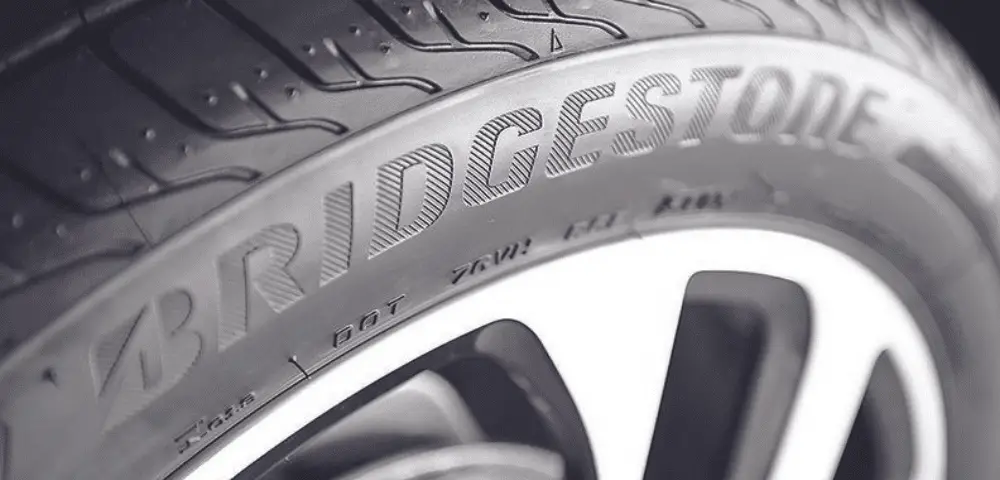
Bridgestone tires are known for combining long tread life, a quiet ride, and strong wet-weather traction across passenger cars, SUVs, and light trucks. If you’re trying to decide whether Bridgestone is the right tire brand for your vehicle, this guide covers the brand’s most popular current models, key specs, and how they compare to Michelin and Goodyear.
We’ll also clear up a common point of confusion in tire reviews: the difference between Bridgestone and Firestone, which are actually two separate brands owned by the same parent company.
Bridgestone vs. Firestone: What’s the Difference?
Bridgestone Corporation, headquartered in Tokyo, is the parent company of both the Bridgestone and Firestone tire brands. Bridgestone acquired Firestone in 1988, but the two brands are sold and positioned differently today.
Bridgestone-branded tires are generally the company’s premium, flagship products, while Firestone tires are marketed as a value-oriented alternative, mostly in North America. This review focuses specifically on tires sold under the Bridgestone name.
Background of Bridgestone Tires
Choosing the right tire brand can be overwhelming with so many options on the market, but Bridgestone tires are hard to miss — you’ll find them at nearly every major tire retailer because of the brand’s reach and reputation for quality.
Bridgestone’s manufacturing scale and rubber technology have made it one of the largest tire and rubber manufacturing companies in the world, and its tires come standard as original equipment on vehicles from many major automakers.
Founded in Japan, Bridgestone grew quickly into a global brand. Tire performance is generally ranked by category — ultra-high-performance summer tires, all-season touring tires, and off-road tires each have their own segment leaders — and Bridgestone competes near the top of most of these categories.
Michelin remains Bridgestone’s toughest competitor, particularly in premium touring and European markets, but Bridgestone consistently ranks among the top one or two tire manufacturers globally by sales volume.
Bridgestone’s lineup spans everyday passenger cars, SUVs, light trucks, and off-road vehicles, with pricing that varies by size, speed rating, and technology rather than a single fixed cost tier. Because tire pricing changes frequently by retailer and region, it’s best to check current pricing directly before buying.
Factors to Consider Before Buying Bridgestone Tires
Before buying a set of Bridgestone tires, it helps to weigh a few practical factors — the same factors that apply when comparing any tire brand.
Brand Reputation and OE Fitment
Brand reputation matters because it reflects real-world testing across millions of vehicles. Bridgestone tires ship as original equipment on many new cars, so there’s a good chance a vehicle built by a major automaker left the factory riding on Bridgestone rubber.
Whatever you drive — a sedan, SUV, or light truck — you’ll want a tire designed for the conditions you actually drive in, whether that’s dry summer highways or wet, cold winter roads.
Cost and Value
Cost is always a factor. Independent tire tests have repeatedly shown that Bridgestone tires — for passenger cars, light trucks, and heavy-duty applications alike — deliver strong performance for their price point.
Bridgestone offers options across most budget tiers, but its premium lines (like Turanza and Potenza) cost more than entry-level all-season tires. Compare total cost of ownership, including expected tread life and warranty coverage, rather than sticker price alone.
Size and Speed Rating Compatibility
Bridgestone builds most of its popular tire lines in a wide range of sizes, load indexes, and speed ratings. Always check your vehicle’s tire placard (inside the driver’s door) for the correct size, load index, and speed rating before choosing a model — especially with ultra-high-performance summer tires, which are size-specific.
Best Bridgestone Tires 2026
Bridgestone’s tire lineup changes over time as models are updated or discontinued, but the following have remained popular, widely available choices in recent years. Always confirm current availability, exact sizing, and warranty terms with a Bridgestone dealer or retailer before buying, since specs can vary by size.
Bridgestone DriveGuard Run-Flat — Best for Sedans and CUVs Without a Spare
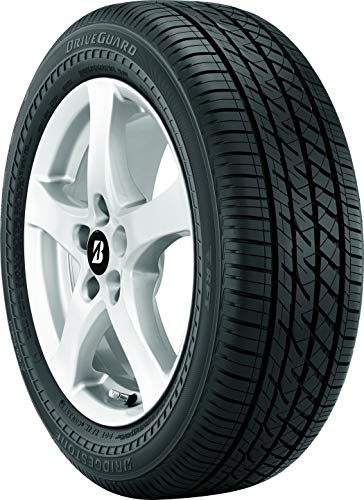

The DriveGuard is Bridgestone’s run-flat all-season tire, designed for sedans and crossovers that don’t come with a spare tire.
- Run-flat construction lets you drive up to roughly 50 miles at speeds up to 50 mph after a puncture, so you can reach a repair shop instead of changing a tire roadside
- All-season tread compound is built for year-round grip in wet and dry conditions, not just one season
- Available in sizes fitting most midsize sedans and compact-to-midsize crossovers, typically with H or V speed ratings
- Treadwear warranty coverage varies by size, generally in the 50,000-mile range — confirm exact terms with your retailer before purchase
Bridgestone Dueler H/L Alenza Plus — Best for SUVs and Crossovers
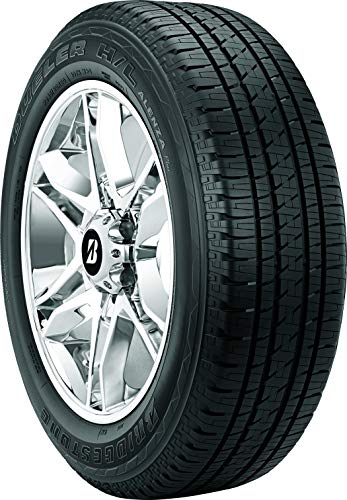
The Dueler H/L Alenza Plus is Bridgestone’s highway all-season touring tire, built for SUVs and crossovers that spend most of their time on pavement.
- All-season tread design delivers confident handling in both dry and wet conditions year-round
- Reinforced sidewall construction supports the heavier loads common in SUVs and crossovers while helping maintain a comfortable ride
- Owners frequently note a quiet, well-balanced ride, which the tire’s construction is designed to support
- Typically backed by a limited treadwear warranty of roughly 65,000–70,000 miles depending on size — verify exact coverage before purchase
Bridgestone Ecopia EP422 Plus — Best for Fuel Efficiency

The Ecopia EP422 Plus is a fuel-efficient all-season touring tire designed for sedans and coupes that prioritize efficiency without sacrificing comfort.
- Low rolling resistance tread compound improves fuel efficiency compared to standard all-season tires while resisting uneven wear
- Optimized tread design increases wet-road traction and stability
- Sold in a range of sizes fitting compact to midsize sedans, typically with a treadwear warranty around 65,000 miles depending on size
Bridgestone Turanza QuietTrack — Best for a Quiet, Comfortable Ride
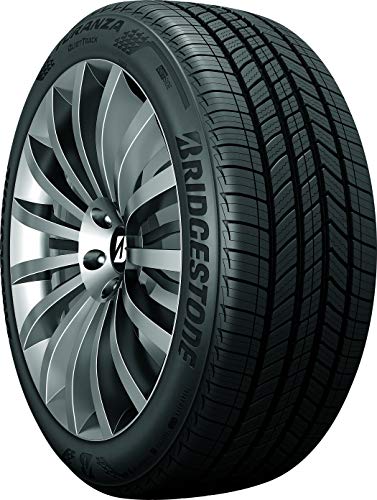
The Turanza QuietTrack is Bridgestone’s flagship comfort-oriented all-season touring tire, aimed at drivers who prioritize a quiet cabin and long tread life over aggressive handling.
- Engineered tread pattern and internal noise-reduction technology combine for one of the quieter rides in Bridgestone’s lineup
- All-season compound retains grip in light snow and wet conditions, not just dry pavement
- Comfort-tuned construction helps absorb small road imperfections and expansion joints
- Backed by one of Bridgestone’s longer treadwear warranties, commonly in the 65,000–80,000-mile range depending on size — confirm exact terms with your retailer
Bridgestone Dueler A/T — Best for Off-Road SUVs and Trucks
The Dueler A/T family covers Bridgestone’s all-terrain lineup for trucks and SUVs that split time between pavement and light off-road use.
- Aggressive shoulder tread blocks improve traction on gravel, mud, and light off-road terrain compared to highway tires
- Reinforced casings are built to handle the added weight of trucks and towing setups
- Sizing and warranty coverage vary widely across the A/T lineup, so confirm specs for your exact fitment before buying
Bridgestone Blizzak — Best for Winter Driving
Blizzak is Bridgestone’s dedicated winter tire line, built specifically for snow, ice, and cold-weather grip rather than year-round use.
- Soft, cold-weather-optimized rubber compound stays flexible in freezing temperatures for better grip than all-season tires
- Dense siping improves traction on snow and ice, and many Blizzak sizes carry the severe snow service (three-peak mountain snowflake) rating
- Like most winter tires, Blizzak models typically carry shorter or no treadwear warranty since they’re intended for seasonal use, not year-round mileage
Bridgestone Potenza — Best for Performance Driving
Potenza is Bridgestone’s performance-focused line, spanning ultra-high-performance summer and all-season tires for sports cars, sport sedans, and performance-trim SUVs.
- Stiffer sidewalls and performance tread compounds are tuned for sharper steering response and higher cornering grip than standard touring tires
- Many Potenza sizes carry W, Y, or (Y) speed ratings for high-speed vehicles
- Treadwear is generally shorter than touring or all-season tires, which is typical of performance-oriented tread compounds across all brands
Design Features and Benefits
Several design features have shaped Bridgestone’s response to market demands over the years. Here’s what tends to set the brand apart.
Quality
One thing that makes Bridgestone tires stand out is attention to quality control, backed by a dedicated quality assurance process for its products.
To deliver ultra-high performance, Bridgestone builds touring all-season tires designed to provide extra traction across a wide range of conditions.
Handling
Review ratings consistently show that Bridgestone’s touring all-season tires provide better-than-average traction and control compared to budget alternatives.
Tire quality is only part of the equation — handling matters just as much, and it’s an area where Bridgestone has built a strong reputation.
Wear
The wear resistance of these tires has been a standout thanks to Bridgestone’s advanced tread compound technology.
Ultra-high-performance summer tires remain a major part of the range, engineered to deliver strong grip and durability especially during warmer months.
Road Feedback
Responsive steering feel matters on winding roads, and Bridgestone’s touring and performance lines are tuned to communicate road conditions clearly without excessive harshness.
Multiple owner reviews highlight that Bridgestone’s tread designs deliver this feedback while still keeping road noise low — a combination that’s harder to achieve than it sounds.
How Bridgestone Compares to Michelin and Goodyear
All three brands make excellent tires, but they tend to emphasize different strengths. Here’s a general comparison based on how each brand’s mainstream touring and all-season lines are typically reviewed:
| Category | Bridgestone | Michelin | Goodyear |
|---|---|---|---|
| Wet traction | Very good | Excellent | Very good |
| Dry handling | Very good | Very good | Good to very good |
| Ride comfort / noise | Excellent (Turanza line) | Excellent | Very good |
| Treadwear warranty | Typically 50,000–80,000 miles depending on model | Typically 60,000–85,000 miles depending on model | Typically 55,000–75,000 miles depending on model |
| Price positioning | Mid to premium | Premium | Mid to premium |
Michelin generally edges out competitors in wet braking and longevity tests, but often at a higher price. Bridgestone and Goodyear typically offer comparable performance at a slightly lower cost, with Bridgestone’s Turanza line standing out specifically for cabin quietness.
What Do Owners and Testers Say?
Independent tire-testing organizations and retailer review platforms — such as consumer ratings hubs and tire-specific test programs — consistently place Bridgestone’s touring and highway all-season tires near the top of their categories for ride comfort and tread life.
Owner reviews commonly cite quiet highway performance and predictable wet-weather grip as the brand’s biggest strengths. Some budget-conscious buyers note that Bridgestone’s premium lines cost more upfront than comparable tires from value brands, which is worth factoring into your decision.
Pros and Cons
Pros
- Consistently strong build quality backed by extensive quality control
- Owner reviews frequently report improved traction after switching from stock or budget tires to Bridgestone
- Wide model range covering everyday commuting, SUVs, performance driving, and off-road use
Cons
- Premium lines can cost more upfront than budget or mid-tier competitors
- Warranty claims typically require proof of proper maintenance, such as regular rotations, which some owners find inconvenient to track
Frequently Asked Questions
Is Firestone the same as Bridgestone?
No. Firestone is a separate brand owned by Bridgestone Corporation. Bridgestone-branded tires are generally positioned as the premium line, while Firestone tires are marketed as a more budget-friendly option, mainly in North America.
Are Bridgestone tires better than Michelin?
Both brands make excellent tires. Michelin often leads independent tests in wet braking and long-term tread life, while Bridgestone competes closely on comfort, noise, and value in its comparable model tiers. The better choice depends on your priorities and vehicle.
How long do Bridgestone tires last?
Most Bridgestone all-season and touring tires carry treadwear warranties ranging from roughly 50,000 to 80,000 miles, depending on the specific model and size. Actual tread life depends on driving habits, alignment, rotation schedule, and road conditions.
Which Bridgestone tire is best for SUVs?
The Dueler H/L Alenza Plus is Bridgestone’s dedicated highway all-season tire for SUVs and crossovers, offering a comfortable ride and reinforced construction for heavier vehicles. Drivers who need off-road capability should look at the Dueler A/T line instead.
Does Bridgestone make a good winter tire?
Yes. The Blizzak line is Bridgestone’s dedicated winter tire family and is widely regarded as one of the stronger options for snow and ice traction. Because winter tires trade off dry-pavement longevity for cold-weather grip, most drivers run them seasonally rather than year-round.
Are Bridgestone tires expensive?
Bridgestone tires span a wide price range. Entry-level and Firestone-branded options are competitively priced, while Bridgestone’s premium lines, like Turanza and Potenza, are priced closer to Michelin’s premium offerings. Pricing also varies significantly by tire size and retailer.
Conclusion
Overall, Bridgestone tires consistently earn positive reviews for build quality, comfort, and wet-weather traction, making them a solid investment for most drivers.
If your vehicle needs to handle a range of climates and terrains, Bridgestone’s combination of tread technology and construction quality makes it a strong contender against Michelin and Goodyear.
Just remember that Bridgestone and Firestone are related but distinct brands, and that Bridgestone’s own lineup changes over time — so confirm current model availability, sizing, and warranty terms before you buy.
Choosing the right tire is ultimately a balance of budget, driving conditions, and vehicle type, but the models and comparisons covered here should help you make a confident choice.