
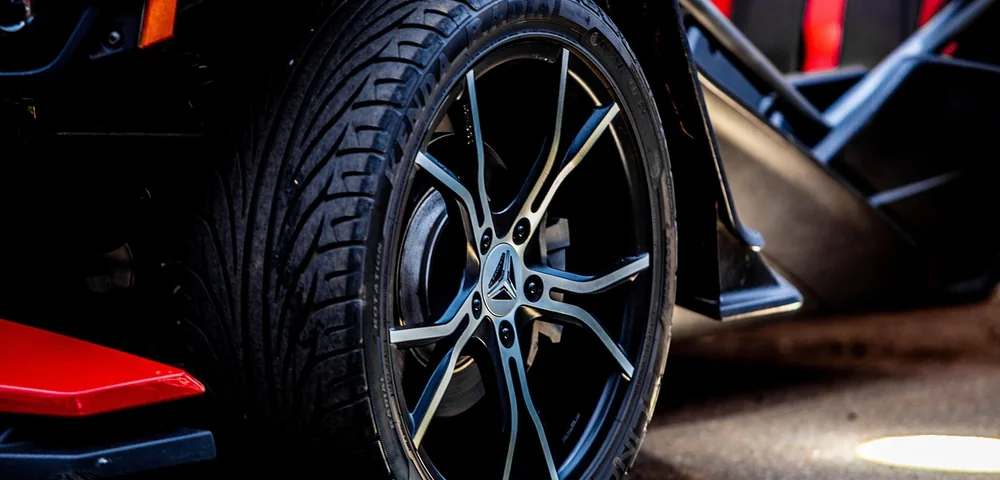
Douglas is Walmart’s in-house tire brand, manufactured by Cooper Tire and sold exclusively through Walmart stores and Walmart.com. If you’re asking whether Douglas tires are any good, the short answer is: they’re a legitimate budget option built by an experienced manufacturer, but they’re tuned for price and convenience rather than performance or longevity. They make sense for daily commuters on a tight budget who drive moderate annual mileage, and they make less sense for anyone who wants top-tier grip, long tread life, or a quiet, cushioned ride. Below, we break down the full range, how the tires actually perform, what they cost to own over time, and who should (and shouldn’t) put them on their car.

Who Makes Douglas and Where They Sit in the Market
Douglas is a private-label brand owned by Walmart, not an independent tire manufacturer. The tires are produced by Cooper Tire and Rubber Company, a long-established American tiremaker now part of the Goodyear family after Goodyear’s acquisition of Cooper in 2021. That parentage matters: Douglas tires share manufacturing know-how, some compound science, and quality-control processes with Cooper’s own branded lines, even though the two are positioned very differently in the market.
Douglas sits firmly in the value tier, similar in positioning to brands like Kelly (also Goodyear-family) or other Walmart-adjacent budget names. The goal isn’t to chase Michelin or Bridgestone on performance metrics — it’s to give price-sensitive shoppers a serviceable, DOT-compliant tire at the lowest possible entry cost, backed by the convenience of buying and having it installed at the same store where you do your grocery shopping. If you want to understand how Cooper’s own engineering philosophy compares to a mainstream competitor, our General Tire vs Cooper Tire comparison is a useful reference point for what the parent company brings to the table.
Douglas Tire Range: Main Lines and What Each Is For
Douglas keeps its lineup simple and consumer-friendly, which is typical of house brands aimed at shoppers who don’t want to research forty SKUs before buying.
- Douglas All-Season: The core touring tire for sedans, coupes, and small crossovers. Designed for year-round commuting in mild-to-moderate climates, with a focus on ride comfort and low price rather than aggressive grip.
- Douglas Performance: A step up in speed rating and a slightly stiffer, more responsive tread compound, aimed at drivers with sportier sedans or coupes who still want a budget price point.
- Douglas XTreme Terrain / SUV-CUV lines: Sized for crossovers, minivans, and light SUVs, with reinforced sidewalls and tread patterns tuned for slightly heavier vehicles rather than off-road use.
There’s no dedicated Douglas winter tire in most markets, and there’s no serious light-truck or all-terrain line comparable to what you’d find from brands like Wild Country or Carlisle. If your vehicle needs a true LT-rated tire for towing or heavy cargo, check the load range on your current tire’s sidewall — our tire load range guide explains how to read that — because Douglas’s range skews toward passenger and light crossover use, not commercial-duty applications.
Performance: Dry, Wet and Winter Grip
In dry conditions, Douglas tires deliver adequate, unremarkable grip. Braking distances and cornering grip are noticeably behind premium all-season tires, but for normal commuting speeds and routine lane changes, most drivers won’t feel unsafe. The Performance line firms this up slightly with a stiffer sidewall and shorter braking distances than the standard All-Season line, but it still won’t match a genuine performance all-season from Michelin, Continental, or Bridgestone.
Wet performance is where budget all-season tires generally show their age fastest, and Douglas is no exception. The tread compounds prioritize tread life and low rolling resistance over soft, grippy rubber, which means wet braking distances lengthen more than premium tires as the tire wears past 50% tread depth. Hydroplaning resistance at highway speeds in heavy rain is acceptable when tread is fresh but degrades noticeably in the tire’s second half of life.
Winter performance is the weakest point. Douglas all-season tires are not built with the low-temperature-flexible compounds or the tread geometry of a true winter tire, so they harden in cold weather and lose grip on snow and ice well before a dedicated winter tire or even a quality all-weather tire would. If you live somewhere that regularly sees sustained sub-freezing temperatures or real snowfall, plan on a separate winter tire set rather than expecting the Douglas all-season to carry you through.
Tread Life, Warranty and Value for Money
Douglas tires typically carry treadwear warranties in the 40,000 to 65,000-mile range depending on the specific line, which is modest compared to premium touring tires that often claim 70,000 to 85,000 miles. In real-world use, expect the lower end of that range if you drive aggressively, live somewhere hot (heat accelerates tread wear and compound hardening), or skip regular rotations.
The genuine value proposition isn’t tread life — it’s upfront cost. Douglas tires are consistently among the cheapest DOT-approved options you can buy, and Walmart’s installation and rotation services add convenience that’s hard to beat for a low-mileage driver. If you do the math on cost-per-mile rather than sticker price alone, a Douglas tire that lasts 45,000 miles at a low purchase price can still lose to a mid-tier tire that costs more but lasts 70,000 miles — so it pays to run the numbers for your specific mileage habits rather than assuming cheaper is automatically better value.
Warranty claims are handled through Walmart rather than a direct manufacturer relationship in some cases, which can simplify returns for defects but may complicate prorated treadwear claims. Read the fine print before buying, and see our tire warranty guide for what’s typically covered and what isn’t across brands like this.
Road Noise and Ride Comfort
Ride comfort on Douglas All-Season tires is generally soft and forgiving over small bumps and expansion joints, which suits their target buyer — commuters in sedans and crossovers who prioritize a smooth daily drive over sharp handling feedback. The tradeoff is a tread compound and sidewall construction that isn’t optimized for noise suppression at highway speed. Expect a noticeable increase in road drone and tire hum compared to premium touring tires, especially as the tread wears and the block edges become less effective at breaking up airflow and road contact noise.
This isn’t unique to Douglas — most budget tiers make the same compromise, trading acoustic engineering for cost savings. If road noise is a major concern for you, it’s worth comparing Douglas against other value-tier options like Laufenn or Kelly Edge A/S, both of which occupy similar price territory but sometimes post quieter cabin readings in independent testing. A common mistake buyers make is assuming all budget tires sound the same — they don’t, and a few decibels of difference is very noticeable on a long highway drive.
How Douglas Compares with Rivals at the Same Price
At Douglas’s price point, the realistic competitive set includes other budget and private-label brands rather than mainstream names like Michelin or Bridgestone.
| Brand | Typical Strength | Typical Weakness |
|---|---|---|
| Douglas | Lowest upfront cost, wide Walmart availability | Shorter tread life, average wet/winter grip |
| Kelly (Goodyear family) | Slightly better wet grip, wider retailer network | Similar noise levels, comparable price |
| Laufenn | Backed by Hankook engineering, decent ride quality | Less widely stocked than Douglas |
| Primewell | Goodyear-family, good all-around value | Not always cheaper than Douglas |
The pattern across this tier is consistent: you’re choosing between very similar performance envelopes, and the deciding factors often come down to local pricing, warranty terms, and which store is most convenient for installation — not dramatic differences in grip or durability.
Who Should Buy Douglas Tires — and Who Shouldn’t
Douglas tires make sense for drivers who put on modest annual mileage, live in a temperate climate without harsh winters, and want the lowest possible entry price with no-fuss installation at a store they already visit. They’re a reasonable choice for a second car, a teen driver’s first vehicle, or a short-term ownership situation where maximizing tread life isn’t the priority.
They’re a poor fit for high-mileage highway commuters who need long tread life to keep cost-per-mile down, for anyone in a region with real winter weather, and for drivers of performance-oriented cars who want confident wet grip and precise handling. If you’re chasing a specific fitment for a particular vehicle — say, sizing for a compact sedan — it’s worth comparing against dedicated guides like our best tires for Mazda 3 roundup to see how a value tire stacks up against purpose-picked options for your car. And before buying any replacement tire, always double-check the size and load index against your current tire’s sidewall using our guide to reading a tire sidewall, since fitment mistakes are one of the most common and costly errors budget-tire shoppers make.
Frequently Asked Questions
Are Douglas tires made by a real tire manufacturer?
Yes. Douglas tires are manufactured by Cooper Tire and Rubber Company, now part of Goodyear, exclusively for sale through Walmart. They aren’t a no-name import brand — they’re produced using an established tiremaker’s manufacturing infrastructure, just built to a lower price target than Cooper’s own branded lines.
Do Douglas tires come with a warranty?
Most Douglas lines include a limited treadwear warranty, typically in the 40,000 to 65,000-mile range depending on the specific model, plus standard workmanship and materials coverage. Warranty service is generally handled through Walmart, so keep your receipt and follow the recommended rotation schedule to keep any prorated coverage valid.
Are Douglas tires good in snow?
The all-season line offers basic cold-weather traction similar to most passenger all-season tires, but it is not designed for serious winter conditions. If you regularly drive in snow or ice, a dedicated winter tire will significantly outperform any Douglas all-season model.
How do Douglas tires compare to Cooper’s own branded tires?
Cooper’s branded lines generally use more advanced compounds and tread designs aimed at a broader performance range, while Douglas is engineered specifically to hit an aggressive price point. Expect Cooper-branded tires to outperform Douglas on tread life and wet/dry grip, though Douglas benefits from some shared manufacturing quality control.
Is it worth paying more for a different budget brand instead of Douglas?
It depends on your mileage and climate. If cost-per-mile matters more to you than upfront price, compare treadwear warranties and independent test data across brands like Kelly, Laufenn, or Primewell before deciding — a slightly higher purchase price can pay for itself if the tire lasts meaningfully longer.