

Nobody wants to have good tires more than car owners. It is an important vehicle part because it primarily enhances movement from one location to another.
With several tire brands on the market today, it is almost impossible to choose one. However, Goodyear tires and Continental tires are two of the world’s largest manufacturers and have been competitors for years.
Quick answer: Neither brand is universally “better.” Continental generally has a reputation for quiet, comfortable all-season and performance tires with strong wet-weather grip, while Goodyear offers a broader lineup that includes some of the most respected winter and light-truck/trailer tires on the market. The right choice depends on the specific model, your vehicle, and your driving conditions — not the badge on the sidewall.
The aim of this article is to compare the two manufacturers across price, warranty, tread life, and performance so you can make an informed decision.
Continental vs Goodyear: At a Glance
| Category | Continental | Goodyear |
|---|---|---|
| Founded | Germany, 1871 | USA, 1898 |
| Typical Tread Warranty* | ~60,000–80,000 miles, depending on model | ~55,000–85,000 miles, depending on model |
| Price Positioning* | Mid-range; often competitively priced versus premium rivals | Mid-to-premium; varies widely by model and size |
| Ride Comfort / Noise | Strong reputation for quiet, smooth rides | Comfortable, competitive noise levels |
| Wet Traction | Excellent across most lines | Excellent across most lines |
| Winter Performance | Strong (WinterContact line) | Strong, often cited as a category leader (WeatherReady/Ultra Grip lines) |
| Best For | All-season commuting, performance driving | All-season and dedicated winter needs, trucks/SUVs, trailers |
*Prices and warranty terms vary by tire size, model, and retailer, and change over time. Always confirm current pricing and warranty terms with the manufacturer or retailer before buying.
Continental Tires
Continental is a German company that produces automotive parts including car tires. It is also called “Conti,” and was founded in 1871.
At the time of inception, this tire company released tires made of rubber; by 1898 it had begun manufacturing plain tread tires, and by 1904 Conti had produced a wide range of tires, including some of the first grooved tires in the industry.
Continental remains one of the largest tire companies in the world, with thousands of tire products across passenger, light truck, and commercial segments.
Continental AG is headquartered in Hanover, Germany, with a major North American production plant in Fort Mill, South Carolina, USA. Schaeffler Group holds a significant minority stake in Continental AG, though the two remain separate companies.
Goodyear Tires
Goodyear is also one of the world’s leading tire manufacturers. It started out as “The Goodyear Tire and Rubber Company,” named after chemist Charles Goodyear (though he had no direct involvement in founding it).
Goodyear’s first factory opened in Akron, Ohio, in 1898. The company initially produced rubber tires for bicycles and carriages, then moved into racing tires around 1901 under co-founder Frank Seiberling.
Historically, Goodyear was one of the most successful tire suppliers in Formula One history, credited with well over 350 race wins before exiting the sport as a tire supplier in the late 1990s.
Today, Goodyear operates manufacturing and business facilities across numerous countries, with a significant manufacturing presence in the United States.
Goodyear and Continental are both incredible tire manufacturers, and it’s only fair to acknowledge what they have in common even as competitors. Both tire brands share certain qualities:
- Top-tier reputation: Both are recognized among the largest, most trusted tire manufacturers in the world, known for durable tires across seasons and terrains.
- Heavy R&D investment: Both spend significantly on testing, research, and development to improve tire construction and performance.
- Proprietary technologies: Both adopt innovative technologies to improve tire performance. Continental uses technologies such as ContiSense, Run-Flat, ContiAdapt, EcoPlus, and vibration-reduction features. Goodyear uses technologies such as Air Maintenance, RunFlat, 3D-BIS, and Electric Drive-oriented tread compounds.
- Broad price range: Both offer tires across a wide price spectrum, from budget-friendly all-season models to premium performance and winter tires, alongside other well-known brands like Michelin.
What Tire Models Is Continental Known For?
Continental’s current lineup spans all-season, performance, and touring categories. Some of its most popular models include:
Continental CrossContact LX20


CrossContact LX20 is designed eco-friendly for crossovers, SUVs, and light-duty pickups. Continental’s current lineup also includes the newer CrossContact LX25 and CrossContact LX Sport, which build on the same platform with updated compounds.
This tire family delivers strong performance in fuel efficiency and durability, aided by Continental’s EcoPlus technology for a smoother ride.
It uses an all-season tread compound suited to a wide range of road conditions, including light snow.
The tread features a symmetric design with notched outboard shoulders, independent intermediate tread blocks, and continuous center ribs, which together support:
- Strong straight-line stability
- Responsive on-road steering
- Improved wet traction via four circumferential grooves
- A comfortable ride thanks to reinforced twin steel belts
Continental ExtremeContact Sport
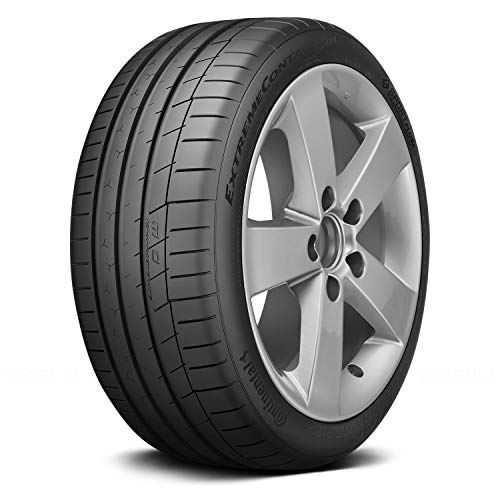
The ExtremeContact Sport is a Max Performance Summer tire designed for sports cars, sedans, and luxury vehicles (a related ExtremeContact DWS06 Plus is Continental’s popular all-season/all-weather alternative).
This tire performs well on both dry and wet roads thanks to its SportPlus technology, delivering precise handling.
- Patented Silane tread compound for durable, active performance
- Two-ply polyester construction for ride comfort
- Two high-tensile steel belts for high-speed capability
- Wide outer shoulder tread blocks for lateral grip and high-speed handling
- Deep circumferential grooves to reduce hydroplaning risk
Continental ContiProContact / PureContact LS

The ContiProContact was long one of Continental’s most popular grand-touring all-season tires. It has largely been succeeded in Continental’s current lineup by the PureContact LS and TrueContact Tour, which use similar all-season principles with updated compounds. Some retailers may still carry ContiProContact stock or comparable replacement models.
These grand-touring tires typically feature all-season versatility with technology aimed at wet traction, responsive handling, and low road noise.
An advanced tread compound molded into a symmetric design improves steering response, while twin steel belts support uniformity and durability at highway speeds. Many models in this class also incorporate low rolling-resistance technology depending on tire size.
Other current Continental tires worth considering include the TrueContact Tour, PureContact LS, TerrainContact H/T, and VikingContact 7 (a dedicated winter tire).
What Tire Models Is Goodyear Known For?
Goodyear’s current lineup includes several strong options for passenger cars, trucks, and trailers:
Goodyear Eagle Sport / Eagle RS-A Legacy

The Eagle RS-A was historically a high-performance all-season tire used as Original Equipment (O.E.) for sports coupes, sedans, and many law enforcement vehicles. It has largely been phased out and replaced in Goodyear’s current lineup by tires like the Eagle Sport A/S and Eagle Touring, which carry forward similar all-season, high-performance traits. If you’re shopping today, check current availability and consider these successors.
These tires typically use a high-performance tread compound with an asymmetric tread pattern to improve dry and wet traction.
- Outer shoulder tread blocks and wide lateral grooves for steering response and cornering grip
- Four circumferential grooves plus lateral grooves to reduce hydroplaning risk
- Reinforced steel belts for durability
Goodyear Unisteel G614 RST (Legacy Trailer Tire)
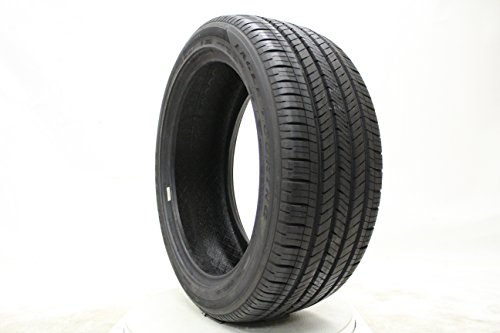
The Unisteel G614 RST is a legacy special-trailer (ST) radial designed for trailers, light trucks, and RVs. It remains available through some retailers, though many buyers now also consider Goodyear’s Endurance line for trailer applications.
This tire uses a shallow tread design for even wear and reduced running temperature, supporting performance and fuel efficiency.
- Rib edge sipes to improve traction
- Lateral grooves to reduce hydroplaning risk on wet roads
- Rounded shoulders for rib stability
- Re-treadability on many sizes
Goodyear Endurance

Goodyear Endurance is a special-purpose trailer tire — it is not designed for light trucks or passenger cars.
It’s built as an all-terrain trailer tire with a rounded profile, symmetric tread design, and closely spaced ribs for stable highway performance.
- Twin steel belts and two-ply nylon reinforcement for tread stability, traction, and durability
- Long-lasting wear characteristics
- Molded scuff guard in the sidewall for extra durability
Other notable current Goodyear tires include the Assurance WeatherReady 2, Assurance MaxLife, Wrangler Territory (successor to Wrangler RS-A), and Fortera SL.
Design Features and Technologies – Feature by Feature
Both manufacturers make excellent products, but a closer look at specific factors helps clarify where each brand tends to stand out.
Quality
Before buying Continental or Goodyear tires, quality is one of the most important factors to weigh, since it directly affects safety and usability.
Both brands produce genuinely high-quality tires, and independent testing organizations regularly rate top models from each manufacturer well. There isn’t a universal winner here — quality depends heavily on the specific tire line you’re comparing rather than the brand as a whole.
Goodyear offers a particularly broad range of tires suited to different vehicle types — summer and winter options for passenger vehicles, light trucks, trailers, sedans, and coupes — while Continental is especially strong in the touring and performance all-season categories.
Who’s More Durable
Durability is one of the top factors considered when choosing tires from major brands like Goodyear, Continental, and Michelin.
No car owner wants a tire that wears out quickly, and both brands invest heavily in tread compounds and internal construction to extend tire life.
In practice, durability comparisons come down to the specific model and tire size rather than a blanket brand advantage. Continental’s touring and all-season lines are frequently praised for even wear and long tread life, while Goodyear’s winter-specific and light-truck/trailer tires are often noted for standing up well to demanding conditions. Checking the treadwear rating and warranty mileage of the exact model you’re considering is a more reliable way to judge durability than brand alone.
Price and Affordability
Both brands belong to the industry’s most established tire companies, and both offer models across a range of price points.
Generally speaking, Continental’s mainstream touring and all-season tires tend to be priced competitively, often on par with or slightly below comparable Goodyear models, while Goodyear’s pricing spans a wider range from budget-friendly to premium depending on the tire line.
Because pricing changes frequently and varies by tire size, retailer, and current promotions, it’s best to compare current prices for the exact size and model you need rather than relying on a fixed brand-wide average.
Ride Comfort / Road Noise
Ride comfort and noise levels are heavily influenced by a tire’s internal construction and tread design.
Continental has a strong reputation for quiet, comfortable rides, often attributed to its noise-reducing tread designs and internal construction. Goodyear also produces comfortable, competitively quiet tires, though it markets this benefit less prominently as a standalone technology.
Handling
Handling measures how responsive a tire is to accelerating, braking, and steering inputs.
Tire width and compound — not brand alone — are the biggest factors in handling characteristics. Wider, performance-oriented tires (available from both Continental and Goodyear) generally provide stronger dry-road grip, while narrower all-season or touring tires from either brand tend to prioritize comfort and wet/winter traction.
When comparing handling between specific Continental and Goodyear models, it’s more useful to compare tires within the same category (e.g., performance summer vs. performance summer) than to generalize across the whole brand.
Tread Life
Tread life is an important factor that determines how a tire performs over time and mileage.
Treadwear ratings estimate relative expected life: a tire with a treadwear rating of 300 is expected to last roughly three times longer than a reference tire rated at 100, under standardized test conditions.
Tread depth is another key factor — the vertical measurement of a tire’s tread pattern from the top of the rubber to the base of the grooves. Deeper tread generally supports longer usable tread life.
As with durability, tread life is best compared model-to-model rather than brand-to-brand. Continental’s touring all-season tires are frequently rated for high treadwear numbers, and several Goodyear all-season and winter models also carry strong treadwear ratings. Always check the specific treadwear rating and mileage warranty printed on the tire or listed by the manufacturer for the model you’re considering.
Tire Warranty Coverage
Tread warranty length is another factor that can distinguish specific models between the two brands, and it directly affects how long you can expect to use a tire before it wears out under normal conditions.
Many mainstream all-season tires from both brands carry tread warranties in the 55,000 to 85,000-mile range, though exact terms vary significantly by model, and performance-oriented tires often carry shorter or no mileage warranty.
Some Continental touring tires also include limited Road Hazard coverage for a set period after purchase; Goodyear offers similar road hazard protections on select lines as well. Because warranty terms change and vary by model, confirm the current warranty details directly with the manufacturer or retailer before purchasing.
Real-World Testing & User Reviews
Beyond manufacturer specs, it’s worth checking independent test results and owner reviews before buying. Sites like Tire Rack and Consumer Reports regularly publish comparative wet-braking, dry-handling, and winter-traction data for current Continental and Goodyear models, and these results can shift as each brand updates its lineup.
In general, owner feedback tends to praise Continental for ride quality and quiet operation, and Goodyear for well-rounded all-season and winter performance, particularly on trucks and SUVs. Since both brands regularly refresh their lineups, it’s a good idea to read reviews for the specific current model and size you’re considering rather than relying solely on brand reputation.
Frequently Asked Questions
Is Goodyear better than Continental?
Goodyear and Continental have long competed to make the best tires for road use, but neither is objectively “better” across the board.
The right choice always depends on your vehicle, budget, and driving conditions.
Goodyear may offer exactly what you need in one category (like winter or trailer tires), while Continental may be the stronger pick in another (like quiet touring or performance tires) — and vice versa.
Conclusion
Are you looking for new tires for your family car, SUV, light truck, or sedan and trying to decide between Goodyear and Continental?
This article has covered the history, current model lineups, and key comparison points — price, warranty, tread life, and performance — for both brands.
Use the comparison table and model breakdowns above as a starting point, but always confirm current pricing, warranty terms, and independent test results for the specific tire size and model you’re considering, since lineups and pricing change over time.
Remember, the best brand for you depends on your vehicle and driving needs, not on which company is “bigger.”