

Finding the right tire to perform those massive burnouts, with huge plumes of smoke, is a challenging task.
Therefore, we have compiled this comprehensive guide to the best tires for burnouts.
Whether you are looking for a special set of drag radials or just looking to upgrade the tires on your sports car, we’ve got you covered.
Safety note: Burnouts and drifting put extreme stress on tires, wheels, and drivetrain components, and they are illegal on public roads in most places. Only attempt burnouts on private property or at a sanctioned event, with proper safety gear, spectators clear of the vehicle, and a car that is mechanically sound. Tireforge does not encourage unsafe or illegal driving; this guide is intended for closed-course and track use.
What are burnout tires?
No production tire is officially rated for burnouts — they’re built as racing, drag, or drift tires, and burnout is really a byproduct of that performance focus.
These tires are high-performance tires with a lot more going on than a standard family-car tire. When it comes to a proper burnout, your regular car tire generally isn’t built for it.
The tread on these tires uses specialized rubber compounds engineered to hold up under the high heat generated during burnouts.
Ultra-high-performance tires also feature stiffer sidewall construction and reinforced body ply materials.
Together, this results in tires that can deliver strong burnout performance in sports cars (and in some cases even regular ones) when traction control is off and proper technique is applied.
Achieving a good result depends on more than tires, though. A great burnout is a combination of tires, car, surface, weather conditions, and technique — get those five factors right and you can leave a serious cloud of smoke behind.
What kind of tires do drift cars use?
It should be no surprise that drift cars use specialized tires designed specifically for that purpose.
By following the steps mentioned later in this article, a daily driver may be able to pull off a burnout or even a donut on regular tires.
But doing so repeatedly will almost certainly damage the tire’s internal structure and increase the risk of a blowout or loss of control.
The best drift car tires generally offer a wide contact patch for maximum grip and a low profile to sharpen handling. They’re also frequently paired with larger-diameter wheels, which helps drivers manage traction loss in a controlled way.
Drift racers also select tires based on the surface they’re running on.
Drifting on asphalt, a parking lot, gravel, or a wet surface will all call for different tires to get optimal handling and grip.
Best Tires for Burnouts: Quick Comparison
Prices and exact specs change often, so treat the figures below as general guidance rather than guaranteed numbers — always confirm current pricing, tread depth, and size availability with the manufacturer or retailer before buying.
| Tire | Price Tier | Approx. Tread Depth | Best Use Case |
|---|---|---|---|
| Pirelli P Zero | Mid-range | ~10/32 in | All-around performance and burnouts on a budget |
| Goodyear Eagle Sport All-Season | Budget | ~10/32 in | Daily driving with occasional light burnouts (not a dedicated performance tire) |
| Michelin Pilot Super Sport | Premium | ~9-10/32 in | Track-inspired grip and even wear |
| Toyo Proxes R888R | Mid-range to premium | ~6/32 in | Dry-weather grip and composed drifting |
| Yokohama Advan Apex V601 | Mid-range | ~9/32 in | Casual summer drifting with longer tread life |
| Falken Azenis RT615K+ | Mid-range | ~7-8/32 in | Balanced daily driver / occasional drift use |
| Federal 595RS-RR | Mid-range to premium | Varies by size | Track use, including wet conditions |
| Hankook Ventus V2 | Budget | Varies by size | Entry-level daily/drift crossover |
| Kenda Kaiser KR20A | Budget | Varies by size | All-weather budget performance |
| Ohtsu FP7000 | Budget | Varies by size | Occasional parking-lot burnouts |
The Best Tires for Burnouts
1. Pirelli P Zero High-Performance Tire


The Pirelli P Zero is a longtime favorite in the world of ultra-high-performance tires. It’s a strong first choice of tire for racing and drifting, without the price tag of the most exotic options.
The P Zero line is engineered to perform in high-temperature situations, which makes it a solid pick for burnouts.
It also has a long track record and a large base of owner reviews, which makes it easier to gauge real-world performance before you buy.
2. Goodyear Eagle Sport All-Season Tire

We’re including this one with a caveat: the Eagle Sport is an all-season touring tire, not a dedicated performance or drift tire. It won’t match the grip, heat resistance, or wear characteristics of the purpose-built tires on this list.
That said, it’s a reasonable budget-friendly option for drivers who mostly need a solid daily tire and only occasionally want to pop off a light burnout in a parking lot, with the understanding that repeated hard use will wear it out much faster than an all-season tire is designed for.
If burnouts and drifting are a regular activity rather than an occasional stunt, skip this one in favor of a true performance or drag radial tire.
3. Michelin Pilot Super Sport Performance Radial Tire
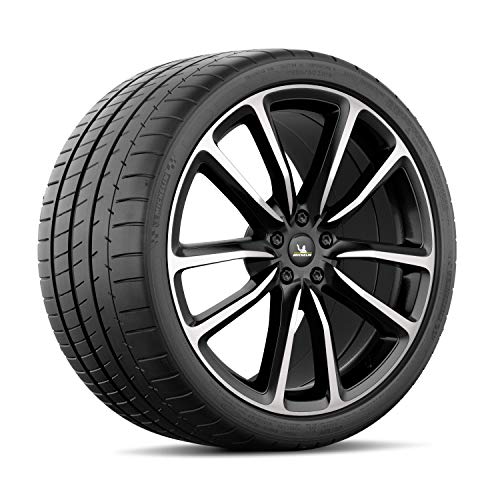
Typically one of the pricier tires on this list, but also one with serious sporting pedigree, drawing on Michelin’s endurance-racing tire engineering.
Note that Michelin has continued to update its ultra-high-performance summer lineup over the years (including the Pilot Sport 4S), so check current availability and confirm which model is being sold before you buy — sizing and compound details can differ between generations.
The Pilot Super Sport is tuned for even wear across the contact patch, which suits it well to repeated burnouts without destroying the tire in one session.
It also performs well across a range of vehicle weights, making it a versatile all-around pick in this category.
4. Toyo Tires Proxes R888R Racing Radial Tire

Toyo Tires brings Japanese manufacturing quality to this dedicated racing radial, known for strong cornering performance.
The R888R is available across a range of wheel sizes, so check current fitment for your specific wheel diameter rather than assuming one size fits most applications.
It offers excellent traction on dry surfaces, which makes it a favorite for composed drifts — but like most DOT-legal race compounds, grip drops off noticeably in wet or cold conditions, so treat it primarily as a dry-weather or track-day tire rather than an all-weather option.
Tread depth on this tire is shallower than a standard street tire by design (a common trait of DOT race radials), which supports grip but means it isn’t well suited to snow or long-term daily use.
Overall, the Toyo Proxes R888R is a solid choice if your goal is occasional dry-weather drifting or track days.
5. Yokohama Advan Apex V601

Another Japanese-engineered tire, designed for performance cars and sport sedans.
One of the more attractive traits of the Advan Apex is its relatively generous tread depth for a performance summer tire.
That’s good news for casual drifters, since more starting tread generally means more usable life before the tire needs replacing.
Yokohama uses silica-enhanced rubber compounds and a performance-inspired tread pattern to help maintain even wear under hard use.
It sits in the mid-range price bracket and works well as a summer drift and performance tire.
6. Falken Azenis RT615K+

The Azenis RT615K+ sits in the middle of this list on both price and performance, making it a good intermediate choice for drivers who want to drift a mid-powered performance car without stepping up to a full race compound.
These tires strike a reasonable balance between track manners and daily-driver comfort.
Note that Falken has released newer designs in this family (such as the RT660), so confirm which generation you’re buying, as size availability and compound can vary between them.
They make up for a somewhat narrower size range with a deeper-than-average tread for a performance tire, which supports decent longevity under moderate drift use.
7. Federal 595RS-RR Performance Radial Tire

The Federal 595RS-RR is a purpose-built track tire, with even stiffness across the center and shoulder areas to maximize grip and wear consistency.
It sits toward the higher end of the mid-range price bracket and, unlike several tires on this list, is also designed with wet-weather performance in mind.
Its flame-shaped grooves are designed to channel water away from the contact patch, reducing hydroplaning risk when drifting or driving hard in the rain.
The 595RS-RR suits sporty coupes well, and its wide footprint helps provide confidence-inspiring stability at higher speeds.
8. Hankook Ventus V2 Concept 2

The Hankook Ventus V2 is a budget-friendly, entry-level performance tire that works well on lower-horsepower sport coupes and sedans.
It carries a longer treadwear grade and lower rolling resistance than dedicated drift tires, which helps with everyday fuel economy.
It’s a good fit for drivers who mainly want an all-season performer but also want the option of an occasional light burnout without destroying the tire.
Its internal construction uses high-density reinforcement to help keep the contact patch stable during hard cornering.
9. Kenda Kaiser KR20A

Another budget-friendly entry on this list.
The Kenda Kaiser is a high-performance all-weather tire that can handle light drifting and burnouts without a huge investment.
It’s a sensible pick for drivers who want a capable all-weather tire before wet-season driving arrives, with the option of the occasional fun burnout on the side.
10. Ohtsu FP7000 Tire

The Ohtsu FP7000 is generally the most affordable tire on this list.
Ohtsu is known for budget-friendly designs that still deliver a comfortable ride and responsive handling.
Keep in mind that heavy, repeated drifting isn’t recommended on these tires, but occasional parking-lot burnouts shouldn’t cause serious harm.
Why High-Performance Tires Matter for Burnouts
The tires best suited for burnouts are typically ultra-high-performance or drag-race tires.
These are often racing slicks or near-slicks, specially constructed to give excellent traction and offer the largest possible contact patch between the tread and the surface.
Pair a tire like that with a high-horsepower drag car and you have the recipe for a serious burnout.
For most drivers, that setup isn’t realistic, so the goal becomes getting the best burnout results within a more modest budget.
In reality, burnouts aren’t just a function of the tire — they depend on the car, the surface, technique, and only then the tire itself.
With that in mind, let’s answer some of the most common questions we get about burnout tires and burnouts in general.
Detailed Guide to Tire Burnouts: How-To’s & Top Questions
Are Cheap Tires Best for Burnouts?
It depends on your definition of “cheap.” Burnouts shed a lot of rubber, so if you’re doing them regularly, the cost adds up fast.
Conventional wisdom says it’s smarter to practice burnouts on older or worn-out tires you were planning to replace anyway, rather than sacrificing a new set.
Once you’ve got your technique down, you can invest in a proper performance or drift-specific tire from your local tire shop.
Depending on the brand and size, dedicated performance or drift tires can range from budget-friendly to several hundred dollars per tire, so shop around and compare current pricing before committing.
How Bad Is a Burnout for Your Tires?
Doing burnouts on regular family-car tires is generally a bad idea.
Most drivers who try it end up flat-spotting their tires or, in worse cases, damaging them beyond safe use.
If you’re running purpose-built tires and using proper technique, you can get away with a lot more — but even performance tires wear down quickly under repeated burnouts.
How Do I Get More Smoke Out of My Tires?
It’s easy to get some smoke out of a tire; it’s much harder to perform a controlled, safe burnout.
Swerving or hard braking at speed can make tires or brakes smoke, but these methods are dangerous and can cause a loss of vehicle control. Avoid them on public roads.
The big, controlled plumes of smoke you see at burnout contests come from special drag or drift tires being spun at an optimal temperature window, on a closed course, with the vehicle stationary or moving in a controlled way.
How to Do a Burnout Safely
Many people assume that all you need to do is hold the brakes and mash the accelerator until the rear wheels lose grip.
A safe, controlled burnout takes a bit more setup than that — and again, this should only be attempted on private property or a sanctioned event, never on a public road.
Follow these steps if you want to do it properly:
Step 1: Use the right car. Manual-transmission cars with higher horsepower are generally easiest for burnouts. Automatic cars can do it too, but it’s a bit trickier to pull off cleanly.
Step 2: Use the right tires. Regular road tires are engineered with safety and longevity in mind, which limits how much smoke and how clean a burnout you can get.
A dedicated high-performance or drift-oriented tire with a wide contact patch will give noticeably better results.
Step 3: With the right car and tires, put the car in first gear (or D for automatics) and build revs gradually by slowly pressing the accelerator.
Keep the clutch fully engaged so the car doesn’t move.
Step 4: Set the handbrake to help keep the car in place. Once the rear tires are hot enough, release the clutch and the rear wheels should spin freely, producing smoke.
Step 5: Feather the accelerator to maintain wheel spin, and use the brake pedal only to slow down or stop.
You can also release the handbrake to move forward and perform a rolling “peel out” instead of a stationary burnout.
Final Thoughts
Whether you’re a drifting enthusiast or just looking to put on a good show, mounting a tire designed for the job makes a real difference.
Good high-performance tires can also reduce the risk of losing control during these extreme maneuvers, though no tire eliminates that risk entirely — always practice in a safe, legal environment.
We hope this list helps you make an informed decision the next time you’re shopping for tires built for burnouts, drifting, or general performance driving.