
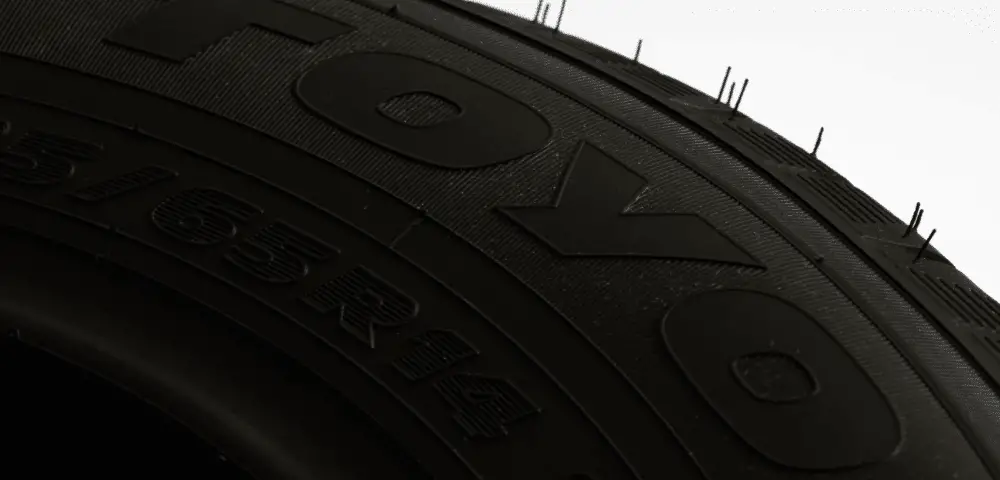
At one point in time, you may have had to mention tire manufacturers that you know, as a car owner. Out of those you mention, you are probably patronizing one of them.
However, you don’t have to stick with one brand all your life – sometimes, a change might be what your car needs to move effectively on the road.
With that being said, check out this Toyo tires review, including what actual owners say about ride quality, wear, and value, plus current pricing context and how Toyo stacks up against brands like Michelin, Firestone, and Yokohama.
Overview of Toyo Tires
Toyo Tire is one of the most respected tire manufacturers in the world, particularly known for light truck, SUV, and crossover tires.
The company, founded in 1945 in Japan, produces all-terrain and mud-terrain tires for light trucks, SUVs, crossovers, and passenger cars.
Toyo expanded into the United States in the 1960s, and its U.S. operations are now headquartered in Cypress, California, with domestic manufacturing supporting the North American market. The brand has also built a strong reputation through motorsport participation over the decades.
This tire manufacturer is committed to making great tires for outdoor and off-road use.
It designs its tires to handle a wide range of terrain and weather conditions without sacrificing on-road performance.
Toyo invests heavily in research and development so drivers across different vehicle types can find a tire suited to their needs.
The manufacturer uses advanced rubber compounds and construction techniques aimed at improving performance and fuel efficiency.
Who Makes Toyo Tires?
Toyo Tire is a Japanese tire manufacturer and one of the best-known brands among off-road enthusiasts.
It has positioned itself as a forward-looking brand, including participation in the Sustainable Natural Rubber Initiative (SNR-i).
Independent and manufacturer testing across a range of light truck, passenger, and SUV tires has generally shown Toyo tires to perform reliably across varied road and weather conditions, which is echoed in many Toyo Tire reviews and owner feedback.
Notable Toyo Tire Models
When it comes to Toyo Tire reviews, a handful of models consistently come up. Note that lineups change over time, so always confirm current availability and sizing for your vehicle before buying. These are the most notable current and recent models:
Toyo Extensa A/S II


The Extensa A/S II is one of Toyo’s core all-season touring tires. It’s built for passenger cars and minivans that need a comfortable, long-wearing daily driver rather than outright performance.
This tire is designed for extended tread life, using a symmetric, non-directional tread pattern that allows for easy cross-rotation to help even out wear.
An optimized center block arrangement improves road contact for a comfortable ride, while still delivering confident, predictable handling.
Other features include four wide circumferential grooves with variable-pitch channels to reduce hydroplaning risk and improve wet traction, a shoulder rib that connects shoulder blocks for added stability, and multi-wave sipes for all-season traction.
Some sizes in Toyo’s touring lineup have shifted toward the newer Extensa A/S 3 over time, so check current fitment for your vehicle before purchasing. For a deeper look, see our full Toyo Extensa A/S II review.
Toyo Proxes ST III All-Season

For pickup trucks, SUVs, and crossovers wanting a sportier ride, the Toyo Proxes ST III All-Season has long been one of the brand’s popular street/sport-truck options.
The tire is built around a directional tread design and a silica-based compound aimed at balancing dry handling with wet and light-snow traction.
The silica compound also helps reduce rolling resistance while improving wet grip and resistance to hydroplaning.
An offset tread pattern helps reduce pipe resonance for a quieter, smoother ride than more aggressive truck/SUV tires.
Other features include a high-hardness bead filler and jointless bead wire for responsive handling, multi-wave sipes to reduce irregular wear, and reinforced steel belts for ride comfort and durability.
As with any tire line, availability of the ST III can vary by size and region, and Toyo has continued to develop newer performance all-season options such as the Proxes Sport A/S. Confirm current specs and sizing with a retailer before buying.
Toyo Open Country A/T III

The Open Country A/T III is the current generation of Toyo’s popular all-terrain line for light trucks, SUVs, and crossovers, succeeding the earlier A/T II.
It’s built for drivers who want capable off-road traction without giving up on-road comfort, quietness, and tread life — a common priority highlighted in owner reviews.
Depending on size, the A/T III lineup includes options that carry the 3-Peak Mountain Snowflake (3PMSF) severe snow service rating, making it a reasonable choice for drivers who see winter weather but don’t want a dedicated mud-terrain tire.
Read our dedicated Toyo Open Country A/T III review or see how it compares with rivals in our best all-terrain tires guide.
Toyo Open Country M/T
For drivers who need a dedicated mud-terrain tire, the Toyo Open Country M/T remains a legendary option in the Open Country family, known for its strength, durability, off-road traction, and comparatively long tread life for a mud-terrain design.
It uses an aggressive tread pattern designed to bite through mud, snow, and rocky terrain.
The tread compound incorporates tough, cut- and chip-resistant materials that support durability, off-road handling, and impact resistance.
The tire also features deep siping in the tread blocks to improve wet traction and wide circumferential grooves with open channels to help self-clean and eject mud and snow.
As a mud-terrain tire, the Open Country M/T trades some on-road comfort and quietness for off-road capability — a tradeoff to weigh against all-terrain options like the A/T III. See our full Toyo Open Country M/T review for size-by-size details.
Toyo Tire Comparison: Top Models at a Glance
Here’s a quick side-by-side look at Toyo’s most popular models to help you narrow down the right tire for your vehicle and use-case. Always verify current specs and warranty terms for your exact size, since these can vary.
| Model | Best For | Typical Treadwear Warranty | Key Strength |
|---|---|---|---|
| Extensa A/S II | Passenger cars & minivans | ~65,000 miles (varies by size) | Comfort & tread life |
| Proxes ST III All-Season | Sport trucks, SUVs, crossovers | Typically limited or no mileage warranty on performance-oriented sizes | Handling & wet traction |
| Open Country A/T III | Light trucks, SUVs, crossovers (all-terrain) | ~50,000–65,000 miles (varies by size) | On-road comfort with off-road capability |
| Open Country M/T | Serious off-road/mud-terrain use | No mileage warranty (typical for mud-terrain tires) | Off-road traction & durability |
Features & Benefits
Still on Toyo Tire reviews, let’s look at the features and benefits that show up most consistently across the lineup.
Handling
Toyo tires are remarkably known for one thing – precise handling.
Toyo’s all-terrain and touring tires are engineered so the tread supports different road surfaces without losing grip, which owners frequently cite as a strength in real-world use.
Tread design also plays into traction for winter, wet, dry, and snowy conditions.
Under the UTQG system, tires are given a wet traction grade from highest to lowest (AA, A, B, or C). Most passenger and touring tires, including many Toyo models, carry an A traction grade.
Durability
Durability is another area where Toyo tires are frequently praised compared to competitors.
Toyo uses durable rubber compounds, often incorporating silica, to help balance wear resistance with wet traction and rolling resistance.
This construction is a big part of why Toyo’s all-terrain and mud-terrain tires hold up well across mixed and rugged terrain.
Quietness/Noise
Another consistently praised feature of Toyo’s touring and all-terrain tires is how quiet they run for their category.
Many models use noise-reducing tread designs and offset tread patterns to minimize pipe resonance and highway drone.
That said, more aggressive off-road models like the Open Country M/T will always be louder at highway speed than street or all-terrain tires — that’s a tradeoff of the tread design, not a flaw.
Treadwear Warranty: What the Numbers Actually Mean
It’s easy to confuse two different numbers here, so let’s separate them clearly.
The UTQG treadwear grade (a number like 400, 500, or 700 printed on the tire) is a comparative rating, not a mileage or year figure. It’s based on manufacturer testing against a reference tire graded at 100. A tire graded 600 is expected to wear roughly six times longer than the reference tire under the same controlled test conditions — but this number cannot be directly translated into miles or years, and it isn’t standardized across brands.
The mileage treadwear warranty is a separate, specific promise from the manufacturer (for example, “65,000 miles”) that applies to certain touring and all-season models. Off-road-focused tires, like most mud-terrain tires including the Open Country M/T, typically carry no mileage warranty at all, since off-road use accelerates and varies wear too much to guarantee.
For Toyo’s passenger and touring all-season tires, mileage warranties commonly fall in the 45,000 to 85,000-mile range, depending on the specific model and size. Always check the warranty for your exact tire size, as it can vary within the same model line, and see our treadwear rating guide for more detail.
Fuel Efficiency
Toyo has invested in nano balance technology, a compounding approach that works at the molecular level of the rubber to help balance grip, wear, and rolling resistance.
Lower rolling resistance generally translates into modest improvements in fuel efficiency, particularly on touring and all-season tires designed with this goal in mind.
Off-road-oriented tires like the Open Country M/T prioritize traction over rolling resistance, so fuel efficiency gains are less of a focus for that category.
Cost of Toyo Tires
Toyo generally sits in the mid-range price tier, above budget brands but below premium options like Michelin or Continental — similar territory to brands like Cooper, General, and Falken.
Exact pricing depends heavily on tire size, model, and retailer, and changes over time, so it’s best to compare current prices at a few retailers rather than rely on a fixed number. As a rough guide, expect touring and passenger models to be less expensive per tire than larger all-terrain or mud-terrain sizes for trucks and SUVs.
Consumer Reactions & Ratings
Beyond manufacturer claims, it’s worth looking at what real owners report after putting miles on their Toyo tires.
Across major tire retailers and review platforms, Toyo’s most popular models tend to earn consistently positive feedback, generally landing in the four-star range out of five. Common themes in owner reviews include:
- Praise for ride comfort and quietness, especially on the Extensa A/S II and Open Country A/T III.
- Strong marks for off-road traction on the Open Country M/T, with owners frequently citing confidence in mud, rocks, and loose terrain.
- Solid wet and light-snow performance reported for the Proxes ST III and newer Proxes Sport A/S.
- Occasional complaints about tread life on more aggressive or performance-oriented models, which is typical for tires prioritizing grip over longevity.
- Generally favorable value perception, with many owners noting Toyo tires perform closer to premium-brand tires than their price tier would suggest.
As with any tire brand, individual experiences vary by vehicle, driving style, climate, and alignment/maintenance habits, so it’s worth reading recent reviews for your specific size before buying.
Frequently Asked Questions
Are Toyo tires good?
Yes. Toyo has built a strong reputation for light truck, SUV, minivan, and passenger car tires.
The company continues to invest in research, development, and engineering of tire compounds and tread designs aimed at improving road performance, comfort, and off-road capability.
Are Toyo tires better than Firestone?
It depends on the specific models you’re comparing — the two brands are closely matched overall.
Firestone is a well-established name in the tire industry with a strong lineup across passenger, truck, and SUV segments, making it a reasonable alternative for Toyo shoppers. See our full Firestone tires review for details.
Specific models will differ in tread depth, warranty length, and intended use, so the better choice comes down to comparing the exact tires you’re cross-shopping rather than the brand as a whole.
Which is better, Yokohama or Toyo Tire?
Neither brand is universally “better” — it depends on your priorities.
Toyo Tire and Yokohama are both well-respected companies, but their lineups lean in slightly different directions. Yokohama tends to have a strong presence in sportier, higher speed-rated tires, which can mean shorter tread life in exchange for grip.
Toyo tends to emphasize touring and all-terrain comfort with strong tread life, particularly in its Extensa and Open Country lines. See our Yokohama tires review for a closer comparison.
Your best choice depends on speed rating needs, expected tread life, and intended use (on-road vs. off-road).
How do Toyo tires compare to Michelin or BFGoodrich?
Michelin generally sits in the premium price tier and is often the benchmark for tread life and refinement, while Toyo typically offers strong performance at a lower price point. See our Michelin tires review for more.
BFGoodrich is Toyo’s closest direct competitor in the off-road space — the BFGoodrich KO2 is frequently cross-shopped against the Open Country A/T III and M/T. Differences tend to come down to specific tread design preferences and available sizing rather than one brand being clearly superior. Check our BFGoodrich tires review for a side-by-side look.
How do I read a Toyo tire’s size and load index?
Toyo tire sizes follow the standard format used across the industry, for example P235/65R17 104H: the width (235mm), aspect ratio (65% of width), radial construction (R), wheel diameter (17 inches), load index (104), and speed rating (H).
The load index corresponds to the maximum weight the tire can carry at its rated pressure — for example, a load index of 104 supports roughly 1,984 lbs per tire. Always match or exceed your vehicle manufacturer’s recommended load index; never go below it.
Are Toyo tire warranties good?
Yes, Toyo’s warranty coverage is competitive with other mainstream brands.
Most Toyo passenger and touring all-season tires carry a mileage-based treadwear warranty (commonly in the 45,000–85,000-mile range depending on the model and size), plus workmanship and materials coverage. Off-road-focused tires like the Open Country M/T typically don’t carry a mileage warranty, which is standard for that tire category across all brands.
Check current Toyo Tires warranty information for the specific terms on your model and size.
Conclusion
The goal of this Toyo Tires review was to give you a clear, current picture of the brand.
We covered Toyo’s background and manufacturing footprint, its most notable current model lineup (Extensa A/S II, Proxes ST III, Open Country A/T III, and Open Country M/T), and the features, warranty terms, and pricing tier that define the brand.
We also looked at what real owners consistently say in their reviews, and how Toyo stacks up against alternatives like Firestone, Yokohama, Michelin, and BFGoodrich.
Overall, Toyo Tires remain a strong option for vehicle owners (light truck, SUV, minivan, passenger car) who want a balance of off-road capability, on-road comfort, and value. For more help choosing, see our best all-terrain tires guide and treadwear rating guide.
Toyo Popular Tires
ALL-SEASON TIRES
PERFORMANCE TIRES
TRUCK TIRES