
Ever tried starting your car and it just won’t turn over? Maybe you jumped the battery only to find the real problem was somewhere else entirely — like a cracked radiator.
Most car owners can relate to this. Your car rarely just “stops working” out of nowhere. Usually, there were warning signs you noticed but ignored.
If a mechanic tells you that you have a cracked radiator, the next question is: “How did this happen?” This guide covers the real causes, warning signs, safety risks, repair costs, and prevention tips — with a quick FAQ at the end for common questions.
How Do Radiators Crack? Common Causes
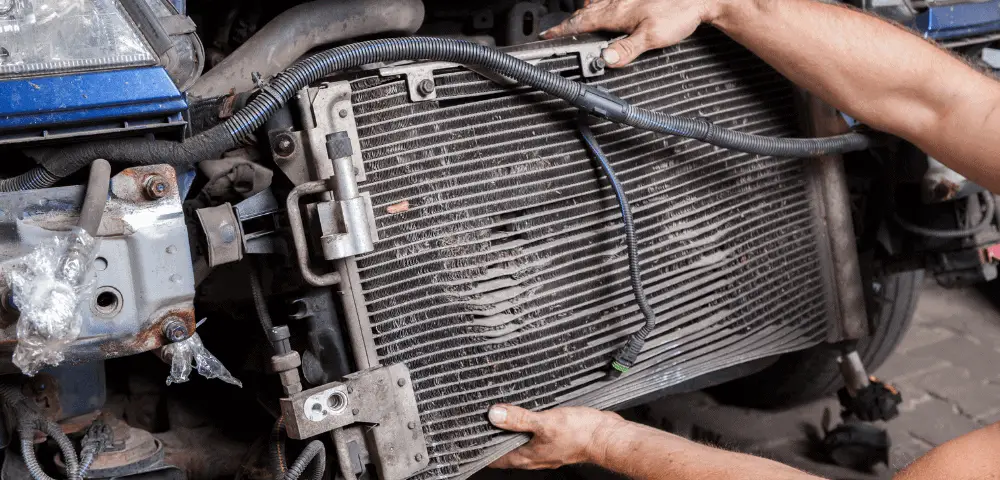
The radiator is a vital part of your vehicle’s cooling system. It works alongside the thermostat, water pump, and hoses to pull heat away from the engine and keep it running at a safe operating temperature.
Radiators are built to last for years, but several issues can cause cracks over time, including the following.
Faulty or Stuck Thermostat
The thermostat is a temperature-sensitive valve that controls how much coolant flows between the engine and the radiator. It doesn’t add coolant to the system — it simply opens and closes to regulate flow.
If the thermostat sticks closed, coolant can’t circulate properly. This traps heat and builds excessive pressure inside the cooling system, which can eventually stress and crack the radiator, especially at plastic tank seams. If it sticks open, the engine may run cooler than normal, but this is less likely to directly damage the radiator.
Leaking or Blown Head Gasket
The head gasket seals the engine block and cylinder head, keeping coolant, oil, and combustion gases separate. When it fails, combustion gases can leak into the cooling system, creating abnormal pressure spikes that the radiator isn’t designed to handle.
Over time, this added pressure can crack radiator tanks or seams, so a blown head gasket and a cracked radiator often show up together.
Road Debris
If you drive off-road often, or even on rough highways, rocks and debris kicked up from the road can strike the radiator, which sits directly behind the front grille. A direct hit can crack the core or tanks instantly.
Bad Radiator Fan
The radiator fan pulls air through the radiator to help cool the coolant, especially at low speeds or while idling. If the fan fails, airflow drops, the coolant can’t shed heat efficiently, and the engine overheats.
Repeated overheating cycles stress the radiator’s plastic tanks and welded seams, which can eventually lead to cracks.
Extreme Weather
Temperature extremes put real stress on a radiator.
In hot weather, the radiator and cooling system work harder to keep the engine from overheating, which can accelerate wear on an already weak or aging radiator.
In freezing weather, coolant that’s old, diluted, or mixed incorrectly can partially freeze and expand inside the radiator, cracking the core or tanks. This is why maintaining the correct coolant-to-water ratio matters year-round.
Corrosion and Age
Older metal radiators and radiator caps can corrode internally over years of use, especially if coolant isn’t flushed on schedule. Corrosion weakens metal, thins radiator fins, and makes cracks far more likely. Even modern radiators with plastic tanks and aluminum cores can degrade with age as the plastic becomes brittle from repeated heat cycles.
Signs of a Cracked Radiator
A damaged radiator usually gives you warning signs before it fails completely. Watch for these symptoms, and get the vehicle inspected at the first sign of trouble to avoid a full radiator replacement later.
Leaking Coolant
One of the first signs of a cracked radiator is a coolant leak. Coolant is typically bright green, orange, pink, or yellow, depending on the formula. If you see a puddle like this underneath your car, especially near the front, it likely means the radiator, a hose, or a connected fitting is leaking.
Coolant Level Keeps Dropping
If you keep having to top off the coolant reservoir but never see an obvious leak on the ground, the coolant may be leaking internally or evaporating through a small crack. Either way, a consistently low coolant level is worth investigating right away.
Engine Overheating
When the radiator can’t hold or circulate enough coolant, the engine temperature climbs above normal. If your temperature gauge creeps toward the red zone or a warning light appears, pull over and let the engine cool before continuing.
Repeated or prolonged overheating can cause serious engine damage, including a warped cylinder head or a blown head gasket.
Corrosion Around the Radiator Cap
Discoloration, white residue, or rust around the radiator cap is often a sign of a slow leak or a developing crack near the cap seal.
What Happens If Your Radiator Cracks?
Once a radiator cracks, a chain reaction usually follows:
First, coolant leaks out of the crack, often visible as fluid pooling under the front of the car.
Second, with less coolant circulating, the engine starts running hotter than it should, which can quickly lead to overheating.
Third, prolonged overheating can cause significant engine damage, including warped components and a failed head gasket.
Finally, a low coolant level affects the entire cooling system, including the water pump, which relies on coolant flow to stay cool and operate properly. A water pump that runs dry or overheats can fail prematurely.
Is It Safe to Drive With a Cracked Radiator?
No — driving with a cracked radiator is risky and can lead to expensive engine damage.
A cracked radiator won’t necessarily stall your car immediately. It may take some time before you notice overheating, leaks, or performance issues. But once you know the radiator is cracked, you should stop driving and have it repaired or replaced as soon as possible.
Continuing to drive on a cracked radiator can cause the engine to overheat severely enough to warp the cylinder head, blow the head gasket, or in extreme cases, seize the engine entirely — all of which are far more expensive to fix than a radiator.
An overheating engine can also cause a sudden loss of power or stalling, which is dangerous in traffic and could contribute to a serious accident.
If you notice steam coming from under the hood while driving, pull over safely, turn off the engine, and stay away from the hood until it cools — the cooling system is pressurized and can cause serious burns.
How Long Can You Drive With a Cracked Radiator?
If your radiator cracks mid-trip, you may be able to limp the car a short distance — roughly 5 to 10 miles at low speed with the heater on full blast to help pull heat off the engine — but this varies a lot depending on the size of the crack, how much coolant remains, and outside temperature.
Watch the temperature gauge closely. If it starts climbing quickly, pull over immediately rather than trying to reach a specific destination. It’s always safer to have the vehicle towed than to risk major engine damage.
How Much Does It Cost to Fix a Cracked Radiator?
Radiator repair or replacement cost depends heavily on your vehicle’s make and model, labor rates in your area, and whether the radiator is repairable or needs full replacement.
As a general guide, a professional radiator replacement (parts and labor) commonly falls somewhere in the range of a few hundred dollars for common vehicles up to well over a thousand dollars for luxury or performance models. Small cracks in accessible plastic tanks are sometimes repairable with a specialized sealant or epoxy for considerably less than a full replacement, though this is usually a temporary fix rather than a permanent solution.
If you’re comfortable doing the work yourself, buying just the radiator part and doing the swap in your driveway can cut the cost significantly, since labor typically makes up a large share of the total bill. Always get a quote from a local, ASE-certified repair shop for an accurate estimate, since prices vary by region and vehicle.
How to Prevent Radiator Cracks
Monitor the Radiator Fan and Cooling System
One of the best ways to prevent radiator cracks is to keep an eye on your cooling system as a whole, not just the radiator itself.
The radiator fan, water pump, hoses, and thermostat all work together to keep the engine at a safe temperature. If any one part fails, it puts extra strain on the rest of the system, including the radiator.
If you notice a bad radiator fan or other cooling system component, have it replaced at a trusted auto repair shop as soon as possible.
Check for Leaks Regularly
Periodically check underneath your vehicle for signs of a coolant leak, and keep an eye on the coolant reservoir level. Catching a small leak early can prevent a bigger radiator failure down the road.
Flush and Replace Coolant on Schedule
Old or contaminated coolant loses its ability to protect against corrosion and can clog the radiator’s internal passages over time. Follow your owner’s manual’s recommended coolant flush interval, and always use the coolant type specified for your vehicle, mixed to the correct ratio with water.
Watch Your Temperature Gauge
Get in the habit of glancing at your temperature gauge, especially during hot weather, towing, or stop-and-go traffic. A rising gauge is often the earliest warning sign of a cooling system problem, well before a crack or leak becomes obvious.
Frequently Asked Questions
Can a cracked radiator be repaired instead of replaced?
Small cracks in accessible plastic tanks can sometimes be sealed with epoxy or a radiator sealant as a temporary fix. Cracks in the metal core, or cracks in hard-to-reach spots, usually require full radiator replacement for a lasting repair.
Can hot weather alone cause a radiator to crack?
Extreme heat alone rarely cracks a healthy radiator, but it puts extra strain on an aging or already weakened one. Combined with low coolant, a failing fan, or old coolant, hot weather significantly raises the risk of a crack or other cooling system failure.
What does it mean if coolant is leaking but the radiator looks fine?
Coolant leaks often come from hoses, the water pump, or the reservoir rather than the radiator itself. A mechanic can pressure-test the cooling system to pinpoint exactly where the leak is coming from.
How often should I have my radiator inspected?
Most manufacturers recommend having the cooling system inspected at every major service interval, and having coolant flushed roughly every 2-5 years depending on the coolant type and vehicle. Check your owner’s manual for the exact schedule.
Conclusion
How do radiators crack? Usually through a combination of age, deferred maintenance, and stress from heat, cold, pressure, or physical impact.
A cracked radiator is a serious problem — left unaddressed, it can destroy your engine and put you at risk on the road. Catching the warning signs early, keeping up with coolant flushes, and having your cooling system inspected regularly are the best ways to avoid a costly breakdown.
When in doubt, have a qualified mechanic inspect your cooling system — catching a small issue early is always cheaper than replacing an engine.