
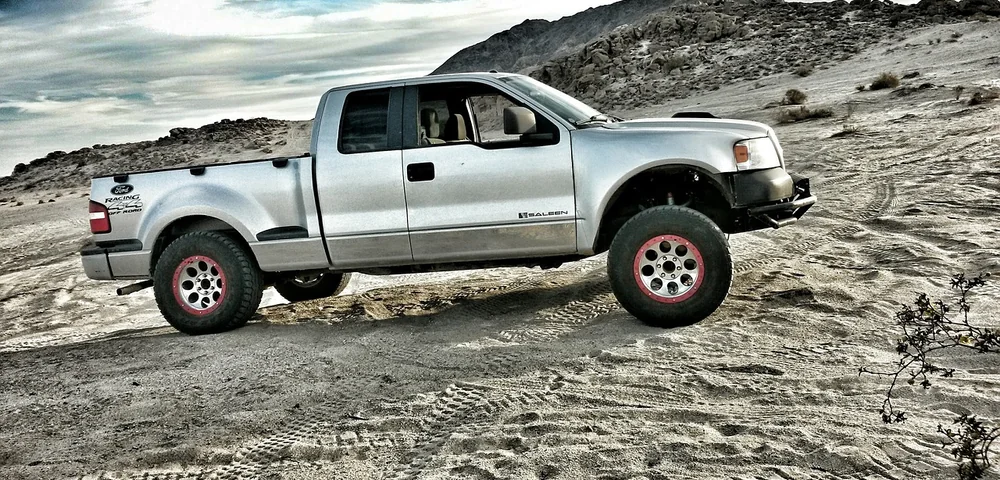
If you’ve ever buried a truck up to its axles on a beach ramp or watched a buggy flounder in soft dune sand, you already know that regular tires are the wrong tool for the job. The best tires for sand use a wide, flat footprint, a flexible sidewall, and either a smooth-ish or paddle-style tread that floats on top of loose granules instead of digging a trench. Getting this choice right — and pairing it with the correct tire pressure — is the difference between a day of dune running and an afternoon spent digging and waiting for a tow.
This guide breaks down what actually makes a tire work in sand, compares paddle tires against all-terrain tread, gives you real pressure numbers to start from, and lists the tire styles worth shopping for depending on whether you’re hauling a truck to the beach or running a dedicated dune rig.
What Makes a Tire Good in Sand
Sand is unlike mud, snow, or rock. It doesn’t compact, it doesn’t offer a fixed surface to bite into, and it shifts under load. A tire that claws and digs — like an aggressive mud-terrain tire designed to cut through muck until it finds solid ground — actually works against you in sand because there’s no solid ground to find. Instead, a good sand tire is built to spread the vehicle’s weight over the largest possible surface area, essentially letting the tire ‘float’ across loose granules rather than sinking through them.
Three factors drive this flotation effect. First is tire width and footprint shape: wider, flatter contact patches reduce ground pressure (measured in pounds per square inch) and keep the tire riding higher in the sand instead of plowing. Second is tread pattern: large, open lugs that work great in mud actually scoop sand backward and dig holes, while smoother or paddle-style patterns push the vehicle forward with less resistance. Third is sidewall flexibility, which lets the tire deform and air down significantly without the bead separating from the wheel, dramatically increasing footprint length when pressure drops. A tire with stiff, reinforced sidewalls built purely for load capacity on pavement will not flex enough to give you real flotation, no matter how aggressive the tread looks.
Paddle Tread Design vs All-Terrain Tread
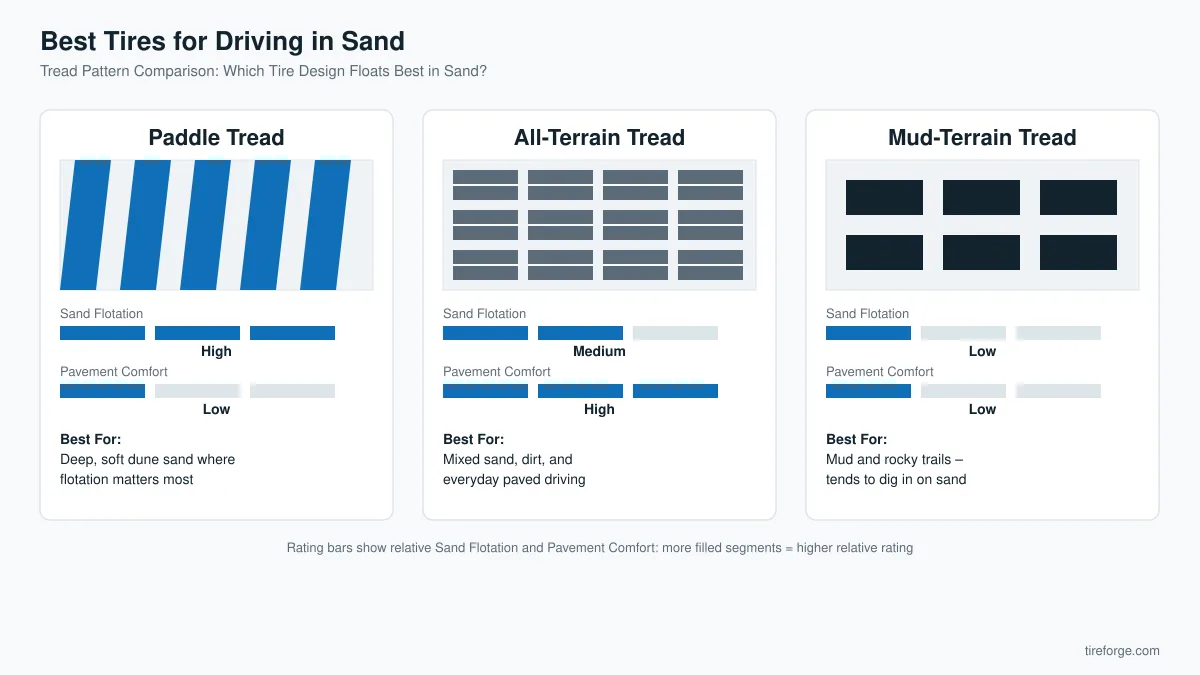
Paddle tires are purpose-built sand tires with widely spaced, scoop-shaped lugs angled to throw sand backward and generate forward thrust, similar to a propeller. They have almost no tread in the traditional sense — just large rubber paddles separated by deep gaps. These are the tires you see on dedicated dune buggies, sand rails, and some desert-prep trucks. Paddle tires excel in soft, deep, dry sand where you need maximum thrust and don’t care about street manners, because they are genuinely unsafe and nearly uncontrollable on pavement, gravel, or wet surfaces. They wear unevenly and loudly on hard ground and are not DOT-legal in some configurations.
All-terrain (A/T) tires, by contrast, use a tighter, more varied tread pattern designed to handle gravel, dirt, highway miles, and light sand duty all in one package. They won’t out-float a true paddle tire in deep, soft dunes, but a quality A/T tire aired down properly handles packed beach sand, moderate dunes, and transitional terrain perfectly well while still being safe and quiet enough to drive home on the highway. For most beach-goers and overlanders who occasionally hit sand but mostly drive on roads, an all-terrain tire is the far more practical choice. Paddle tires only make sense if sand is your primary environment and you’re trailering the vehicle to and from the dunes.
Tire Pressure Tips for Sand Driving
Air pressure is arguably more important than tread pattern when it comes to sand performance. Lowering pressure increases the tire’s footprint length, spreading weight over more sand and dramatically improving flotation. Most drivers on packed beach sand do fine dropping to around 18-22 psi from a typical street pressure of 32-35 psi. For soft, deep dune sand, many experienced sand drivers go further, down to 10-15 psi, and dedicated sand rail and paddle tire setups sometimes run as low as 4-8 psi because they’re on wheels and bead-lock systems designed specifically for it.
A few rules keep this safe. Never air down below what your wheel and tire combination can safely hold without risking the bead popping off the rim under sideways load — bead-lock wheels exist specifically to solve this problem for extreme low-pressure off-roading. Lower pressures also mean you should drive slower and avoid sharp turns, since the sidewall is doing more flexing and the risk of a pinched or rolled bead increases. Always carry a portable air compressor so you can re-inflate to street pressure before getting back on pavement; driving any distance on the highway at dune pressures overheats the tire and can cause a blowout. If you’re unsure how to safely add air back in in a parking lot or driveway, this step-by-step guide to airing up tires at home covers the basics.
Sand Tires vs Mud Tires: Key Differences
Mud-terrain (M/T) tires and sand tires are often confused because both look aggressive, but they’re engineered for opposite problems. Mud tires use large, deep, widely spaced lugs with sharp edges designed to cut through soft muck until the tread finds a firmer layer underneath to grip. That digging action is exactly what causes a mud tire to bury itself in sand — there’s no firm layer to find, so the tire just keeps excavating a hole beneath itself.
Sand tires (and sand-capable A/T tires) do the opposite: they’re built to avoid digging in. Tread blocks are smaller, more closely spaced, or paddle-shaped specifically to stay near the surface and generate forward push without excavating. Sidewalls on sand-oriented tires also tend to be more flexible to support aggressive airing down, while mud tires often have stiffer, more heavily reinforced sidewalls to resist punctures from rocks and debris.
If your wheeling is split between muddy trails and sandy washes or beaches, a hybrid all-terrain tire is usually the better all-around compromise than either extreme — you’ll lose a bit of ultimate mud-digging grip and a bit of ultimate sand flotation, but you gain a tire that won’t leave you stranded in whichever terrain you didn’t specifically buy for. Dedicated rigs that live in one environment full-time are the only scenario where a true mud tire or true paddle tire makes sense.
Top Sand-Ready Tire Picks
Rather than naming a single