

The best tires for a Subaru Forester depend on how you drive it: all-season tires from brands like Michelin, Continental, and Goodyear suit daily commuting and light snow, while all-terrain tires from BFGoodrich, Falken, or Toyo are better if you regularly leave pavement. Below we break down our top picks in both categories, the correct tire sizes for different Forester trims, and what to look for before you buy.
We’ll cover all-season tires, all-terrain tires, dedicated winter tires, and the tire sizes each Forester generation actually uses — so let’s get started.
How to Choose the Right Tires for Your Subaru Forester
If you own a Subaru Forester, you already know the vehicle performs best with the right tires mounted on it. Subaru doesn’t push a single mandatory tire brand for the Forester, so owners have a solid range of quality options to choose from across major manufacturers.
When comparing tires for your Forester, focus on a handful of core factors:
- Tread life and warranty — mileage warranties give you a rough idea of how long a tire should last under normal driving.
- Traction in your climate — wet grip, snow traction, and Severe Snow (3-Peak Mountain Snowflake) rating matter if you see real winters.
- Ride comfort and noise — all-terrain tires are noisier and firmer than all-season tires, which matters on a crossover primarily driven on pavement.
- Correct size and load rating — using the wrong size or a lower load index than stock can affect handling, ABS/traction control calibration, and safety.
With those criteria in mind, here are our picks for the best all-season and all-terrain tires for the Subaru Forester, plus a look at winter-specific options and correct tire sizing.
Subaru Forester Tire Sizes by Trim
Forester tire sizes vary by generation and trim, so always confirm your exact size on the tire placard inside the driver’s doorjamb or in your owner’s manual before buying. As a general guide:
- Base and Premium trims (most model years): commonly 225/60R17, typically with a 99H load/speed rating.
- Sport, Limited, Touring, and Wilderness trims: commonly 225/55R18 or 225/60R17 depending on the year, often rated 98H–99H; the Wilderness trim uses a slightly larger overall diameter to boost ground clearance.
- Older Foresters (roughly 2014–2018): commonly 225/60R17 or 225/55R17.
A load index of 98 supports about 1,653 lbs per tire, and 99 supports about 1,709 lbs — both are well above what a Forester’s curb weight requires per corner, so stick with the factory load index or higher when replacing tires.
Quick Comparison: Top Forester Tire Picks
| Tire | Category | Severe Snow Rated | Best For |
|---|---|---|---|
| Goodyear Assurance MaxLife | All-Season | No | Long tread life, daily driving |
| Continental TrueContact Tour | All-Season | No | Warranty coverage, comfort |
| Michelin Defender LTX M/S | All-Season | No | Wet/snow braking, longevity |
| General Altimax RT43 | All-Season | No | Budget-friendly stability |
| Pirelli Cinturato P7 A/S | All-Season | No | Ride comfort, size selection |
| BFGoodrich All-Terrain T/A KO2 | All-Terrain | Yes | Off-road durability |
| Yokohama Geolandar A/T G015 | All-Terrain | Yes | Mixed on/off-road use |
| Falken Wildpeak A/T Trail | Crossover A/T | Yes | Light off-road, quieter ride |
| Toyo Open Country A/T III | All-Terrain | Yes | Value all-terrain performance |
| Nitto Terra Grappler G2 | All-Terrain | Yes | Style plus all-terrain grip |
Best All-Season Tires for the Subaru Forester
All-season tires are the right call for most Forester owners who mainly drive on paved roads and see moderate winter weather. They balance dry/wet grip, light snow traction, ride comfort, and tread life without the noise and fuel-economy penalty of an all-terrain tire.
Standard all-season tires aren’t designed for heavy off-roading — pushing them past their limits on rough terrain will wear them out fast and can compromise your control of the vehicle. If you split time between pavement and light trails, consider the crossover-focused all-terrain options later in this guide instead.
1. Goodyear Assurance MaxLife All-Season


The Assurance MaxLife is Goodyear’s long-tread-life all-season tire, built around a durable tread compound and a design meant to maintain even wear over a long service life.
It’s consistently one of the best-reviewed touring all-season tires among Forester and CR-V owners, largely thanks to its treadwear warranty and predictable handling.
It’s priced in the mid-range for a mainstream all-season tire, which makes it a strong value pick for a Forester used mainly for commuting and road trips rather than off-roading.
Pros:
- Long-wear tread compound designed for even wear and extended mileage
- Solid all-season traction in wet, cold, and light snow conditions
- Quiet ride thanks to an optimized tread pattern
- Backed by one of the longest treadwear warranties in its class
Cons:
- Not Severe Snow rated — not ideal if you regularly drive in heavy snow
2. Continental TrueContact Tour Radial Tire

Continental backs the TrueContact Tour with its Total Confidence Plan, which bundles a 60-day satisfaction guarantee, a treadwear warranty, and roadside/flat-tire assistance — a meaningful safety net for owners who want peace of mind after purchase.
If a tire underperforms or wears unevenly within the coverage window, Continental’s replacement process is straightforward, which is a big part of why this tire holds up well against pricier competitors.
Combined with a reasonable mid-range price, the warranty coverage is the main reason this tire earns a spot on a Forester owner’s shortlist.
Pros
- Dependable all-season tread for varied road conditions
- Treadwear coverage included in the warranty plan
- Flat-tire roadside assistance included
Cons
- Some owners report needing extra wheel balancing after installation
3. Michelin Defender LTX M/S
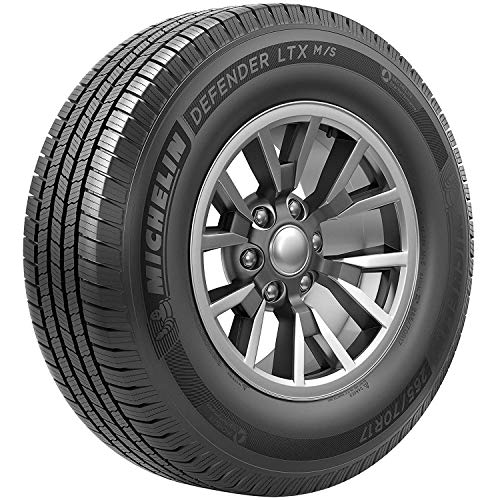
Michelin has a well-earned reputation for durability and all-weather performance, and the Defender LTX M/S is one of its most popular touring all-season tires for crossovers like the Forester.
It’s a strong option if you want confident wet and light-snow braking along with a comfortable, quiet ride for daily driving and highway trips.
Michelin’s MaxTouch Construction is designed to maximize even tire-to-road contact, which the company says helps improve tread life and rolling efficiency compared to a standard tire — though real-world fuel savings will vary with your driving habits, load, and tire pressure.
Pros
- Above-average tread life for its class, backed by a long treadwear warranty
- Strong wet and light-snow braking performance
- Even tread contact designed to support fuel efficiency and long-term wear
Cons
- Firmer construction means some owners need more frequent wheel balancing
4. General Altimax RT43
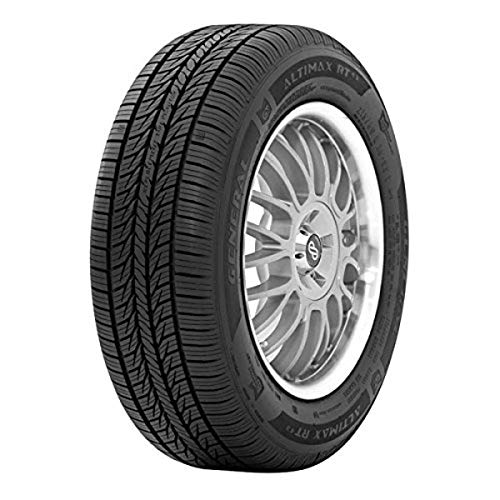
General Tire has built a solid reputation for value-priced all-season tires that still deliver dependable performance, and the Altimax RT43 is a good example of that balance.
It’s a comfortable choice for Forester owners who want predictable handling and confident braking without paying premium-brand pricing.
This all-season tire is built to improve everyday grip and stability, with a modern tread design intended to shorten braking distances in wet conditions.
Pros
- Low surface abrasion tread compound for reduced wear
- Competitively priced for its performance class
- Directional tread design offers good grip in wet conditions
Cons
- Firmer ride than some premium all-season competitors
5. Pirelli Cinturato P7 A/S
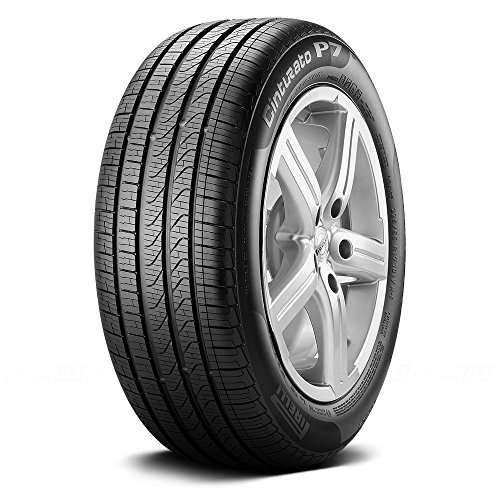
Rounding out our all-season picks is this tire from Pirelli, a manufacturer known for balancing comfort with responsive handling.
The tread design is engineered to deliver stable, predictable handling across a wide range of road conditions without demanding frequent maintenance.
It’s available in a wide range of sizes and options, including Run Flat variants on some fitments, which makes it easy to match to your specific Forester trim.
Owners generally praise its quiet, comfortable ride, which is one of its biggest selling points for daily driving.
Pros
- Wide range of sizes and product options available
- Run Flat versions available on select fitments
- Comfortable, quiet ride quality
Cons
- Not tuned for aggressive or sport-oriented driving
Best All-Terrain Tires for the Subaru Forester
If you regularly take your Forester onto gravel, dirt, or light off-road trails, an all-terrain tire is worth the tradeoff in road noise and fuel economy.
Rough terrain demands more from your tires than pavement does — loose gravel, mud, and rocky trails all test tread design and sidewall durability differently than a daily commute.
Vehicles built specifically for off-roading rely heavily on tire grip and sidewall strength to handle steep or loose terrain safely, and that’s true for a crossover like the Forester too, just at a more moderate level than a dedicated off-road truck.
Most of the capability in off-road driving comes down to the driver, but the right tire meaningfully expands what’s actually possible before you lose traction.
Because of the added grip and traction that all-terrain tires provide, drivers can push further into rougher terrain with more margin for error.
If you want your Forester to be more trail-capable, here are five of the best all-terrain options currently available.
6. BFGoodrich All-Terrain T/A KO2
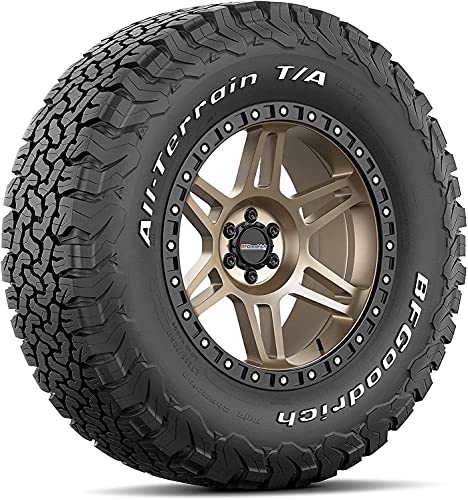
The KO2’s serrated shoulder design and reinforced sidewalls make it one of the most trusted all-terrain tires on the market, and it’s a common upgrade pick for Forester owners who tow small trailers or camp off-grid.
Despite being an off-road-focused tire, it still delivers a reasonably comfortable on-road ride, which matters since most Forester miles will still be on pavement.
BFGoodrich backs the KO2 with strong ownership guarantees, which is one of the main reasons it consistently ranks near the top of all-terrain comparisons.
Its 60-day satisfaction guarantee and mileage-based replacement policy give you real recourse if the tire doesn’t perform, which is a meaningful bonus versus most competitors.
Pros
- Severe Snow rated for confident winter traction
- 60-day satisfaction guarantee plus a 50,000-mile treadwear warranty on most sizes
Cons
- Faster tread wear noted on dry pavement compared to street tires
7. Yokohama Geolandar A/T G015
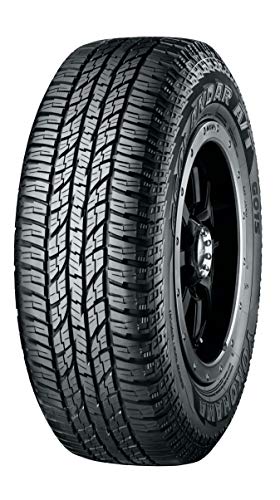
Yokohama has built a strong reputation in the tire industry through consistent product quality and long-standing motorsport sponsorships.
The Geolandar A/T G015 is one of Yokohama’s most capable all-terrain tires, built for drivers who split time between highway driving and light-duty trails.
It holds up well in snowy and slippery conditions, which is exactly where a lot of crossover drivers need the extra confidence.
If winter grip and off-road versatility are both priorities for your Forester, this is a strong all-around choice.
Pros
- A versatile tire suited to both on- and off-road driving
- Reinforced compound designed to resist cuts and punctures on rough terrain
- Circumferential grooves help evacuate water and reduce hydroplaning risk
Cons
- Priced higher than most competing all-terrain tires in this size range
8. Falken Wildpeak A/T Trail

Unlike traditional truck-focused all-terrain tires, the Wildpeak A/T Trail was designed specifically for crossovers and SUVs like the Forester, which means a quieter, more comfortable ride without giving up much off-road capability.
Falken backs the tire with a solid warranty and a tread design engineered for dependable traction in mixed conditions.
It performs confidently in snow and wet weather thanks to its tread compound and siping, making it a good year-round option.
If you want a crossover-tuned all-terrain tire rather than a heavier truck-style tire, this is one of the better options available for the Forester.
Pros
- Durable 2-ply polyester construction for added strength
- Severe Snow rated (3-Peak Mountain Snowflake certified)
- Long treadwear warranty, among the best in the crossover A/T segment
Cons
- Slightly noisier than a standard all-season tire on dry highway driving
9. Toyo Open Country A/T III

Toyo doesn’t have the brand recognition of some competitors, but the Open Country A/T III consistently earns strong reviews for its balance of on-road manners and off-road capability.
It’s a great crossover-friendly option if you want an all-terrain tire that still handles predictably on the highway.
The tread design and reinforced construction give it strong value relative to its price point, especially compared to pricier premium-brand all-terrain tires.
Pros
- Strong value relative to performance in its category
- Severe Snow rated for confident winter traction
- Evenly distributed tread void area improves grip and self-cleaning in mud
Cons
- Noticeably firmer and noisier than an all-season tire on paved roads
10. Nitto Terra Grappler G2
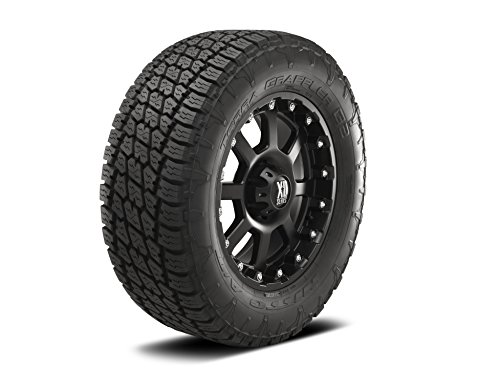
Nitto doesn’t market as aggressively as some larger tire brands, but the Terra Grappler G2 has earned a loyal following for its blend of on- and off-road performance.
It’s backed by a treadwear warranty covering up to 50,000 miles on most sizes, giving you some protection if the tread wears prematurely.
Its tread blocks are designed to flex and interlock for better traction and impact resistance on rough terrain, while still maintaining a reasonably refined highway ride.
Pros
- Severe Snow rated for heavy winter conditions
- Interlocking tread design adds strength and impact resistance off-road
- Aggressive, popular tread aesthetic
Cons
- Noticeable road noise at highway speeds
- Faster tread wear reported in dry, high-mileage highway driving
Winter and Snow Tire Options for the Forester
If you live somewhere with heavy, sustained winter weather, a dedicated winter tire will outperform even a Severe Snow-rated all-season or all-terrain tire on ice and deep snow. Winter tires use softer rubber compounds that stay flexible in freezing temperatures, along with denser sipe patterns for extra grip.
Popular winter tire choices for the Forester include studless options like the Bridgestone Blizzak WS-series and Michelin X-Ice Snow, both of which are widely available in Forester-compatible sizes and are frequently recommended by tire retailers for Subaru crossovers.
A common and cost-effective approach is running dedicated winter tires on a second set of wheels during the coldest months, then switching back to your all-season or all-terrain set for the rest of the year. This protects your primary tires from cold-weather wear and gives you the best possible grip when temperatures consistently drop below about 45°F (7°C), the point at which all-season rubber starts to stiffen and lose grip.
Look for the Severe Snow (3-Peak Mountain Snowflake) symbol on the sidewall when comparing winter tires, and check that the size matches your Forester’s factory specification rather than assuming any 17- or 18-inch tire will fit correctly.
Frequently Asked Questions
What size tires does a Subaru Forester need?
Most Foresters use either 225/60R17 or 225/55R18, depending on trim and model year. Always check the tire placard on the driver’s doorjamb for your specific vehicle’s factory size before ordering replacements.
Can I put all-terrain tires on a Subaru Forester?
Yes, as long as you stay within the factory tire size range (or a size recommended by the tire manufacturer for your specific Forester trim). Crossover-tuned all-terrain tires, like the Falken Wildpeak A/T Trail, tend to ride quieter and more comfortably on pavement than heavier truck-style all-terrain tires.
Do I need Severe Snow-rated tires for my Forester?
If you regularly drive in heavy snow or icy conditions, a Severe Snow-rated all-season or all-terrain tire — or a dedicated winter tire — will provide noticeably better traction and shorter stopping distances than a standard all-season tire.
Final Thoughts
The right tire for your Forester ultimately depends on how and where you drive it. If you’re mostly on pavement, prioritize a comfortable, long-wearing all-season tire like the Michelin Defender LTX M/S or Goodyear Assurance MaxLife. If you regularly leave the pavement, an all-terrain tire like the BFGoodrich KO2 or Falken Wildpeak A/T Trail will serve you better, and if you deal with serious winters, don’t skip a dedicated snow tire.
Match the tire to your driving conditions, confirm your correct size before ordering, and you’ll get the safety, comfort, and longevity your Forester is capable of.