
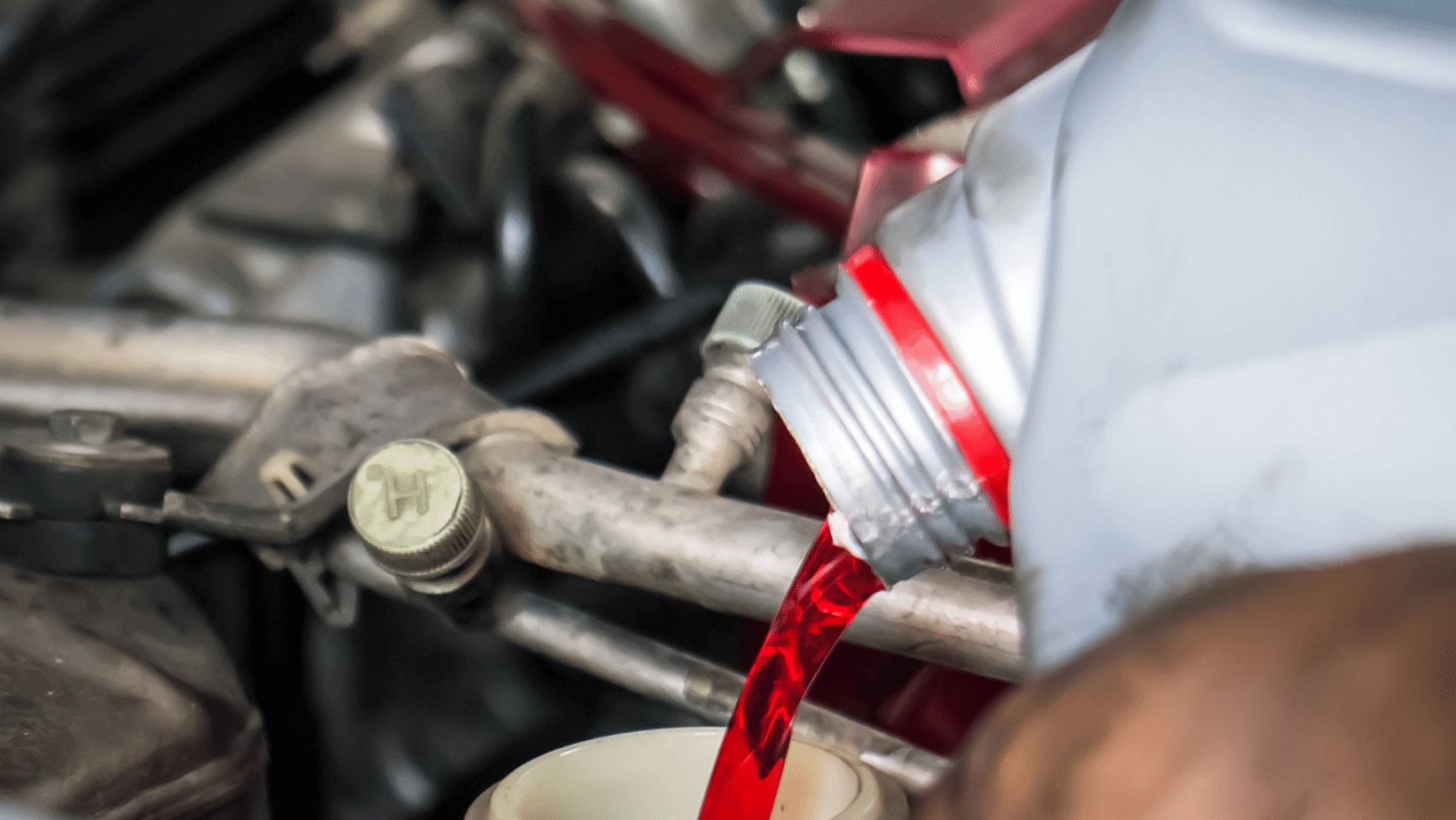
Most V8 engines need between 9 and 13 quarts of automatic transmission fluid for a standard drain-and-fill (pan drop), or up to 17 quarts if you’re doing a full flush that clears fluid from the torque converter and cooler lines as well. The exact amount depends on your specific make, model, and transmission type, so always confirm with your owner’s manual before topping off.
No part of a vehicle is inconsequential — every component plays a role in how the car performs, including on the road where your tires meet the pavement. Transmission fluid is one of those often-overlooked fluids that keeps your drivetrain (and ultimately your wheels) turning smoothly. Below, we break down transmission fluid basics, how much your V8 actually needs, and how to keep it in good condition.
Transmission Fluid Basics
Transmission fluid is a lubricant needed in a vehicle to ensure smooth power transfer to the wheels.
It works on the areas subject to friction and also keeps seals and gaskets conditioned for the long haul.
This fluid also helps in controlling operating temperature and provides protection for metal surfaces against wear and rust.
Getting the amount right matters — too little and parts run dry; too much and you risk foaming, leaks, and seal damage.
There are three main types of transmission fluid to know: manual, semi-automatic, and automatic transmission fluid.
Manual Transmission Fluid
This is the appropriate lubricant for vehicles with manual transmissions. Depending on the manufacturer’s specification, it can sometimes be substituted with a specific-weight conventional or synthetic gear oil.
It helps limit internal heat buildup so the transmission doesn’t overheat under load.
Semi-Automatic Transmission Fluid
This fluid is used in vehicles with automated manual transmissions — cars that share the same gear and clutch setup as a manual transmission but shift automatically.
Automatic Transmission Fluid (ATF)
ATF is used in vehicles with automatic and most CVT transmissions. The fluid, circulated by the torque converter, lubricates and cools internal components, helps transfer engine power efficiently, and prevents wear.
Always use the ATF type specified by your manufacturer — using the wrong formulation can cause shifting problems or long-term damage, since not all ATFs are interchangeable.
Total transmission capacity (pan plus torque converter and cooler lines) varies widely by vehicle. Ideally, most cars take between 4 and 17 quarts (roughly 3.8 to 16 liters) for a full fluid change.
Always confirm the specific amount your vehicle needs with a professional mechanic or your owner’s manual before adding fluid.
Benefits of Properly Maintained Transmission Fluid
Regardless of which transmission fluid your vehicle requires, keeping it clean and at the correct level offers real benefits:
- Protects internal components against wear and tear.
- Ensures smooth shifting and better maneuverability.
- Helps the engine and transmission maintain proper operating RPMs.
- Improves fuel economy by reducing friction losses in the drivetrain.
How Many Quarts of Transmission Fluid Does a V8 Need?
How much fluid a V8-powered vehicle needs depends on three main factors: the transmission’s total fluid capacity, whether you’re replacing the pan gasket and filter, and whether you’re doing a simple drain-and-fill or a full flush that also clears the torque converter and cooler lines.
For most V8 vehicles, a standard pan drop and refill uses roughly 9 to 13 quarts. A complete flush, which pushes fluid through the entire system including the torque converter, can require closer to 15 to 17 quarts since it removes nearly all the old fluid rather than the roughly 40-50% a pan drop typically replaces.
Example V8 Vehicles and Approximate Fluid Capacities
These figures are approximate and can vary by model year and transmission option — always verify with your owner’s manual or a dealer service department before filling.
| Vehicle (V8 Engine) | Approx. Total Capacity (Quarts) |
|---|---|
| Ford Mustang GT (5.0L) | ~9–10 quarts |
| Chevrolet Camaro SS (6.2L) | ~9–10 quarts |
| Dodge Challenger/Charger R/T (5.7L HEMI) | ~10–11 quarts |
| Ram 1500 (5.7L HEMI) | ~11–12 quarts |
| Ford F-150 (5.0L) | ~12–13 quarts |
| Chevrolet Silverado 1500 (5.3L or 6.2L) | ~10–11 quarts |
| Toyota Tundra (older 5.7L V8 models) | ~10–11 quarts |
Because manufacturers periodically revise transmission designs, always cross-check capacity figures against your vehicle’s official owner’s manual or a resource like NHTSA’s vehicle owner resources rather than relying solely on generic charts.
Transmission Fluid Requirements by Vehicle Type
Before adding transmission fluid, consider your vehicle’s body style and transmission type — these factors determine how many quarts are too few or too many. Checking your owner’s manual is always the most reliable method, but the general ranges below can help you sanity-check what a shop tells you.
General Fluid Capacity by Body Style
| Car Type/Model | Volume (in Quarts) |
|---|---|
| City Car, Family Car, Sedan | 1.8 – 10.3 quarts |
| Convertible, Roadster | 2 – 10.6 quarts |
| Coupe, Muscle Car | 4 – 13.5 quarts |
| Estate Car, Station Wagon, Touring | 1 – 9.5 quarts |
| Green/Eco Car, Hybrid or Electric Vehicle (EV) | 1.5 – 4 quarts (many EVs use no traditional ATF) |
| Hatchback, Liftback | 1.9 – 9.1 quarts |
| Limousine | 9.5 – 12 quarts |
| Microcar | 2.5 – 6.3 quarts |
| Minivan, Crossover Utility Vehicle (CUV) | 2 – 9.7 quarts |
| Pickup, Commercial Vehicle | 2.2 – 13 quarts |
| Sports Utility Vehicle (SUV), Subcompact Car | 3.5 – 17 quarts |
| Supercar, Exotic Car, Sports/Race Car, Grand Tourer (GT) | 1.7 – 11.9 quarts |
Note that most V8-equipped vehicles fall into the Coupe/Muscle Car, Pickup, or SUV categories above, which is why the 9–13 quart range is the most common figure for a typical V8 fluid change.
Inspecting Fluid Levels
Regularly checking your transmission fluid level and condition is one of the simplest ways to catch problems early — ideally every time you check your oil, or at minimum once a month.
Your vehicle will typically give warning signs when fluid is too low or degraded, so there’s no need to guess. Watch for:
- Humming, buzzing, or whining noises, sometimes with a burnt smell.
- Fluid pooling underneath your vehicle, which can eventually cause overheating.
- Loss of power due to inadequate fluid reaching the torque converter.
- Grinding noises when the vehicle is put into gear.
- Gears slipping, jumping, or hesitating during shifts.
- The check engine light or transmission temperature warning cycling on and off.
- Engine revving high without a corresponding gear shift.
- The transmission unexpectedly disengaging while driving.
If you notice any of these symptoms, check your fluid level and condition, or have a mechanic inspect the system before the issue worsens.
Overfilled transmission fluid can also leak. If you see a reddish, pink, or amber-colored puddle under your car (not to be confused with green or orange coolant), it’s a sign of excess or leaking transmission fluid.
Transmission Flush vs. Pan Drop (Fluid Change)
When it’s time to service your automatic transmission, you’ll generally choose between a transmission flush or a pan drop (fluid and filter change).
A transmission flush uses a machine to push nearly all of the old fluid out of the system — including the torque converter and cooler lines — and replace it with fresh fluid.
A pan drop involves draining the fluid from the pan, replacing the filter and gasket, and refilling — but this only replaces roughly 40-50% of total fluid, since the torque converter retains the rest.
So which should you choose?
If the fluid is still reddish or amber-tinted and the vehicle is due for routine maintenance, either a flush or a pan drop is reasonable.
However, if the fluid is dark brown or black, smells burnt, or contains visible debris, a pan drop with filter replacement is generally the safer choice — flushing severely degraded fluid through an already-worn transmission can sometimes dislodge debris and cause additional problems.
Dangers of Overfilling Transmission Fluid
When adding fluid, follow one rule closely: don’t overfill. Consult your owner’s manual for the exact capacity, since overfilling can cause several problems:
- Shifting problems caused by foamy, aerated transmission fluid.
- Fluid escaping through the vent or dipstick tube due to pressure buildup.
- Seal failure from excess internal pressure.
- Fluid leaking underneath the transmission — look for reddish, pink, or amber fluid, distinct from green or orange coolant.
- Long-term transmission damage if the issue isn’t corrected.
Keeping fluid at the correct level — not too low, not too high — protects your vehicle’s performance and drivetrain longevity.
How Often Should You Change Transmission Fluid?
Change intervals depend on your transmission type and driving conditions:
- Automatic transmissions: typically every 30,000 to 100,000 miles, depending on the manufacturer and whether the fluid is conventional or a long-life synthetic ATF.
- Manual transmissions: typically every 30,000 to 60,000 miles.
- Severe-duty use (towing, extreme heat/cold, frequent stop-and-go driving) generally calls for more frequent changes toward the lower end of these ranges.
Many modern vehicles with long-life synthetic ATF are rated well beyond 100,000 miles between changes — always follow your manufacturer’s maintenance schedule rather than a generic interval, since requirements vary significantly between makes and model years.
Keeping Your Whole Drivetrain in Shape
Transmission fluid is just one piece of routine maintenance that keeps power getting from your engine to your wheels efficiently. Since worn tires, poor alignment, and incorrect tire pressure can also strain your drivetrain and reduce fuel efficiency, it’s worth periodically checking your tire maintenance and buying guides alongside your fluid service schedule to keep your whole vehicle running smoothly.
Frequently Asked Questions
Final Thoughts
How many quarts of transmission fluid does a V8 need? For most V8-powered cars and trucks, expect somewhere between 9 and 13 quarts for a pan drop, or up to 17 quarts for a full flush — but always verify with your owner’s manual, since capacities vary by model and transmission.
Transmission fluid shouldn’t be ignored, since the performance and longevity of key drivetrain components depend on it.
As a car owner, make it a habit to periodically inspect your fluid level and condition so you can catch problems early.
If you ever need to add fluid or replace the filter, catching it early can save you from a much costlier repair down the road.