

Continental and Michelin are two of the world’s largest tire manufacturers, and both make excellent all-season, performance, and truck tires. In general, Michelin tends to edge out Continental on tread life and ride comfort, while Continental often offers comparable performance at a lower price point. Below, we break down the history, technology, and real-world performance of each brand so you can decide which is the better fit for your vehicle and driving needs.
This guide compares Continental vs Michelin tires across quality, durability, noise, handling, tread life, warranty, and price, and includes a quick-reference comparison table and FAQ section at the end.
Continental Tires
Founded in Hanover, Germany, in 1871, as Continental-Caoutchouc- und Gutta-Percha Compagnie, Continental has grown into one of the largest tire manufacturers in the world.
The company’s stated mission is developing technologies and services for the safe, efficient, and sustainable mobility of people and goods.
Continental AG operates manufacturing and R&D facilities in dozens of countries and employs roughly 190,000–200,000 people worldwide, according to the company’s most recent annual reports. Continental Group’s total annual revenue (across its tire, automotive technology, and industrial divisions) has recently been reported in the €39–41 billion range, not the much smaller figures sometimes cited in older articles — so be cautious of outdated revenue numbers when comparing tire manufacturers.
Continental competes directly with brands like Bridgestone, Goodyear, Pirelli, and Cooper Tires, producing both replacement tires and original equipment (OE) tires for cars, SUVs, and minivans.
The brand is a long-time OE supplier for Mercedes-Benz and the Volkswagen Group, among many other automakers.
Michelin Tires
Michelin is a French multinational tire company headquartered in Clermont-Ferrand, France, with manufacturing plants and operations across dozens of countries worldwide — not just North America, as is sometimes mistakenly reported.
Michelin is consistently ranked as one of the top two tire manufacturers globally by sales volume, alongside Bridgestone, and has repeatedly appeared on lists of the world’s most admired companies.
Beyond tires, Michelin develops high-technology automotive components and is well known for its Michelin Guide restaurant ratings and road-trip maps, which have sold in the tens of millions of copies historically.
According to industry sales data, Michelin’s North American tire sales have historically been reported in the multi-billion-dollar range annually, making it one of the top revenue-generating tire brands in the region.
Michelin operates dozens of manufacturing plants across more than 15 countries and employs well over 100,000 people globally.
Continental vs Michelin: Quick Comparison Table
Here’s a quick side-by-side snapshot to help you scan the key differences before diving into the details below.
| Category | Continental | Michelin |
|---|---|---|
| Typical Price Range (per tire, standard sizes) | Budget to mid-range; generally more affordable | Mid-range to premium; generally priced higher |
| Standard Treadwear Warranty | Typically 50,000–70,000 miles depending on model | Typically 60,000–85,000 miles depending on model |
| Tread Life (real-world) | Good to very good | Very good to excellent |
| Road Noise | Quiet, especially with ContiSilent models | Very quiet, especially with Acoustic Technology models |
| Wet/Dry Handling | Excellent, strong traction focus | Excellent, strong all-around balance |
| Best For | Budget-conscious drivers, performance/track use | Long-term value, comfort-focused daily driving |
Note: Exact warranty terms and pricing vary by specific tire model, size, and retailer, so always confirm current details on the manufacturer’s website or with your tire retailer before purchasing.
Michelin and Continental tires may be two different brands, but they share several important qualities.
Both brands make top-quality tires compared to many competitors — they’re effective, support high speed ratings, and are suitable for a wide range of passenger and commercial vehicles.
Both companies are also packed with advanced, brand-specific technologies for maximum performance. For instance:
Continental Run-Flat Technology
Run-flat tires are designed to stay drivable for a limited distance after a puncture — typically up to 50 miles at reduced speeds (around 50 mph or less), giving drivers time to reach a service center instead of changing a tire roadside.
Continental uses this technology across several of its performance and touring tire lines.
Continental ContiSeal Technology
ContiSeal tires use a built-in sticky sealant layer that automatically seals small punctures (usually up to about 5mm) as they happen, often without noticeable air loss.
Continental ContiSilent Technology
To reduce road noise and vibration, Continental also uses ContiSilent technology, which adds a foam layer inside the tire to absorb cavity noise for a quieter, smoother ride.
Michelin Acoustic Technology
Michelin addresses noise with its own Acoustic Technology, a similar foam-lined design that meaningfully reduces in-cabin road noise for a more comfortable ride, particularly on the CrossClimate2 and Primacy lines.
Michelin SelfSeal Technology
Michelin’s SelfSeal technology uses a natural rubber sealant layer built into the tire to instantly seal small punctures from nails or screws and prevent air loss while driving.
Popular Continental Tire Models
Below are some of Continental’s most popular tire models. Note that Continental periodically updates its lineup, so always check current sizing and specs before buying.
Continental CrossContact LX20


The Continental CrossContact LX20 is one of the brand’s best-selling all-season touring tires, using EcoPlus Technology and popular with crossover, light truck, SUV, and touring vehicle owners.
It’s an all-season tire with solid traction for light off-road use, as well as wet roads and light snow.
The EcoPlus construction also helps deliver good wet braking and improved fuel efficiency.
It uses a symmetric tread design with four circumferential grooves for responsive, stable handling with reduced road noise.
Continental ExtremeContact Sport (and Sport 02)
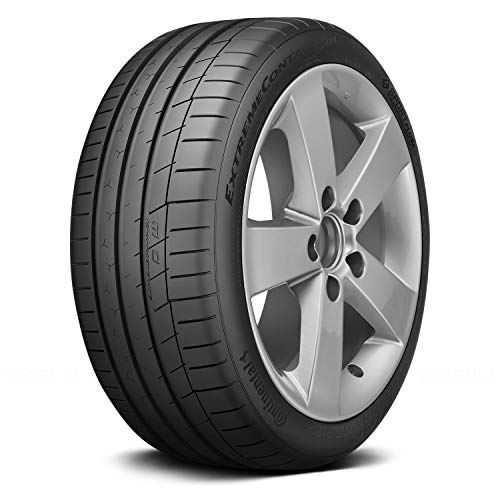
The Continental ExtremeContact Sport is an ultra-high-performance summer tire built with SportPlus Technology, popular for sports cars and performance-oriented sedans. Continental has since released an updated ExtremeContact Sport 02 with further refinements to grip and tread life, so check which generation you’re buying.
It offers extraordinary dry and wet handling precision, staying stable and responsive across different surfaces.
It also delivers strong dry and wet braking with a longer tread life than many competing performance tires.
Overall, this tire holds up well even for demanding drivers, including autocross and track-day enthusiasts.
Continental ContiProContact / TrueContact Tour

The ContiProContact is Continental’s grand-touring, all-season tire built for fuel efficiency, comfort, and everyday performance. Continental has largely transitioned this segment to its newer TrueContact Tour lineup, which uses updated compounds for improved wet traction and tread life — worth checking if you’re shopping for a direct replacement today.
This style of tire suits passenger cars, crossovers, and touring vehicles, offering precise handling and solid traction in light snow and dry conditions.
These tires use wide circumferential grooves for good steering response and minimized road noise, along with low rolling resistance for better fuel economy.
Their symmetric tread design supports all-season versatility and solid speed durability.
Continental tires generally carry competitive speed ratings compared to value-oriented brands like Cooper Tires.
Other notable Continental models worth considering include the Continental PureContact LS and Continental TerrainContact H/T.
Popular Michelin Tire Models
Michelin also has several standout models currently on the market. See below for some of the most popular options.
Michelin CrossClimate2 All-Season Radial Car Tire
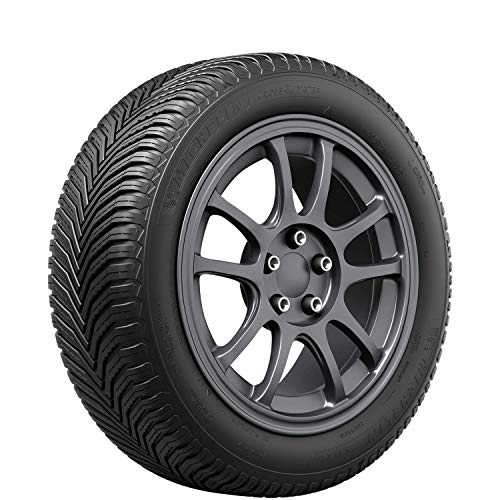
The Michelin CrossClimate2 remains one of the brand’s most popular all-season tires, designed for sedans, coupes, SUVs, crossovers, and station wagons, and is well suited for daily driving.
It uses a Thermal Adaptive all-season tread compound and a V-formed tread design, which helps it perform well in dry, wet, and even light winter conditions — it carries the severe snow service (3PMSF) rating.
The CrossClimate2 also uses PIANO Noise Reduction Tuning technology for a quieter ride, along with 3D SipeLock technology for added rigidity, stability, and traction across surfaces.
Despite its relatively grooveless-looking pattern, it uses V-Ramp technology to enhance braking traction and road contact.
Michelin Defender LTX M/S (and Defender LTX M/S2)
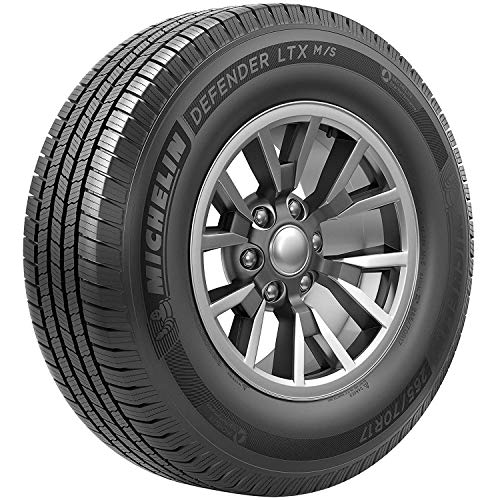
The Michelin Defender LTX M/S is known for its long tread life and fuel efficiency, thanks in part to Michelin’s MaxTouch construction. Michelin has since updated this line with the Defender LTX M/S2, which improves wet traction and tread wear further.
This tire offers strong traction and short braking distances on wet roads and light snow — it’s an all-season tire, not a dedicated winter tire, so drivers in heavy snow climates should still consider a winter-specific tire.
Michelin Energy Saver A/S

The Michelin Energy Saver A/S is a solid choice for passenger cars and minivans as a premium all-season touring tire.
It uses a durable tread compound that balances safety, durability, and low rolling resistance for good fuel economy.
Other popular current Michelin models worth considering include the Michelin Primacy MXM4/Primacy Tour A/S, the Michelin Pilot Sport 5 (the successor to the Pilot Sport 4S for ultra-high-performance driving), and the Michelin Alpin 6 for dedicated winter performance.
Design Features and Technologies — Head to Head
Many drivers find it challenging to choose between two brands when both come packed with strong safety and performance features.
Still, there are some useful factors to weigh when comparing a specific Continental tire against a comparable Michelin tire.
Quality
Continental and Michelin are both remarkably well-regarded for premium build quality, and both brands consistently perform well in independent tests.
That said, Michelin often edges ahead slightly in overall build consistency and long-term wear according to consumer surveys and independent tire-testing organizations.
Michelin’s lineup spans nearly every category — all-season, summer, winter, and specialty tires — each built with premium materials and brand-specific technologies.
Durability
In head-to-head durability comparisons, Michelin tires generally show an edge due to their tread compounds and construction, though specific Continental models (like the TrueContact Tour) are also known for long tread life.
Greater durability generally means safer, more predictable performance over the life of the tire.
Price
Continental generally offers a wider range of budget-friendly options compared to Michelin. Michelin is positioned as a premium brand, and its tires are typically priced higher across comparable categories, though the gap has narrowed for some entry-level Michelin lines.
Ride Comfort / Road Noise
Both brands invest heavily in noise-reduction technology, and both produce some of the quietest tires on the market in their respective categories.
That said, independent testers have frequently found Michelin tires to be marginally quieter than comparable Continental models, particularly in the CrossClimate2 and Primacy lines.
Lower road noise is a major contributor to overall ride comfort, especially on long highway trips.
Handling
Continental tires are frequently praised for strong wet and dry traction, particularly in their performance-oriented lines like the ExtremeContact Sport 02.
That traction translates into precise, responsive handling across different road surfaces and conditions.
Tread Life
Michelin generally wins on tread life. The brand uses both symmetric and asymmetric tread patterns to maintain stability and consistent wear across different surfaces over a longer mileage window.
Continental tires, by comparison, more commonly use symmetric tread patterns, and tread life is generally competitive but slightly shorter on average across comparable categories.
Tire Warranty Coverage
Reflecting their tread-life advantage, Michelin tires often come with longer treadwear warranties than comparable Continental models, though exact terms vary significantly by specific tire line, so always check the warranty for the exact model you’re buying.
Real-World Testing and Third-Party Ratings
Beyond manufacturer claims, independent tire testers and consumer surveys (such as those published by Consumer Reports and Tire Rack) consistently rank both Continental and Michelin near the top of their respective categories for all-season and performance tires.
In these types of tests, Michelin models frequently score highest for treadwear and ride comfort, while Continental models are often praised for wet braking performance and value for money. As with any comparison, results vary by specific tire model and vehicle, so it’s worth checking the latest test results for the exact tire size and model you’re considering before buying.
Are Michelin Tires Better Than Continental?
The debate over whether Michelin tires are better than Continental tires has been ongoing for decades, and there’s no single universal answer — it depends on your priorities.
For most drivers, both brands make excellent SUV, passenger, and performance tires. Michelin tends to win on tread life, warranty length, and ride comfort, while Continental tends to win on price and certain performance/traction metrics.
Drivers should consider what matters most — budget, longevity, noise, or outright performance — and choose the brand and specific model that best matches those priorities, rather than assuming one brand is universally “better.”
Frequently Asked Questions
Are Michelin tires better than Continental tires?
Not universally — Michelin generally offers longer tread life, quieter rides, and longer warranties, while Continental often offers comparable performance at a lower price. The “better” brand depends on your driving needs and budget.
Are Continental tires as good as Michelin?
Yes, in many categories Continental tires perform comparably to Michelin, especially for wet traction and value. Michelin typically has an edge in tread life and ride comfort, but the gap is often small for everyday driving.
Which brand has a longer tire warranty, Continental or Michelin?
Michelin tires generally carry longer treadwear warranties on comparable models, though this varies by specific tire line, so always check the warranty listed for the exact tire you’re purchasing.
Which is cheaper, Continental or Michelin tires?
Continental tires are generally more affordable than comparable Michelin models, making Continental a popular choice for budget-conscious drivers who still want strong performance.
Which brand is quieter, Continental or Michelin?
Both brands offer dedicated noise-reduction technology, but independent testing has often found Michelin’s quietest models to have a slight edge in cabin noise reduction over comparable Continental tires.