
Last reviewed: October 2026
If you are familiar with a car’s suspension system, you know “shocks” and “struts” are not alien. As a matter of fact, you know them as shock absorbers.
However, while their functions vary, car owners still get confused about whether they mean the same thing or are different.
Quick answer: No, a car does not have both a shock absorber and a strut at the same wheel. Each corner of the vehicle uses either a shock or a strut, never both. Find out what the difference is, where each one is typically located, and how to tell when yours need replacing.
Shocks vs Struts: Are They the Same Thing?
Shocks and struts are not the same thing, even though both are commonly lumped together under “shock absorbers.” Every wheel on a vehicle is fitted with either a shock or a strut, but never both at the same corner.
In most modern vehicles with independent front suspension, you’ll find struts at the front wheels and shocks at the rear. This layout (commonly called MacPherson strut front suspension) is the most widely used setup in passenger cars and crossovers, though some vehicles use struts at all four corners or shocks at all four corners instead.
Shocks vs Struts: Key Differences
Shock absorbers and struts are part of a vehicle’s suspension system and can both dampen coil spring oscillations and enhance ride control.
However, they have their individual functions, which explains the difference between them. According to the National Institute for Automotive Service Excellence (ASE), which certifies suspension and steering technicians, shocks and struts are tested and serviced differently precisely because they play different structural roles in a vehicle.
Shock Absorbers
A shock absorber consists of hydraulic components that absorb impact and limit the movement triggered by the vehicle’s springs. It is a standalone damping device — it does not bear the weight of the vehicle or provide structural support.
It works the same way as an oil pump – when you encounter a bump, the application of pressure allows the forcing through of hydraulic fluid or gas into some holes and this system does much to weaken the force of such a bump.
The impact absorption by these springs is one from damaged, bumpy, or rocky roads. Thus, the shocks give you good control over your car for better ride quality.
Struts
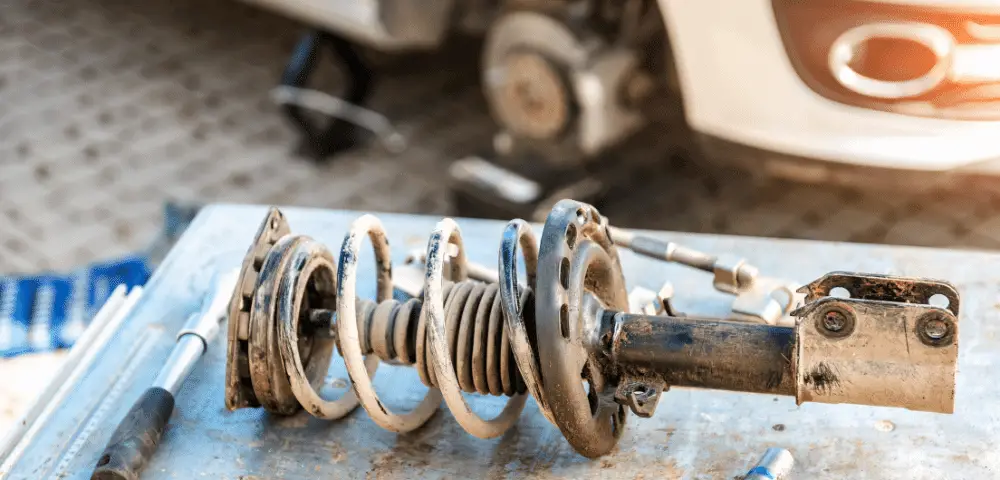
A strut is structural support for a vehicle’s steering and suspension system, not just a damping device. It is a pivot point for the steering system and is built around a coil spring, with the shock-absorbing cartridge mounted inside the strut housing.
A strut combines a shock absorber and a spring into a single structural unit that dampens jolts, supports part of the vehicle’s weight, and helps determine wheel alignment (camber and caster).
Because a strut carries structural load in addition to damping, strut assemblies are generally larger and heavier than standalone shocks, and replacing one often affects wheel alignment — which is why an alignment check is usually recommended after strut replacement.
Do All Cars Have Shocks and Struts?
No. Many vehicles use shocks at all four corners, and some use struts at all four corners. The front-strut, rear-shock combination is common on mainstream sedans, hatchbacks, and crossovers, but it is not universal.
First, you have to consider the car’s design to determine which setup it uses. Trucks and SUVs with solid rear axles, for example, typically use shocks at the rear rather than struts.
Secondly, your vehicle may use different springs and shocks in the place of struts. Checking your owner’s manual or having a technician inspect the undercarriage is the most reliable way to know which type your vehicle uses.
Do You Need Both Struts and Shocks?
Ideally, you need either shocks or struts to dampen the movement of your wheels to prevent vehicle bounce or swing — not both at the same wheel.
They perform similar tasks; hence a given wheel only needs one or the other. It’s common, though, for a vehicle to have struts at one axle and shocks at the other.
Can Struts and Shocks Be Combined at the Same Wheel?
No, they can’t.
A vehicle will either have a shock or a strut at each wheel but never both.
What you can have is a mixed setup across the vehicle — for example, struts at the front wheels and shocks at the rear wheels — but never a shock and a strut doing the same job at the same corner.
If your vehicle is designed with shocks at one axle and struts at the other, you cannot swap one type for the other. Always follow the owner’s manual and manufacturer specifications for safety and proper handling.
How to Tell If Your Car Has Front Shocks or Struts
To determine if your car has shocks or struts at a given wheel, a visual inspection is the most reliable method.
Although every car model has different ways their shocks and struts appear, you can still tell them apart by looking at how the component connects to the vehicle.
Shocks are mounted vertically near the tires but are a separate, smaller component attached to the lower control arm or axle — they don’t connect directly to the top of the steering knuckle or bear the vehicle’s weight. They look like a slim cylindrical tube with a coil spring sometimes mounted around or beside them.
On the other hand, struts are also mounted vertically but are larger and bulkier, since the coil spring is built around the strut body. A strut connects at the top to the vehicle’s body (often under the hood near the front shock towers) and at the bottom to the steering knuckle, making it part of the structural support rather than just a damper.
Your owner’s manual or a qualified technician can confirm which type your vehicle uses if you’re unsure after a visual check.
Average Replacement Cost and Mileage Intervals
Exact pricing varies by vehicle, region, and labor rates, but as a general guide:
- Shocks are generally less expensive to replace per corner than struts, since they are a standalone part and don’t typically require an alignment afterward.
- Struts cost more per corner because the part itself is more complex (often sold as a complete “strut assembly” with the spring included) and a wheel alignment is usually recommended after installation.
- Typical replacement interval: most manufacturers and suspension specialists suggest having shocks and struts inspected around 50,000 miles and recommend replacement somewhere in the 50,000–100,000 mile range, depending on driving conditions and the symptoms described below. Rough roads, towing, and aggressive driving shorten this interval.
Rather than relying on mileage alone, watch for the warning signs below and have your suspension inspected whenever you get new tires or a wheel alignment, since worn shocks or struts can cause uneven tire wear.
Do Shocks and Struts Need to Be Replaced at the Same Time?
There is no mechanical requirement to replace shocks and struts at the same time if your vehicle doesn’t have both.
However, many technicians recommend replacing components in axle pairs — both front struts together, or both rear shocks together — because the two safety systems on the same axle tend to wear down at a similar rate and replacing only one side can cause uneven handling.
So if you’re replacing a worn component, check the other one on the same axle at the same time, even if you don’t need to touch the opposite axle yet.
Signs of Bad or Worn Shocks and Struts
If your car has bad shocks or a strut problem, there are some warning signs that will let you know you need to replace them.
The signs are:
1. Instability
One of the significant ways to know you need new shocks or struts is if you are experiencing problems with stability.
Shocks and struts were designed with a stopping power so you don’t lose control while driving. However, if they become worn or damaged, it would be difficult to corner or handle your ride.
In some situations, you could start noticing your wheels are bouncing or you experience a bumpy ride.
Overall, damaged shock absorbers won’t let you get that comfortable ride you’ve always wanted.
2. Rattling Noise
Another way to know you need to have your shocks changed is if you start hearing rattling noise anytime you drive.
It is experienced in only shocks. The reason is that they have a coil spring and suspension parts that are supposed to dampen vibrations and control movement through a feature called bushings.
If the shocks are bad, your vehicle would start producing a rattling noise or a knocking sound, which is an obvious sign.
3. Leaking Fluid
If your shock absorber is experiencing a fluid leak, that is another clear sign that it is bad and needs to be replaced.
If the shock is functioning properly, it provides enough hydraulic fluid to dampen force from rough roads.
However, if there is oil on the sides or an oily patch on the ground, your shocks won’t be up for proper functioning and your vehicle will experience handling issues.
4. Uneven Tread Wear
Another way to know there is a problem with the struts is if the tires experience uneven tread wear.
Most times, this situation is associated with other vehicle problems, especially one with the wheels and suspension parts. However, you can also consider the possibility of a bad strut if the tire tread wears unevenly.
If this problem persists, it causes other issues like hydroplaning and automatically affects your driving pattern. For more on diagnosing wear patterns, see our guide on which tires wear faster and why.
5. Front End Nose Diving
You also start to experience braking problems if your shock absorbers are faulty.
One of many things you will notice is your vehicle nose-diving at the front end. It only happens simply because fluid is leaking through the seals, causing the piston to move unrestricted in the cylinder.
6. Rear Squatting
Another way you know that your vehicle needs new struts or shocks is if the rear side is squatting when hitting a gas pedal.
As the front nose dives, there is an automatic effect on the rear side. The leaking seals cause the rear to squat excessively, making it look like your car is leaning towards one side.
7. Broken Shock Absorber Bushings
Shocks have a feature at their sides – it is called the Bushings. It is the most vulnerable part because it is exposed to atmospheric conditions – even the harshest.
As time goes by, the bushings crack or break from consistent use on the road. When that happens, you will notice it. Broken bushings are unable to cushion the shocks mounted for suspension work.
Sooner or later, your vehicle will start making noise when you drive on rough roads.
8. Vehicle’s Suspension System and Steering Wheel Issues
Another thing that definitely says something is wrong with the shocks or struts of your car is a problem with the suspension and the steering wheel.
In this case, the steering linkage that transfers motion from the gear to the upper control arm becomes wobbly. Then, the steering wheel starts vibrating on normal roads.
If you notice several of these symptoms together, have a certified technician — such as one holding an ASE Suspension and Steering certification — inspect your vehicle before the issue affects braking or tire wear further.
Conclusion
From this article, you now know that a shock absorber and a strut are not the same thing, even if they perform similar functions. The most common modern setup pairs struts at the front with shocks at the rear, but plenty of vehicles use one type at all four corners.
Not all vehicles have struts, but for those that do, you should check them frequently for damage, fluid leaks, and uneven tire wear. Replacing your suspension components promptly protects handling, braking distance, and tire life.
And if you have to replace these parts, ensure to buy quality parts rated for your specific vehicle and have the work done by a qualified technician.