
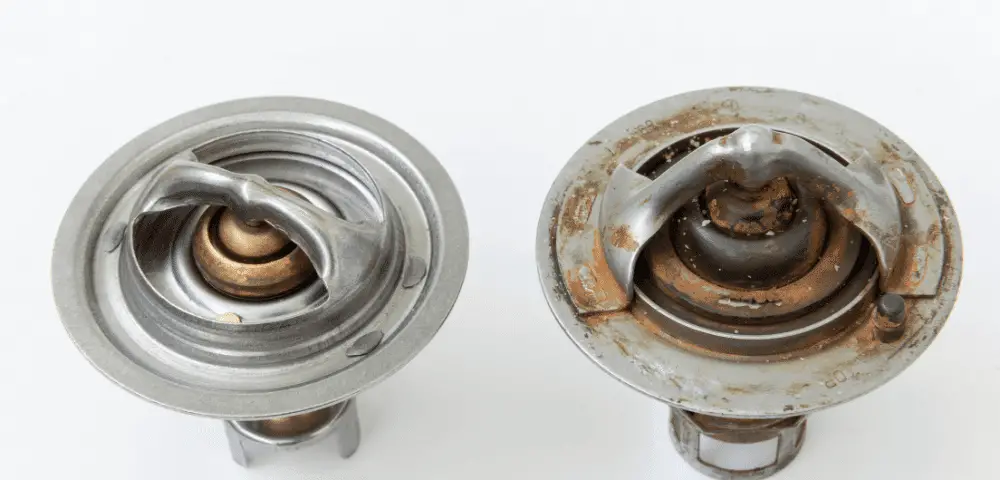
Some car owners consider removing the thermostat from their vehicle, believing it will help the engine run cooler or perform better. But is this actually a good idea? In short, no — removing the thermostat almost always does more harm than good.
Here’s everything you need to know about what a car thermostat does, why removing it is a bad idea, and what to do instead if you’re dealing with a cooling system problem. (And if you’re here because your engine troubles have you thinking about your car’s overall health, don’t forget that tire condition and maintenance play just as big a role in safe, efficient driving.)
What Exactly Does a Thermostat Do in a Car?
Every system in a car follows a specific design that helps it run smoothly, and the engine is no exception.
The engine needs to operate within a fairly narrow temperature range — typically around 195–220°F (90–104°C) for most modern gasoline engines. Running too cold or too hot both cause problems.
That’s why nearly every internal combustion engine is equipped with a thermostat as part of its cooling system.
A car’s cooling system can be affected by outside conditions such as ambient temperature, traffic, towing, or long highway drives. To keep the engine’s temperature in check, the thermostat acts as a valve that controls coolant flow between the engine and the radiator.
The thermostat’s job is to keep the engine within its optimal operating temperature range.
When the engine is cold — such as right after starting — the thermostat stays closed, restricting coolant flow so the engine can warm up quickly.
Once the engine reaches its target temperature, the thermostat opens, allowing coolant to circulate through the radiator to keep the engine from overheating.
How Many Thermostats Does a Car Have?
Most vehicles have just one thermostat, located in the engine’s cooling system. A common misconception is that cars also have a separate thermostat for the air conditioning system — this isn’t accurate. Your car’s A/C system uses components like a thermal expansion valve or an orifice tube to regulate refrigerant flow, not a thermostat.
Some larger engines, particularly V6 and V8 configurations with dual coolant paths, or vehicles with separate cooling circuits for the engine and transmission oil cooler, may use two thermostats. But for the vast majority of everyday cars, one thermostat handles the entire engine cooling system.
Why Would Someone Want to Remove a Thermostat?
If the engine temperature seems too low or a thermostat gets stuck, some people are tempted to remove it entirely rather than replace it, hoping this will “fix” temperature issues or improve performance.
In reality, removing the thermostat causes far more problems than it solves. It won’t fix an overheating issue caused by another failing part, and it introduces new risks of its own.
One noticeable symptom of driving without a thermostat is that the cabin heater may blow cold or lukewarm air, since the engine never reaches the temperature needed to heat the coolant properly.
Are There Any Benefits of Removing a Thermostat?
For a street-driven car, there is essentially no benefit to removing the thermostat. Any reputable mechanic will tell you the same thing.
The one exception is in some racing or track applications, where drivers sometimes run a lower-temperature thermostat (not no thermostat) to manage extreme, sustained engine loads. Even then, a fully removed thermostat is rarely recommended by engine builders, since it causes erratic coolant flow and poor temperature control.
Should You Drive a Car Without a Thermostat?
You should not drive your car without a thermostat for any extended period. Doing so puts unnecessary stress on the engine and can shorten its lifespan.
If you find yourself without a working thermostat and need to get to a repair shop, some drivers use a temporary workaround: placing a piece of cardboard in front of the radiator/grille opening to partially block airflow and help the engine retain heat.
This is a stopgap measure only, and it comes with real risk of overheating if airflow is restricted too much. Keep a close eye on your temperature gauge, and pull over and shut off the engine immediately if it starts climbing toward the red zone.
Disadvantages of Removing a Thermostat
Here’s a closer look at the real-world effects of running a car without a thermostat.
Higher Fuel Consumption
Without a thermostat, the engine runs cooler than its designed operating temperature, especially in cold weather or at low speeds.
Modern engine control units (ECUs) use coolant temperature as a key input for the fuel mixture. A perpetually “cold” reading can cause the ECU to run a richer fuel mixture than necessary, similar to how a car behaves during cold-start warm-up. Government fuel economy testing (via the EPA and similar agencies) has long shown that engines operating below their intended temperature consistently use more fuel per mile than those running at proper operating temperature.
Accelerated Engine Wear
This is arguably the most serious consequence. A car’s internal components are engineered to work together within specific tolerances.
Removing the thermostat throws off that balance. Inconsistent coolant flow and erratic engine temperatures can accelerate wear on pistons, rings, and bearings, and prevent oil from reaching its ideal viscosity and operating temperature — all of which shorten engine life over time.
Increased Emissions
An engine that runs too cold doesn’t burn fuel as completely or cleanly as one at proper operating temperature.
This incomplete combustion increases harmful emissions and can also lead to carbon buildup on internal components over time, which further reduces efficiency.
Higher Long-Term Maintenance Costs
As covered above, removing the thermostat has a domino effect on other components.
Increased engine wear and inefficient combustion mean more frequent repairs and a shorter lifespan for major components — costing far more in the long run than simply replacing a faulty thermostat.
Disrupted Coolant System Function
The thermostat regulates when coolant flows between the engine and radiator.
Without it, coolant flows continuously and unpredictably, regardless of what the engine actually needs. This uneven flow can prevent the engine from ever reaching optimal temperature, and in cold conditions, may even contribute to internal condensation and sludge buildup.
Warning Signs of a Failing Thermostat
Instead of removing a thermostat, watch for these common signs that it’s failing and needs replacement:
- Temperature gauge reading higher or lower than normal, or fluctuating erratically
- Engine overheating, especially at idle or in stop-and-go traffic
- Weak or cold airflow from the cabin heater
- Coolant leaks near the thermostat housing
- Unusual engine noises after startup, such as gurgling from trapped air pockets
If you notice any of these symptoms, have the thermostat inspected and, if necessary, replaced rather than removed.
How Much Does Thermostat Replacement Cost?
A thermostat itself is an inexpensive part, but labor costs vary depending on the vehicle, since some engines require significant disassembly to access the housing.
In general, expect a modest parts cost plus one to two hours of labor at a shop. Vehicles with the thermostat housing tucked deep in the engine bay (common on many transverse-mounted V6 engines) will be on the higher end of that range. Always get a quote from a trusted mechanic, since prices vary widely by region and vehicle make.
Will a Car’s Engine Overheat With a Working Thermostat?
No — a properly functioning thermostat helps prevent overheating by regulating coolant flow to keep the engine within its optimal range.
However, a thermostat that’s stuck closed can absolutely cause overheating, since it blocks coolant from reaching the radiator. This is a common and often misunderstood cause of overheating that some drivers mistakenly try to “solve” by removing the thermostat altogether, rather than simply replacing the faulty part.
If your temperature gauge is reading higher than normal, have the thermostat and cooling system checked before assuming removal is the answer.
Final Thoughts
A thermostat is a small but essential part of your car’s cooling system.
Removing it doesn’t fix cooling problems — it typically causes new ones, from reduced fuel economy and higher emissions to accelerated engine wear and costly repairs down the road.
If your thermostat is faulty, the right fix is a straightforward, inexpensive replacement — not removal. Keeping your engine’s cooling system in good shape, alongside routine maintenance like checking your engine’s overall health and your tires’ condition, is the best way to keep your car running reliably for the long haul.
Sources: U.S. Department of Energy Fuel Economy data (fueleconomy.gov); U.S. EPA emissions and fuel efficiency research; general automotive engineering references on internal combustion engine cooling systems.