

This hubcap size guide shows you exactly how to find the right hubcap size for your vehicle — no tape measure required. The short answer: your hubcap size is not measured directly off the cap itself, it’s determined by the wheel diameter listed in your tire’s sidewall code.
In the automotive world, hubcap and wheel cover sizing is always done in relation to the tire/wheel diameter of your vehicle, not the physical outer diameter of the cap itself.
If you physically measure an old hubcap with a tape measure, you’ll notice the number is usually slightly smaller than the “listed” size (for example, a hubcap marketed as 16-inch may measure closer to 15.5 inches edge-to-edge). That’s normal — the cap has to sit snugly inside the wheel’s lip, so manufacturers size it marginally smaller than the wheel diameter.
How to Measure Hubcap Size
You don’t need to physically measure your hubcap or wheel cover at all. The correct size is printed right on the sidewall of your tire.
Look at the sidewall and you’ll see a code similar to P215/65R15 95H or LT265/70R17 112S. Here’s what each part means, based on the standard tire sizing format used across the industry:
- P / LT / ST / T — the tire class (Passenger, Light Truck, Special Trailer, or Temporary spare). Not all tires have this prefix.
- 215 — the tire’s section width in millimeters.
- 65 — the aspect ratio (sidewall height as a percentage of the width).
- R — radial construction (the vast majority of tires sold today are radial).
- 15 — the wheel diameter in inches. This is the number that tells you your hubcap size.
- 95H — load index and speed rating.
So in the example above, R15 means you need a 15-inch hubcap or wheel cover. This diameter number is standardized across tire manufacturers, so you can rely on it regardless of your car’s make or model.
If your tires have already been swapped for a different size than what the vehicle originally came with, go by the number on the tire that’s currently mounted — not the size listed in your owner’s manual.
Can I Put Any Hubcap on My Car?
In most cases, yes — hubcaps and wheel covers are interchangeable across different makes and models as long as the wheel diameter matches and the mounting style (snap-on vs. bolt-on) is compatible.
A correctly sized 15-inch hubcap will physically fit a 15-inch wheel on virtually any vehicle. That said, it’s still worth double-checking the bolt pattern or retention clips if you’re buying a cap not specifically listed as compatible with your vehicle, since some manufacturers use proprietary clip designs that won’t seat properly on another brand’s wheel.
Popular Hubcap Sizes: 14, 15, 16 and 17-Inch Wheels
Below are commonly recommended wheel covers for the most widely used wheel sizes. Availability, pricing, and specific part numbers change over time, so always confirm current fitment and stock on the retailer’s listing before buying.
14-Inch Hubcap


Pilot Automotive’s wheel covers are constructed out of corrosion and rust-resistant ABS, giving them a lustrous and durable finish.
They use a micro-adjustable retention system designed for a snug fit on 14-inch wheels.
One downside worth noting: the covers come with metal retention rings that need to be attached to each cap before installation. This adds a bit of prep work, and the included instructions aren’t always detailed enough to make the process intuitive on the first try.
15-Inch Hubcap
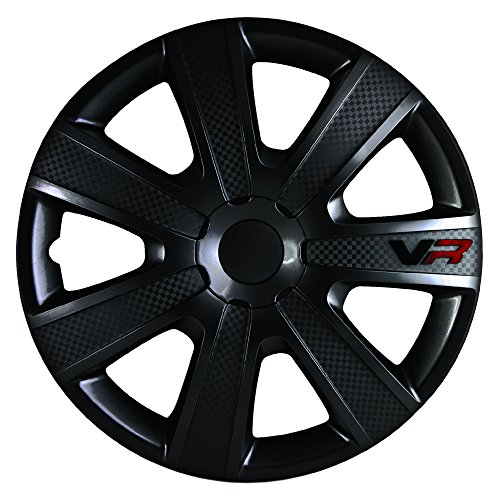
Alpena’s 15-inch wheel cover has a carbon-fiber-look texture with a satin gunmetal finish.
These tend to offer a solid carbon-fiber-style appearance for a reasonable price relative to higher-end covers, though some buyers have reported fit inconsistencies, so check recent reviews for your specific wheel before ordering.
16-Inch Hubcap

These Spyder/Gunmetal Grey wheel covers from Pilot Automotive are an economical way to give a visual upgrade to your vehicle.
They’re designed to fit snugly on 16-inch steel wheels.
Do not use them on alloy wheels — they’re built for steel wheels and won’t seat correctly on an alloy rim.
As with other Pilot Automotive wheel covers, you’ll need to attach the metal retention rings before installing them onto the wheel.
17-Inch Hubcap

Pilot Automotive is a well-known maker of budget-friendly wheel covers that give stock wheels a quick visual upgrade.
This 17-inch wheel cover uses corrosion-resistant materials that hold up to everyday road exposure.
It also features a micro-adjustable retention system intended to keep the cover securely seated and reduce the chance of it coming loose while driving.
If your wheels are 18 inches or larger — increasingly common on SUVs and trucks — full wheel covers become less common, since larger wheels are more often alloy and left uncovered. Center caps are the more typical option at that size; check our guide on rim and wheel costs if you’re weighing a wheel cover against upgrading to new alloys.
Wheel Covers vs. Hubcaps: What’s the Difference?
In everyday conversation, these terms are used interchangeably.
Technically, a hubcap traditionally covered only the center hub and lug nuts of the wheel, leaving the rest of the wheel face exposed. A wheel cover covers the entire face of the wheel, hub to rim edge. Most products sold today as “hubcaps” are actually full wheel covers, but the sizing principle — matching the wheel diameter from your tire sidewall — applies to both.
How to Remove & Install Hubcaps
The removal and install process depends on how your hubcap attaches. There are two common types: ones that screw on with lug nuts and ones that snap onto the wheel rim.
Bolt-On (Lug Nut) Hubcaps
If yours is the bolt-on type, you’ll need to unscrew the lug nuts with a tire wrench, place the new hubcap over the lug nuts, and screw them back on. Park on level ground and engage the parking brake before you start.
Most new hubcaps come with washers — install these too, or you risk squeaking and a loose fit over time.
Snap-On Hubcaps
If you have a snap-on cover, you only need to pry the cover off with a flat screwdriver.
Once unclipped, pull it toward you to remove it — it’s held on only by small plastic clips that lodge into the wheel rim’s flange.
To install a new one, line it up with the wheel rim and press firmly until it snaps into place.
Some alloy wheels require removing the entire wheel to fit the hubcap or center cap. If that’s the case for your vehicle, we’d suggest having a shop handle the install.
Frequently Asked Questions
Why do my hubcaps keep falling off?
The most common cause is improper installation. This can usually be fixed by tightening the lug nuts (for bolt-on caps) or making sure the cap is seated flush against the wheel rim (for snap-on caps).
Driving over potholes is another common culprit. Beyond knocking hubcaps loose, hard pothole impacts can also cause tire and wheel damage, so it’s worth inspecting your tire and rim after a hard hit even if the hubcap survives.
Are there any quick repairs for damaged hubcaps?
If you’re not ready to buy a replacement right away, zip ties can be used to secure a damaged hubcap to the wheel spokes as a temporary fix.
This works for minor cosmetic damage, but if the cap is cracked, warped, or missing large sections, it’s safer to remove it entirely rather than ride around with a loose piece of plastic that could detach at speed.
Can you drive without hubcaps?
Yes. Hubcaps and wheel covers are mainly cosmetic, though they do offer some practical benefits.
They help shield the wheel face from dirt, brake dust, rocks, and other road debris. A properly fitted full-face cover can also have a minor aerodynamic benefit at highway speeds, though the effect is small compared to overall vehicle drag.
How long do wheel covers last?
Most modern wheel covers are made from durable ABS plastic, and alloy-style covers are also available. A good-quality cover, properly installed and maintained, can last for years and typically gets reused when you replace your tires, as long as the wheel size stays the same.
Do hubcaps affect tire pressure monitoring (TPMS)?
No. Standard hubcaps and wheel covers sit outside the wheel and don’t interfere with TPMS sensors, which are mounted inside the wheel at the valve stem. Just make sure the cap doesn’t block access to the valve stem for airing up your tires.
Final Thoughts
Finding the right hubcap size comes down to one number: the wheel diameter printed on your tire’s sidewall. Match that number, confirm whether your cap is a bolt-on or snap-on style, and installation is straightforward even as a DIY job.
For more help with wheels and tires, check out our guides on rim pricing, alloy wheel care, and stretched tire fitment.