
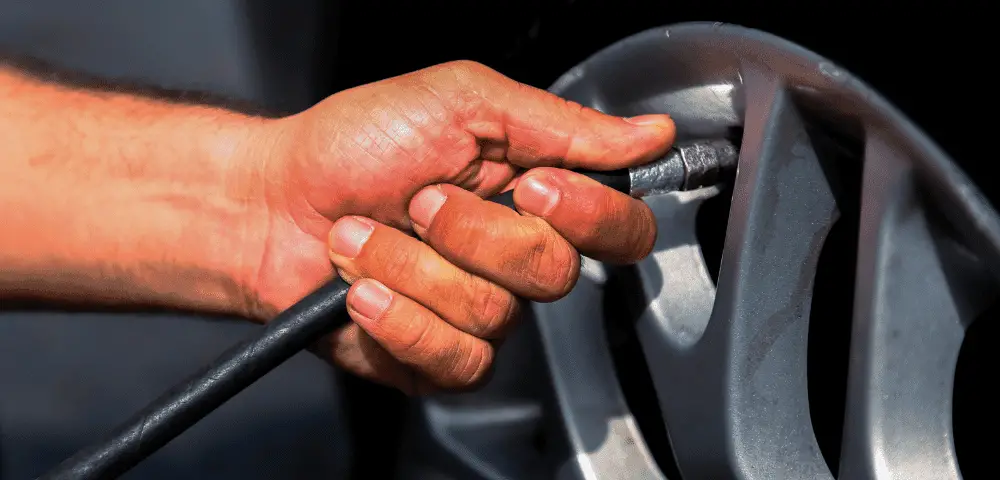
Tires are probably the most vulnerable part of a skid steer. On busy worksites, frequent flats are not only costly to fix but also cost valuable downtime. One reliable way to avoid this problem altogether is to foam fill the tires on your skid steer.
When it comes to foam filling tires, you can always take the machine to a professional shop or buy foam-filled tires already installed.
However, this is a project many owner-operators can tackle themselves. It doesn’t require specialized tools, and the steps below will walk you through the entire process.
How To Foam Fill Tires On A Skid Steer
- Step 1: Gather your tools. You’ll need: a skid steer jack, torque wrench, valve stem remover tool, drill machine, drill bit (appropriate size), tapping screws, expanding polyurethane foam (spray cans or two-part liquid), a cutting blade, and a wooden base to work on.
- Step 2: Remove all four tires from your skid steer, deflate them, and remove the valve core with the valve stem remover tool.
- Step 3: Drill a couple of pilot holes on the tire sidewall, roughly 90 degrees from the valve stem (one near the top, one near the bottom). These holes let you monitor the foam as it fills and let excess air and foam escape.
- Step 4: Lay the tire flat on a wooden base, insert the foam filling straw through the valve stem, and start pumping in the foam. Make sure you have enough foam compound on hand before starting, since interrupting the process partway through can leave uneven fill.
- Step 5: Stop once foam starts bleeding out of the pilot holes and let the tire cure for a few hours (check the product label for exact cure time). Work slowly and methodically to avoid air pockets.
- Step 6: Clean up by trimming the excess cured foam with the cutting blade, then seal the pilot holes with the tapping screws.
- Step 7: Reinstall the valve core and seal it up.
- Step 8: This step is optional, but it’s generally a good idea to re-pressurize the tire with a small amount of air after foam filling to help the foam settle evenly and eliminate any gaps.
What Kind Of Foam Do You Use To Fill Tires?


The most common choice for this project is expanding polyurethane (PU) foam. It’s easy to apply and expands to fill the entire cavity inside the tire, forming a solid, airless layer once cured.
PU foam is usually sold as ready-to-use spray cans (originally marketed as sealants), but you can also use a two-part liquid polyfill system, which some professional shops prefer for larger jobs because it’s easier to meter and mix consistently.
Whichever type you choose, read the manufacturer’s instructions and safety data sheet on the product first, and always wear gloves and eye protection since uncured PU foam is sticky and can irritate skin.
Are Foam Filled Tires Dangerous?
Foam filling a skid steer tire has both advantages and trade-offs — it isn’t inherently dangerous when done correctly, but it does change how the tire behaves.
Since foam replaces air, the tire can’t get a flat or lose pressure over time. This means you can operate your skid steer on demolition sites, scrap yards, and other debris-heavy surfaces without worrying about punctures shutting down work.
Operators generally find foam-filled tires more stable, with better control on uneven ground. The main downsides are added weight, a firmer (less cushioned) ride, and the fact that the process is permanent — once foam-filled, a tire can’t easily be converted back to a pneumatic (air-only) tire.
The extra weight puts more load on the drivetrain, which can lead to faster wear on bearings, axles, and hydraulic components, and a rougher ride for the operator. For most flat-prone job sites, though, the elimination of downtime and repair costs outweighs these drawbacks.
How Much Does A Foam Filled Tire Weigh?
Skid steers commonly use 10×16.5 or 12×16.5 tires. A standard 10×16.5 tire and rim assembly typically weighs somewhere in the 90 to 100 pound range. Foam filling usually adds roughly 25 to 35 pounds per tire, depending on the foam density and how completely the cavity is filled.
Across all four tires, expect the overall weight of the machine to increase by roughly 100 to 140 pounds after foam filling. Larger tire sizes will see proportionally more added weight.
How Much Can You Save By Foam Filling Your Tires?
This is where foam filling really pays off for contractors and rental fleets.
Savings come not just from avoiding the cost of repairing a flat, but from eliminating idle man-hours, missed deadlines, equipment swaps, and the ongoing cost of keeping tires aired up on rough terrain.
Exact savings vary by region, labor rates, and how flat-prone your job sites are, but many commercial operators find that avoiding even a handful of flats over a machine’s service life covers the cost of foam filling several times over. For fleets that regularly run on scrap, demolition debris, or gravel, foam filling is often considered a worthwhile investment rather than an optional upgrade.
Is It Legal To Foam Fill Your Tires?
Yes. Filling tires with polyurethane foam is permitted under US FMCSA regulations, Title 49, Part 393, Section 393.75, which governs tire condition requirements for commercial vehicles. Foam-filled tires are widely used on skid steers, forklifts, and other off-road equipment without legal restriction.
Do Foam Filled Tires Need Air?
The whole point of foam filling is to eliminate the need for air, so a fully and evenly filled tire technically doesn’t need any.
That said, it’s beneficial to add a small amount of air pressure after filling. This helps push the foam into any small gaps it didn’t fully expand into and keeps the tire’s shape taut and round.
This becomes especially important if you notice soft spots or areas where the foam hasn’t expanded evenly during the filling process. In that case, adding air is a better fix than leaving visible deformities on the tire.
How Much Foam Will You Need?
It’s hard to give an exact figure for how much foam you’ll need to fill all four tires of your skid steer, since it depends on tire size, foam expansion rate, and how much waste occurs during application — but we can estimate.
As mentioned earlier, a typical 10×16.5 skid steer tire needs roughly 25 to 35 pounds of cured foam to fill completely. A single can of expanding PU foam can expand many times its liquid volume, but exact yield varies by product, so check the manufacturer’s coverage specs. As a rough planning number, budget for one to two large cans per tire, or six to eight cans total for a set of four — then adjust based on the specific product’s stated yield.
How Much Does It Cost To Foam Fill Your Tires?
Doing it yourself with spray-can PU foam is generally the most affordable route, though total cost depends on tire size, foam brand, and how many cans you end up using. Buying in bulk (case packs) typically lowers the per-can cost compared to buying individual cans.
Professional shops that use two-part polyfill systems usually charge by the pound of foam used rather than a flat fee, so ask for a per-tire quote based on your specific tire size before committing.
Should I Foam Fill the Tires Myself?
Yes, most owner-operators can follow the steps in this guide to foam fill their tires with basic hand tools. However, professional shops are an option if you’d rather not do it yourself.
Professional installers generally get more consistent results and use equipment designed to minimize air pockets, but the service costs more per tire than DIY. If your fleet runs many machines or you want a warranty on the fill, professional installation may be worth the added cost.
Foam Fill vs. Solid/Airless Tires
Foam filling isn’t the only way to get flat-proof tires on a skid steer. Solid or airless rubber tires are another option, and it’s worth understanding the difference before you commit.
- Foam-filled pneumatic tires: Start as a standard tire and are filled with foam after the fact. They retain more of the ride quality of a pneumatic tire while eliminating flats, and they can often be foam-filled using your existing tires.
- Solid/airless tires: Molded entirely from solid rubber or polyurethane with no air cavity at all. They’re virtually indestructible against punctures but ride much stiffer and are usually heavier and more expensive to purchase outright.
For most rental and contractor fleets, foam filling existing pneumatic tires is the more budget-friendly path to puncture resistance, while solid tires make more sense for extremely harsh environments like demolition or scrap handling where even foam-filled tires might see heavy sidewall damage.
Maintenance Tips For Foam-Filled Tires
- Inspect sidewalls periodically for cracking or chunking, since foam-filled tires can still suffer cosmetic and structural tire damage even though they can’t go flat.
- Watch for uneven wear patterns, which can indicate the foam didn’t cure evenly or has started to break down.
- Rotate tires per your skid steer manufacturer’s recommendations to even out wear, just as you would with air-filled tires.
- Replace the entire tire once the tread is worn out or the casing is damaged — foam fill can’t be