
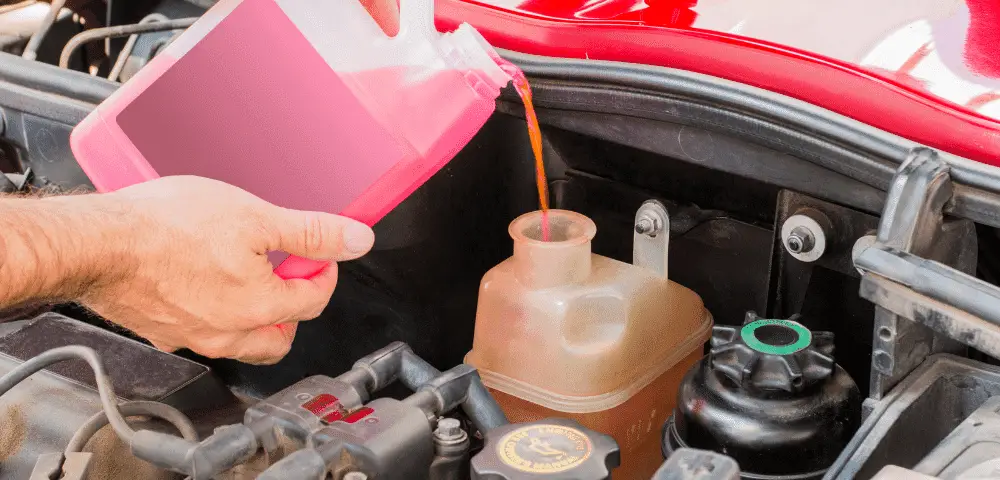
A radiator typically holds between 1 to 2.5 gallons (4 to 9.5 liters) of coolant, depending on the vehicle’s engine size and cooling system design. Small sedans and compact cars usually sit at the lower end of that range, while larger trucks, SUVs, and vehicles with bigger engines can hold closer to 2.5 gallons or more. There’s no single universal number — the exact capacity is always listed in your owner’s manual.
The more invested you are in your vehicle, the less likely it will develop issues without you being aware.
One of the most important things you need to consistently check in your vehicle is your coolant level.
You shouldn’t have to wait until your radiator leaks or your car overheats before you do.
This guide explains what a car’s cooling system does, why coolant levels matter, how much coolant different vehicles actually hold, and answers the most common questions drivers have. If you’re already keeping an eye on tire pressure and tread wear as part of routine maintenance, checking coolant belongs on that same checklist — an overheating engine can just as easily strand you as a flat tire.
How Much Coolant Does a Radiator Hold by Vehicle Type?
Coolant capacity depends heavily on engine size, cooling system design, and whether the vehicle has additional cooling needs (like towing packages or turbocharged engines). Here’s a general breakdown to give you a realistic starting point — always confirm with your owner’s manual or manufacturer specs before topping off or refilling.
| Vehicle Type | Typical Coolant Capacity |
|---|---|
| Compact cars / sedans (4-cylinder) | 1 – 1.5 gallons (4 – 6 liters) |
| Mid-size sedans / crossovers (V6) | 1.5 – 2 gallons (6 – 7.5 liters) |
| Full-size SUVs / trucks (V8) | 2 – 3 gallons (7.5 – 11 liters) |
| Heavy-duty trucks / diesel engines | 3 – 5 gallons (11 – 19 liters) |
| Hybrid / electric vehicles (battery + engine cooling loops) | Varies widely; often smaller engine-coolant volume plus separate battery coolant circuit |
These figures are general averages, not exact specs for any one make or model. For the correct capacity, check your vehicle’s owner’s manual or a manufacturer-published service specification — coolant capacity is one of the details manufacturers list precisely because underfilling or overfilling can cause real damage.
What is a Car’s Cooling System?
The cooling system in a car helps reduce heat from the engine and keeps it running at an optimum temperature for maximum efficiency.
The cooling system usually includes several components working together, such as the water pump, thermostat, cooling fan, overflow hose, and radiator.
Why Does a Car Engine Need Coolant?
A car’s engine coolant is essential for removing heat from the engine.
This heat is generated when the internal combustion engine powering the car burns fuel in the cylinders at extreme temperatures to create the force needed for movement.
The working mechanism of the engine coolant is straightforward:
As the coolant (or antifreeze) circulates, it absorbs heat from the engine, then passes through the radiator, where that heat is released into the surrounding air.
As long as the car’s engine keeps running, it’s a continuous process.
If the coolant circulation stops working properly, or the coolant itself is degraded, your engine can overheat quickly, potentially causing serious and expensive damage.
What are the Functions of an Engine Coolant?
- The first function of an engine coolant is to raise the cooling system’s boiling point, which is important for engine efficiency at high operating temperatures.
- The second function is to lower the freezing point of the cooling system’s liquid. Depending on the fluid used, your engine may be put at risk in cold climates. Plain water, for example, freezes at 0°C (32°F), which can crack an engine block in freezing conditions.
- The third function of engine coolant is to inhibit corrosion that could otherwise damage the engine, radiator, and other cooling system components.
Can You Put Too Much Coolant in the Radiator?
Now that you know why coolant matters, it’s also important to understand how the volume you add affects your engine.
If you overfill the radiator or the plastic coolant recovery tank, the system will only use what it needs and push the excess into the overflow reservoir once the engine heats up.
If the reservoir itself doesn’t have room for the excess, the coolant will vent out and spill onto the ground — which is why you should always fill to the marked “MAX” or “FULL” line, not beyond it.
How Many Gallons of Coolant Does a Car Need?
Ideally, an engine’s cooling system needs a specific volume of coolant, mixed correctly with water, to remove heat efficiently and prevent corrosion.
How Much Antifreeze Does It Take to Fill a Radiator?
As shown in the capacity table above, most passenger vehicles need somewhere between 1 and 2.5 gallons of coolant/antifreeze mixture, while larger trucks and diesel engines may require more. There is no single fixed number for all cars — capacity depends on engine size and radiator design.
The coolant capacity is specific to each vehicle, and the ideal antifreeze-to-water ratio can also vary depending on climate and the type of coolant used.
One thing is constant across all vehicles, though: the radiator fluid must contain rust and mineral inhibitors to protect the system long-term.
Is It OK to Add New Coolant Without Draining the Old?
You don’t necessarily need a full radiator flush just to top off your coolant.
A radiator flush means draining the old coolant completely before adding fresh fluid.
However, a radiator flush (or coolant drain) becomes important when the existing coolant has degraded or turned acidic.
Acidic or contaminated coolant can cause corrosion and damage your vehicle’s cooling system over time.
Replacement intervals vary by coolant type. Conventional (green, IAT) coolant typically needs replacement every 30,000 miles or roughly 2-3 years, while long-life OAT or HOAT formulas used in many newer vehicles can last 100,000 to 150,000 miles or 5+ years. Always check your owner’s manual for the manufacturer-recommended interval before assuming either range applies to your car.
What Happens if You Overfill Your Coolant Reservoir?
If you overfill the reservoir beyond what your car’s engine needs, the excess coolant is typically expelled through the overflow hose once the system heats up and pressurizes.
You’ll likely notice a puddle of coolant beneath your car.
In some cases, escaping coolant can come into contact with engine wiring and connectors, potentially causing electrical damage or corrosion of nearby components.
How Long Does Coolant Last in a Car?
Several factors determine how long coolant lasts in a car.
First, the vehicle itself matters — radiator capacity and cooling system design vary from one car to another.
Second, the coolant formulation matters. Modern long-life coolants typically use Organic Acid Technology (OAT) or Hybrid Organic Acid Technology (HOAT), while older, conventional coolants rely on Inorganic Additive Technology (IAT), which breaks down faster.
You’ll also encounter specialized coolant types such as ethylene glycol-based, propylene glycol-based, and pre-mixed 50/50 solutions.
In general, coolant lasts anywhere from 2 to 5+ years, or 30,000 to 150,000 miles, depending on the formulation. Manufacturer guidance always takes priority over general estimates.
Top Signs of Low Coolant
Cooling and antifreeze protection is critical for your engine’s health. If you’re not regularly checking your coolant level, here are the warning signs to watch for.
Rising Temperature
One of the first signs of low coolant is a rising temperature gauge — your engine may start overheating. As the temperature climbs, engine components can begin to malfunction or warp, including the engine block itself.
Left unchecked, you’ll eventually reach a point where you can’t safely keep driving.
Non-Functioning Heater
If coolant drops below the minimum fill line, certain systems in your car can stop working properly.
The cabin heater, dashboard warning lights, and related electrical systems can all be affected by low coolant levels.
Poor Fuel Economy
Low coolant can hurt fuel economy because an overheating engine runs less efficiently. This means fewer miles per tank and more frequent refueling stops.
Sweet Smell
Another common sign of low coolant or a coolant leak is a noticeably sweet smell coming from the engine bay, caused by the ethylene glycol in most coolants.
Can You Drive with Low Coolant?
Under normal driving, the radiator circulates coolant to keep engine temperature in check. If your cooling system doesn’t have enough coolant to circulate, engine temperature will climb rapidly, especially under load or in hot weather.
Driving with insufficient coolant risks serious engine damage, including a warped cylinder head or blown head gasket. If your temperature gauge is climbing, the safest move is to pull over and let the engine cool before continuing.
How Much Does It Cost to Replace Coolant in a Car?
Coolant prices vary from one brand to another, as well as by coolant type and vehicle requirements. Larger cooling systems, like those in trucks and SUVs, naturally require more fluid, which increases the overall cost.
A full coolant flush and refill — including parts and labor — is generally a modest, routine maintenance expense at most repair shops, though prices vary by region, vehicle type, and whether you have it done at a dealership versus an independent shop. It’s worth getting a quote from a couple of local shops for comparison.
Coolant vs. Water
If you’ve ever wondered whether you can just pour plain water into your radiator, here’s your answer:
Plain water is not a proper long-term coolant — it’s actually corrosive to engine components over time and lacks the anti-boil and anti-freeze properties coolant provides. Water alone can cause your cooling system to become damaged.
Coolant, by contrast, contains anticorrosive additives that extend your engine’s service life.
One important safety note: never add coolant to a hot engine.
Removing the cap on a hot system can cause pressurized, boiling coolant to spray out and cause burns or damage. Always let the engine cool before checking or adding coolant.
Frequently Asked Questions
How do I check my coolant level?
With the engine cold, check the translucent coolant reservoir tank (not the radiator cap) and confirm the level sits between the “MIN” and “MAX” markings.
Can I mix different coolant colors or types?
No. Mixing incompatible coolant types (for example, OAT and IAT formulas) can cause a chemical reaction that forms a gel-like sludge, clogging the cooling system. Always use the type specified in your owner’s manual.
What’s the correct coolant-to-water ratio?
Most manufacturers recommend a 50/50 mix of coolant concentrate and distilled water, though colder climates may call for up to a 70/30 antifreeze-to-water ratio. Many coolants are also sold pre-mixed for convenience.
Does low coolant affect anything besides the engine?
Yes — an overheating engine can trigger a limp mode in some vehicles, reducing power and performance, and prolonged overheating can also stress other systems, including the transmission in some designs.
Conclusion
This guide covered the key questions drivers have about coolant: how much a radiator actually holds, whether you can overfill it, how to add coolant safely, and whether plain water is ever an acceptable substitute.
Coolant is essential to your engine’s health, so it deserves the same regular attention you give your tires and brakes — check it routinely, use the correct type for your vehicle, and don’t wait for warning signs before topping it off.
Use the correct coolant type and mixture for your specific vehicle, verify capacity against your owner’s manual, and keep your car’s cooling system protected for the long haul.