

If you were to pick a couple of tire brands for your vehicle, Continental is definitely going to be on the list.
Ever wondered why?
The tire company has invested so much into delivering high-quality products for road use.
The only problem now is that most people aren’t sure whether Continental is still the right pick for them.
Well, with the help of this Continental tires review, you should get the hang of it and know the best options currently on the market, how they compare, and what real drivers say about them.
Overview of Continental Tires
Continental Tire is a company that started as a rubber manufacturer in 1871 in Hanover, Germany.
Years later, the founders decided to take it up a notch, and since creators wanted to bring mobility ideas to life, the brand started making car tires.
It didn’t take long before this company gained massive recognition, especially among major car brands at the time.
It became one of the best Original Equipment Manufacturers in the world.
Today, Continental remains one of the largest tire manufacturers in the world, and a significant share of European vehicles roll off the factory line on Continental rubber.
The brand’s most notable tire lines include ProContact, ExtremeContact, CrossContact, and the TrueContact/PureContact family, which continue to be updated and replaced as compounds and tread technology evolve. If a specific model you’ve seen mentioned online is unavailable at your local retailer, check with Continental’s current lineup, as tire manufacturers periodically retire and replace models.
Things to Consider Before Buying Continental Tires
If you’re considering a Continental tire, keep these factors in mind to pick the best option for your vehicle.
First, consider tire size, type, and speed rating. These are important factors in choosing the right fit for your vehicle and driving style.
Secondly, decide whether you need all-season tires or dedicated summer and winter tires. Your climate and how you use your vehicle will determine which is best.
Third, check current pricing and availability. Continental generally sits in the mid-to-premium price bracket compared to budget brands, though exact pricing varies by retailer, size, and promotions, so it’s worth comparing a few sellers before you buy.
As long as you weigh these factors, you shouldn’t have a hard time choosing the right Continental tire for your vehicle.
Continental Tires Review: The Most Notable Tire Models
Let’s break down the standout Continental tire models below.
Continental ContiProContact SSR
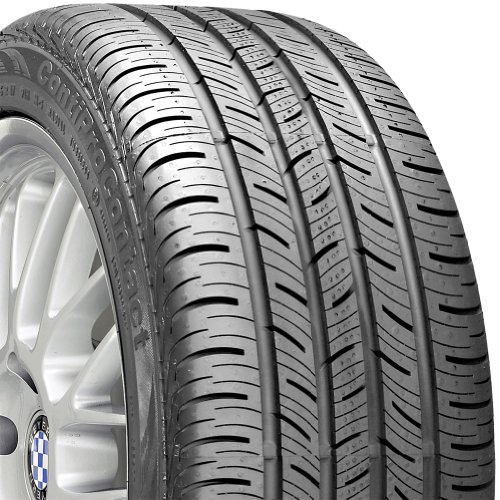

Continental ContiProContact Self Supporting Runflat is a unique grand touring tire from this brand perfect for temporary extended mobility.
This tire keeps drivers mobile until they get the chance to repair the flat tire or fix the spare.
And while using it, the maximum recommended driving speed after a puncture is around 50 mph, depending on car weight and road conditions — always check Continental’s official run-flat guidance for your specific vehicle.
ContiProContact SSR is built with an all-season tread compound and is molded into a symmetric pattern for responsive steering and handling.
It also has a tread design that creates more active edges in the contact patch for improved traction, including in light snow, while keeping road noise low.
Continental ProContact TX

Another solid grand touring all-season tire from the brand is the Continental ProContact TX.
It offers a clean look, competent handling, and dependable traction, including in light snow.
This tire is designed as original equipment for coupes and performance sedans, though it’s also available in various sizes as a replacement tire.
A consistent feature across the ProContact TX line is Continental’s ContiSilent Technology, which helps reduce cabin noise. This involves a layer of sound-absorbing foam adhered to the tire’s inner liner.
Continental CrossContact LX20

Continental CrossContact LX20 is one of the company’s more fuel-efficient tires, built for sport utility vehicles, light trucks, and crossovers.
This tire uses EcoPlus Technology, an all-season tread compound built with Tg-F polymers and +Silane additives.
These features are designed to improve fuel efficiency and treadwear while providing solid traction on wet roads.
The CrossContact LX20 also uses a symmetric tread design with independent tread blocks and continuous center ribs to aid steering response and improve traction on dry pavement.
Four circumferential grooves help channel water away for better grip in wet conditions.
Continental ExtremeContact Sport / Sport 02
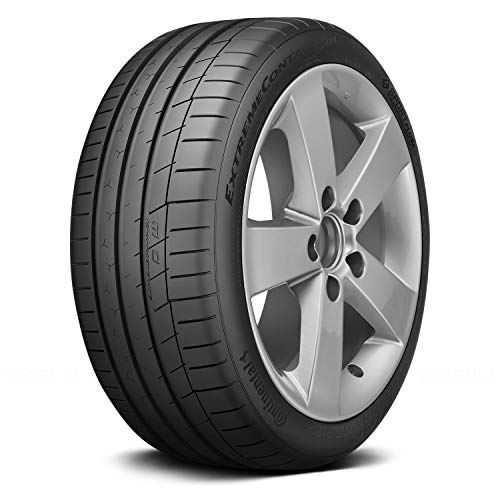
Continental’s ExtremeContact Sport is one of the best performance tires on the market, explicitly designed for luxury vehicles, sports cars, sedans, and performance SUVs. Continental has since introduced a Sport 02 update in this line, so confirm which generation you’re buying before checkout.
This tire offers strong ride comfort thanks to a specialized summer-only compound molded into a five-rib asymmetric design.
It also uses SportPlus Technology to deliver precise handling and well-rounded performance.
The ExtremeContact Sport is a top summer tire choice, featuring wide tread blocks for constant rubber-to-road contact and above-average tread life for a performance tire.
It also uses a +Silane tread compound to help maintain grip in damp conditions, along with deep circumferential grooves to resist hydroplaning.
So while this tire excels on dry roads, it also performs well in wet conditions and supports high-speed driving.
Size, Load Index & Speed Rating Comparison
Continental offers each model in a wide range of sizes, so the table below shows typical ranges rather than a single spec. Always confirm exact size, load index, and speed rating against your vehicle’s tire placard before buying.
| Model | Typical Size Range | Typical Load Index | Typical Speed Rating |
|---|---|---|---|
| ContiProContact SSR | ~205/55R16 to 245/45R19 | 91–98 | H, V |
| ProContact TX | ~195/65R15 to 245/40R20 | 91–102 | H, V, W |
| CrossContact LX20 | ~225/65R17 to 275/55R20 | 101–111 | S, T, H |
| ExtremeContact Sport / Sport 02 | ~205/55R16 to 325/30ZR21 | 91–108 | V, W, Y |
Design Features & Benefits
Before you buy Continental tires, here’s what you can generally expect.
Quality
Continental builds high-quality tires for a wide range of road conditions, with options covering summer, winter, and all-season use.
The brand clearly specifies speed ratings and generally focuses on delivering tires with good fuel economy and improved rolling resistance.
Handling
Handling, cornering, and braking are all part of what makes a tire feel confident on the road.
Continental tires generally provide precise and responsive handling, easy cornering, and dependable braking in dry and wet conditions, with light-snow capability on most all-season models.
Durability
One thing generally expected from Continental tires is durability. The brand uses well-regarded materials and tread technology in constructing its tires.
That said, treadwear and longevity vary by model, driving habits, alignment, and climate, so individual results can differ.
Grip & Traction
Grip and traction are two closely linked strengths of most Continental tires. The grip provided supports consistent performance on dry and wet roads.
Features like independent tread blocks and circumferential grooves contribute to this performance.
Winter and Ice Performance
This is an area where it’s important to separate tire lines. Continental’s all-season tires (ProContact, CrossContact, etc.) generally handle light snow reasonably well but are not designed or rated for dedicated ice or deep-snow performance. For genuine winter or ice conditions, Continental’s dedicated winter line (such as the WinterContact/VikingContact family) performs significantly better, since it uses a cold-weather-specific compound and is often certified with the severe snow (three-peak mountain snowflake) rating.
So the accurate takeaway is: Continental’s all-season lineup is competent in light winter conditions, but if you regularly deal with ice or heavy snow, a dedicated winter tire from Continental (or another brand) is the safer choice.
Wear
Most Continental tires are engineered for even treadwear, though as with any brand, uneven wear can occur if alignment, tire pressure, or rotation intervals aren’t maintained.
Comfort
Continental tires are generally regarded as comfortable, quiet-riding options in their respective categories.
Several models use noise-canceling technologies to minimize road noise and enhance ride comfort.
Continental also backs most of its passenger and light-truck tires with a limited tread life warranty; specific terms vary by model, so check the warranty details for the exact tire you’re buying.
Road Feedback & UTQG Ratings
Across consumer and retailer reviews, Continental’s core lineup consistently earns strong ratings, typically in the 4 to 4.5 out of 5 range, depending on the specific model and use case.
Beyond consumer opinion, Continental (like all tire makers selling in the U.S.) is required to publish Uniform Tire Quality Grading (UTQG) ratings for treadwear, traction, and temperature resistance, as mandated by the National Highway Traffic Safety Administration (NHTSA). These ratings are printed on the tire sidewall and listed on Continental’s official spec sheets, and they’re a useful, standardized way to compare treadwear and traction claims across brands rather than relying on marketing copy alone.
Independent outlets such as Tire Rack and Consumer Reports also run controlled wet-braking, dry-handling, and noise tests on Continental models; checking their published test results alongside UTQG numbers gives a fuller, more objective picture than star ratings alone.
Pros & Cons
Pros
- Durable, high-endurance tires for daily road use
- Strong fuel efficiency and low rolling resistance on several models
- Backed by a limited warranty on most lines
- Among the quieter, more comfortable options in their categories
- Competent light-snow traction on all-season models
Cons
- All-season models are not a substitute for a dedicated winter tire on ice or in heavy snow
- Sits in the mid-to-premium price range compared to budget brands
- Specific model availability changes over time, so a size you find in one review may be discontinued or replaced later
Continental Tire Reviews By Customers
Below are representative consumer reviews on Continental tires, sourced from retailer review platforms.
Positive Continental Tire Reviews
“Tire has fantastic handling when dry and is also one of the safest and most predictable options I’ve used in a long time.” – Tire Rack
“Great grip on dry roads and solid traction in light snow for an all-season tire.” – Tire Rack
Negative Continental Tire Reviews
“The tire had only gone 6,800 miles but showed noticeably uneven wear on one side.” – Tire Rack
“Wet-weather performance was disappointing compared to what I expected from this brand.” – Tire Rack
As with any tire brand, individual experiences vary by specific model, vehicle, driving style, and maintenance, so it’s worth reading reviews for the exact model and size you’re considering rather than the brand as a whole.
How Long Will Continental Tires Last?
Most Continental passenger and light-truck tires are rated for roughly 50,000 to 70,000 miles of treadwear, though performance-oriented models like the ExtremeContact Sport are rated lower, since grip is prioritized over longevity.
Continental tire models — whether grand touring all-season, performance, or winter — can also age out after roughly 6 years of service, even if tread remains, due to rubber compound aging. Check the manufacture date (DOT code) on the sidewall if you’re buying older stock.
Most drivers start to notice meaningful wear within the third to fifth year of regular use, depending on mileage, climate, and maintenance.
Frequently Asked Questions
Are Continental tires good for winter driving?
Continental’s all-season tires handle light snow reasonably well, but for genuine ice or heavy snow conditions, a dedicated Continental winter tire will perform significantly better.
How does Continental compare to Michelin and Bridgestone?
Continental generally competes closely with Michelin and Bridgestone on comfort, treadwear, and handling, often at a slightly lower price point. See our brand comparison guides for a closer look at how these manufacturers stack up model-for-model.
What is UTQG, and why does it matter?
UTQG (Uniform Tire Quality Grading) is a standardized system required by the National Highway Traffic Safety Administration that rates treadwear, traction, and temperature resistance. It lets you compare tires objectively rather than relying solely on marketing claims or star ratings.
Are Continental tires expensive?
Continental typically prices in the mid-to-premium range compared to budget brands. Exact pricing depends on the size, model, and retailer, so it’s worth comparing current prices across a few sellers before buying.
Conclusion
Drivers looking for a dependable, well-rounded tire brand will find Continental a strong choice.
The brand offers high-quality tires that compete well against other major manufacturers in the industry, including Michelin, Bridgestone, Dunlop, and Yokohama.
Check out the various current tire models available and choose the set that best fits your car, truck, or SUV’s needs.